




The biggest high school in the country sits in New York, and it is not close to a small building. Brooklyn Technical High enrolls 5,848 students, more than four times the size of the largest high school in Vermont. That gap, between the busiest and the quietest state-leaders, is the real story in this data. The largest high school in a state is one of the cleaner proxies for how that state grew and where it put its people.
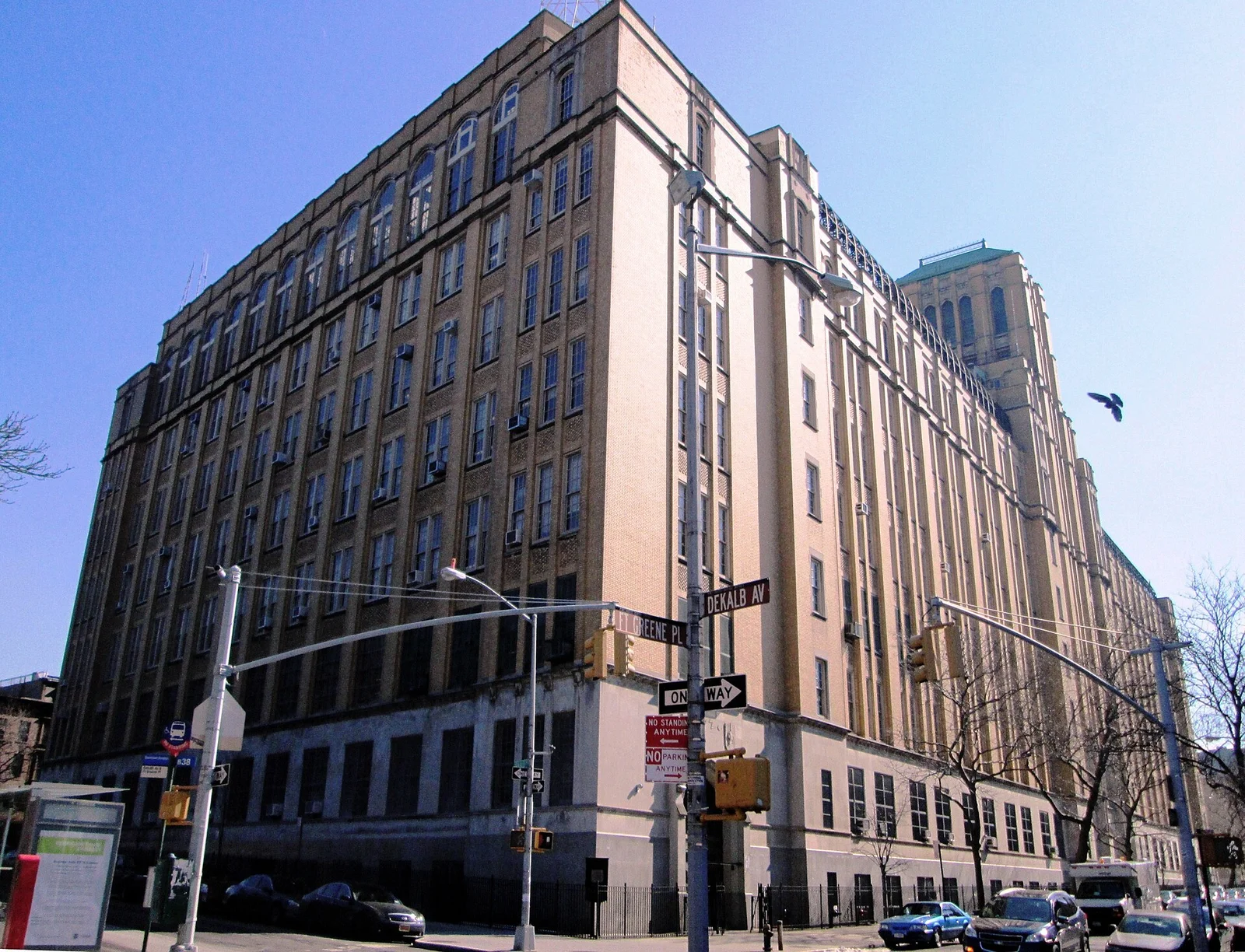 Brooklyn Technical High By Beyond My Ken - Own work, CC BY-SA 4.0, https://commons.wikimedia.org/w/index.php?curid=24704126
Below is the largest brick-and-mortar, non-charter, comprehensive high school in each state and the District of Columbia, by enrollment, using NCES Common Core of Data for the 2024-25 school year. Comprehensive means a standard grades 9 to 12 school, so virtual charters, magnet exam schools that report unusual grade spans, and specialized programs are not the comparison here. If you want the national ranking that ignores state lines, that lives in the companion piece on the largest public high schools in America, ranked.
The Largest High School in Each State, 2024-25
- Alabama: Hoover High, Hoover, 2,919
- Alaska: West High, Anchorage, 1,702
- Arizona: Hamilton High, Chandler, 3,444
- Arkansas: Bentonville High, Bentonville, 3,579
- California: Eleanor Roosevelt High, Eastvale, 4,353
- Colorado: Cherry Creek High, Greenwood Village, 3,852
- Connecticut: Danbury High, Danbury, 3,612
- Delaware: Caesar Rodney High, Camden, 2,254
- District of Columbia: Jackson-Reed High, Washington, 1,855
- Florida: Cypress Bay High, Weston, 4,579
- Georgia: Brookwood High, Snellville, 3,803
- Hawaii: James Campbell High, Ewa Beach, 2,890
- Idaho: Mountain View High, Meridian, 2,463
- Illinois: Adlai E. Stevenson High, Lincolnshire, 4,758
- Indiana: Carmel High, Carmel, 5,239
- Iowa: Lincoln High, Des Moines, 2,364
- Kansas: East High, Wichita, 2,435
- Kentucky: Lafayette High, Lexington, 2,370
- Louisiana: Denham Springs High, Denham Springs, 2,385
- Maine: Lewiston High, Lewiston, 1,709
- Maryland: Montgomery Blair High, Silver Spring, 3,266
- Massachusetts: Brockton High, Brockton, 3,598
- Michigan: Cass Technical High, Detroit, 2,493
- Minnesota: Wayzata High, Plymouth, 3,781
- Mississippi: Tupelo High, Tupelo, 2,123
- Missouri: Blue Springs High, Blue Springs, 2,429
- Montana: Billings West High, Billings, 2,115
- Nebraska: Grand Island Senior High, Grand Island, 2,696
- Nevada: Desert Oasis High, Las Vegas, 3,300
- New Hampshire: Nashua High School South, Nashua, 1,686
- New Jersey: Passaic County Technical Institute, Wayne, 3,565
- New Mexico: Cleveland High, Rio Rancho, 2,596
- New York: Brooklyn Technical High, Brooklyn, 5,848
- North Carolina: Myers Park High, Charlotte, 3,225
- North Dakota: Legacy High, Bismarck, 1,419
- Ohio: William Mason High, Mason, 3,435
- Oklahoma: Broken Arrow High, Broken Arrow, 4,802
- Oregon: David Douglas High, Portland, 2,756
- Pennsylvania: Reading Senior High, Reading, 4,879
- Rhode Island: East Providence High, East Providence, 1,691
- South Carolina: Dorman High, Roebuck, 3,920
- South Dakota: Central High, Rapid City, 1,998
- Tennessee: Collierville High, Collierville, 2,946
- Texas: Conroe High, Conroe, 5,252
- Utah: Cedar Valley High, Eagle Mountain, 3,300
- Virginia: Alexandria City High, Alexandria, 4,655
- Vermont: Champlain Valley Union High, Hinesburg, 1,251
- Washington: Chiawana Senior High, Pasco, 3,127
- West Virginia: Morgantown High, Morgantown, 1,754
- Wisconsin: Middleton High, Middleton, 2,303
- Wyoming: Kelly Walsh High, Casper, 2,002
Listed alphabetically by state. Enrollment figures are total student head counts from NCES SY 2024-25; school cities follow the address NCES has on file, which is sometimes the mailing town rather than the larger metro everyone names.
What the Numbers Show
The top of the list is a who's-who of fast-growing metros. Brooklyn Technical leads everyone at 5,848, helped by being a single exam-magnet high school drawing from an entire borough rather than one neighborhood attendance zone. Right behind it, six state-leaders clear 4,700 students: Conroe in Texas at 5,252, Carmel in Indiana at 5,239, Reading in Pennsylvania at 4,879, Broken Arrow in Oklahoma at 4,802, and Stevenson in Illinois at 4,758. Three of those, Conroe, Carmel, and Broken Arrow, are classic high-growth suburbs that kept funneling new families into one enormous school instead of splitting into multiple smaller schools.
That last point is worth sitting with, because school size is partly a population story and partly a policy choice. Two districts with the same number of teenagers can land in very different spots on this list depending on whether they build one 4,000-student megaschool or four 1,000-student ones. The states near the top tend to favor the big-school model, often because a single high school is cheaper to staff and run than several, and because community identity gets attached to one football team and one name.
The bottom of the list is just as consistent. The smallest state-leaders are in small and rural states: Champlain Valley Union in Vermont at 1,251, Legacy in North Dakota at 1,419, and Jackson-Reed in the District of Columbia at 1,855, where the District simply does not have a large enough single attendance zone to build something bigger. South Dakota's Central High in Rapid City tops out at 1,998, and Wyoming's Kelly Walsh at 2,002. In these places, the largest high school in the entire state is smaller than a single grade level at Brooklyn Tech is large.
Put the two ends together and the pattern is clean. Sunbelt growth states and big-suburb states near major metros produce 4,000-plus flagships. Rural and small-population states top out somewhere between 1,200 and 2,000, even at their biggest single school. The largest high school in a state is, in effect, a readout of how concentrated that state's school-age population is and how its districts chose to organize it.
The middle of the list is more crowded than the extremes, and it is where the suburb-versus-city distinction shows up. A lot of these leaders sit in the 3,000 to 4,000 band: Brookwood in Georgia at 3,803, Wayzata in Minnesota at 3,781, Cherry Creek in Colorado at 3,852, Dorman in South Carolina at 3,920. Almost all of them are well-off suburban districts on the edge of a major metro, the kind of place where a single large high school anchors the town. The big-city leaders read differently. Cass Technical in Detroit at 2,493 and Lafayette in Lexington at 2,370 rank large by their state's standard but stay modest next to the suburban giants, because dense cities tend to spread their teenagers across many smaller neighborhood schools rather than one school. The biggest single high schools in America are mostly a suburban phenomenon, not an urban one, with exam magnets like Brooklyn Tech as the standout exception.
How to Read This List
A few honest caveats, because enrollment data is messier than a clean ranking suggests. NCES head counts are self-reported by schools and reflect a single point-in-time count, so a school at 4,353 one year may report 4,200 or 4,500 the next without anything real changing on the ground. The exclusion of charters and virtual schools matters too: in a handful of states the literal largest school by raw enrollment is a statewide online charter with tens of thousands of names on its rolls, which is why those do not appear here. This list is comprehensive neighborhood and magnet high schools, the kind of building a student actually walks into every morning.
If you are using these figures to size up a school, the headcount is only the starting point. A 4,000-student school and a 1,400-student school are different experiences, but bigger is neither automatically better nor worse. The thing to check is the student-to-teacher ratio and the course catalog, not the raw number on the front of the brochure. A large school can offer more advanced courses, more sports, and more clubs simply because it has the bodies to fill them, while a small one can offer a kid the chance to not be a number. You can pull enrollment, ratio, and demographics for any of these schools, and every other public school in the state, from the individual school pages on this site.
If you want to compare against the all-state ranking rather than state-by-state, the companion list of the largest public high schools in America ranks the same kind of schools head to head across the whole country.
Data note: enrollment figures are total student counts from the NCES Common Core of Data, SY 2024-25, limited to brick-and-mortar, non-charter, comprehensive high schools serving roughly grades 9 to 12.
Sources
NCES: Common Core of Data, Public School Data and Reports (SY 2024-25 enrollment)
NCES: ELSI, Elementary/Secondary Information System (school-level enrollment tables)