



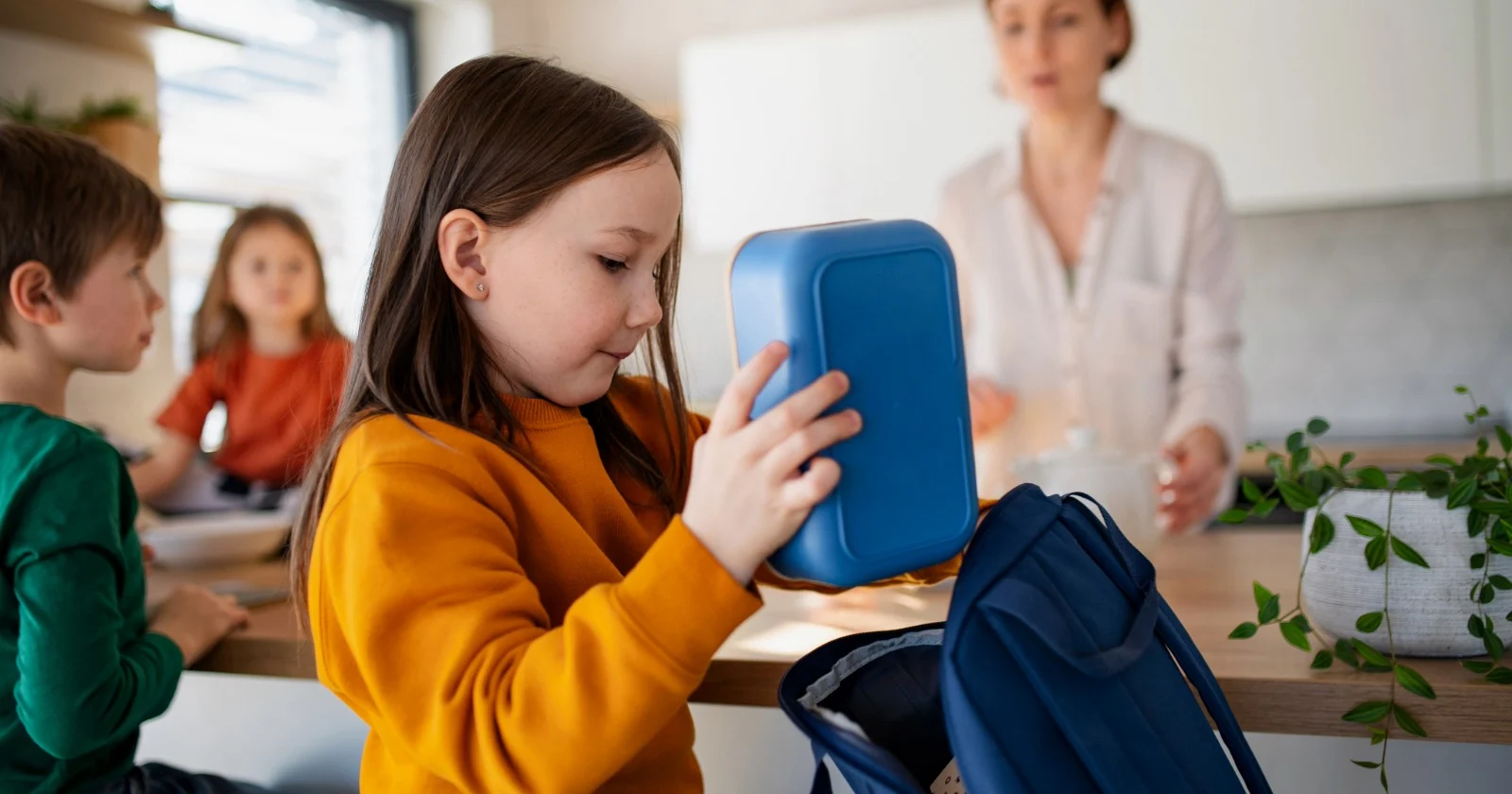
Here is the thing no lunchbox guide admits: the fanciest lunch you pack is worthless if it comes home uneaten. So the real target is not a perfect lunch but one that actually gets eaten, by a specific child with specific opinions.
Build from a formula, not a recipe
The reason you end up making the same sad turkey sandwich every day is that you are trying to invent a meal at 7 a.m. Stop inventing. Work from a formula instead: a protein, a fruit, a vegetable, a carbohydrate, and one thing that is purely fun. Fill each slot with whatever is in the house and you have hundreds of combinations.
Once you think in slots, the sandwich stops being mandatory. The protein can be a rolled-up piece of turkey, a hard-boiled egg, a cheese stick, hummus, or last night's chicken. The carb can be crackers, a tortilla, pretzels, or leftover pasta. A snack-plate lunch, small piles of several things, is often the most popular of all, because it looks like the store-bought kits kids covet and lets them graze. Breakfast for lunch, a couple of pancakes and some fruit, is also something to consider. The formula stays the same and only the fillings rotate.
The part most people get wrong: keeping it safe
A packed lunch is not refrigerated, and perishable food should not sit between 40 and 140 degrees for more than two hours. That is the range where bacteria multiply, and a lunchbox in a warm classroom can blow past two hours easily. Sandwiches with meat, yogurt, cut fruit, and anything mayonnaise-based all live in that risk zone.
The fix is cheap. Use an insulated bag and an ice pack, every day, not just when you remember. Better still, freeze the drink or a yogurt tube the night before so it works as the cold pack on the way and is thawed and cold by lunchtime. For anything hot, like soup or pasta, preheat the thermos: fill it with boiling water, let it sit five minutes, dump it, then add the hot food. That one step is the difference between warm lunch and lukewarm lunch four hours later.
Pack for what gets eaten, not what looks good
Watch what comes home and you'll learn fast. Whole apples come back with just two bites; sliced apples get completely eaten. Big sandwiches come home in halves; small pieces disappear. Little kids especially eat with their eyes and their hands, so bite-sized and easy-to-open beats large and impressive. If a wrapper takes an adult a second to fight open, it is coming home sealed.
Two habits to pick up. First, let your child help pack, or at least pick from a short list you control. Kids eat what they chose in a way they never eat what was assigned to them. Second, introduce new foods one at a time, tucked next to the reliable favorites, not as a whole experimental lunch. And pack a little less than feels right. An empty lunchbox is a win and tells you what worked. A full one is groceries in the trash and no information about why.
It is also worth asking whether to pack at all on a given day. Packing is not automatically cheaper or healthier than the cafeteria. School meals are heavily subsidized and held to federal nutrition standards, a lot of students qualify for free or reduced-price meals, and a growing number of states now serve them free to every student. Once you add up the produce that gets thrown out and the fifteen minutes at the counter each morning, the school tray sometimes wins on both cost and sanity. What kids eat during the day genuinely affects how they do in class, so the point is a good lunch, whoever makes it, not packing for its own sake. We get into that in whether what kids eat affects how they do in school.
One more practical note before you commit to a peanut-butter rotation: many elementary schools restrict nuts because of allergies, and some ban them outright. Check your school's policy before packing, and if you need a swap, sunflower seed butter tastes close enough that most kids do not notice. The whole project is less about nailing a Pinterest lunch and more about landing on a handful of combinations your kid reliably finishes, then running them until they get bored, at which point you rotate a slot and start again.
Sources
USDA Food Safety and Inspection Service: Keeping Bag Lunches Safe
allk12: Which states give every student free school meals