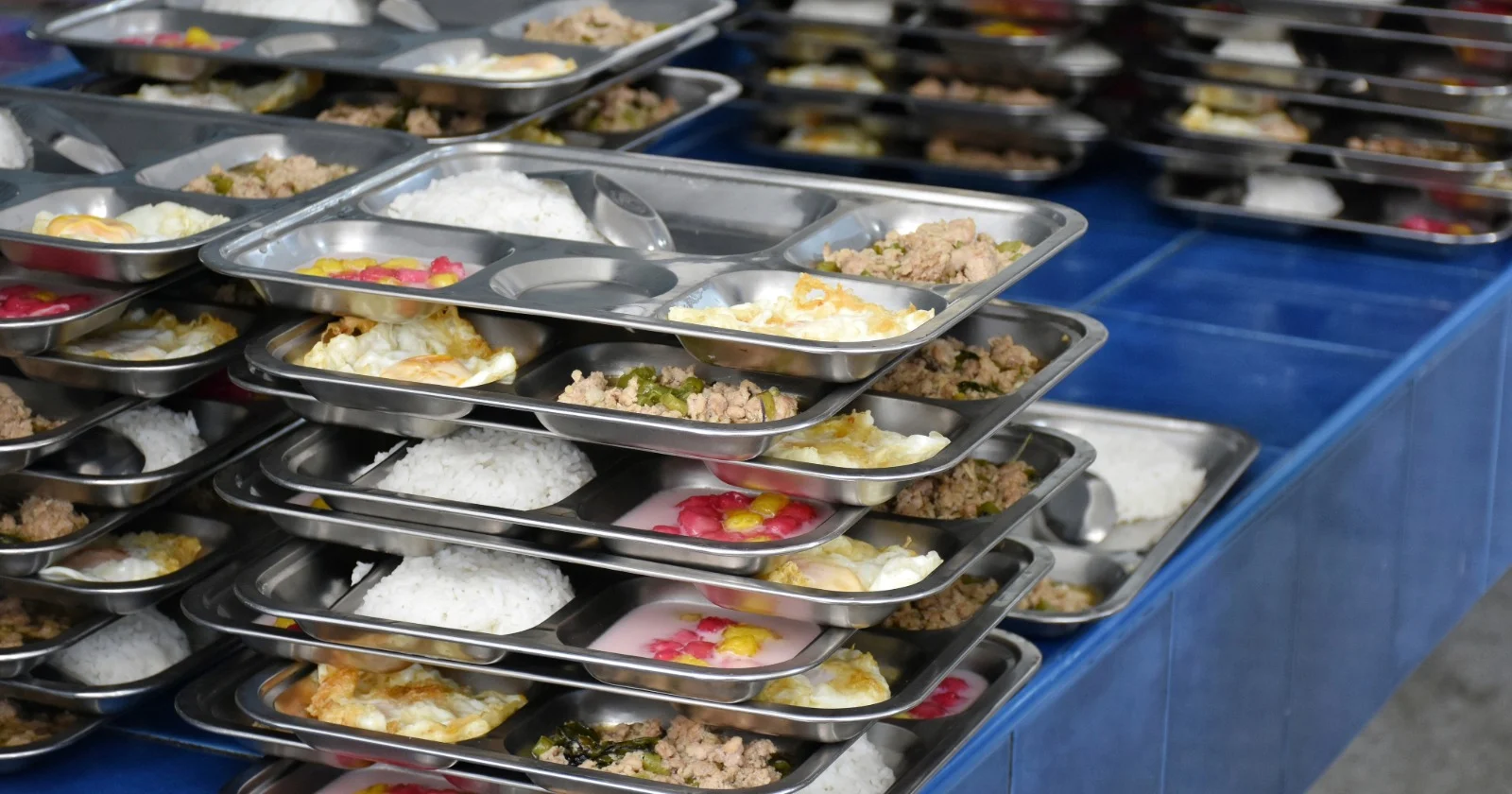





If you have read a school ranking, a news story about education, or one of our own reports, you have seen schools described by their share of students on free and reduced lunch. That single number, usually written as FRL or sometimes FRPL, does a lot of work. It is the standard way researchers, journalists, and the federal government measure how much poverty a school serves. It also gets misread constantly, treated as a grade on the school rather than a description of its students. Here is what FRL actually counts and how to read it correctly.
What FRL Counts
Free and reduced-price lunch eligibility comes from the federal National School Lunch Program, run by the U.S. Department of Agriculture. According to USDA's Food and Nutrition Service, a child qualifies for free meals if household income is at or below 130 percent of the federal poverty guideline, and for reduced-price meals if income falls between 130 and 185 percent. For a family of four, 185 percent of the poverty line works out to roughly the low-to-mid 50,000s in annual income, so the cutoff captures not just families in deep poverty but a substantial slice of the working class.
The FRL rate for a school is simply the percentage of its enrolled students who qualify. Because the program is income-based and nearly universal across public schools, that percentage became the default proxy for school poverty long ago. It is collected consistently, it is available for almost every school in the country, and it tracks family economic status reasonably well. That is why it shows up everywhere, including on the school profiles and rankings across this site.
Why It Triggers Title I Money
FRL counts do more than describe a school. They route federal funding. Title I of the Elementary and Secondary Education Act sends extra money to schools that serve high concentrations of low-income children, and districts typically use FRL eligibility to identify which schools qualify and to rank them for funding. A school generally becomes Title I eligible once its low-income share crosses a threshold, often around 40 percent, although districts have some discretion in how they set priorities within federal rules.
This is the practical reason the number matters to a school's budget. A higher FRL share can mean more federal dollars for reading interventionists, tutoring, smaller classes, or family outreach. We walk through what that designation means, and what it does and does not tell you, in our explainer on Title I schools. The short version is that Title I status signals the school serves many low-income students, not that the school is struggling.
Why Researchers Lean on It
Education researchers use FRL as a poverty proxy because the alternatives are worse. Schools do not collect detailed family income data, and asking would be invasive and unreliable. FRL is already gathered for the meal program, covers nearly every student, and updates yearly. When a study or a ranking wants to account for the fact that schools serve very different populations, FRL is usually the variable it reaches for. Our own best schools rankings lean on this logic: the headline measure adjusts each school's test results for the poverty of the students it serves, so a school is credited for outperforming what its demographics would predict rather than simply for being affluent.
The Blind Spots
FRL is useful, but it has real weaknesses that have grown over time, and a careful reader should know them.
The biggest is the Community Eligibility Provision. Under CEP, schools and districts in high-poverty areas can offer free meals to every student without collecting individual applications. That is good policy for feeding children, but it scrambles the data, because in a CEP school every student is effectively counted as eligible, which can overstate poverty, or the school may report differently, which can understate it. As CEP has expanded, FRL has become a noisier measure than it used to be, especially in the highest-poverty districts.
The second is high schools. Older students are less likely to fill out meal applications, partly because of stigma, so high school FRL rates often understate the true poverty of the student body relative to elementary schools in the same neighborhood. As the Food Research and Action Center notes, participation and reporting patterns vary enough that FRL is best treated as an approximation, not a precise income census. When you compare two schools on FRL, a few points of difference is noise. A large difference is real.
Poverty and Test Scores Are Linked, but Not Destiny
Across the country, school FRL rates correlate strongly and negatively with average test scores. Higher poverty, lower average proficiency. That relationship is one of the most consistent findings in education data, and we map it state by state in our FRL versus test scores report. But correlation across thousands of schools is not a prediction about any single school. Plenty of high-poverty schools post strong results, and we track them specifically in our Title I schools beating the odds and high-poverty, high-performing reports.
This is the core reason not to read FRL as a quality grade. A 70 percent FRL school and a 15 percent FRL school are serving very different families and facing very different challenges. The fair question is not which one has higher raw scores, because the affluent school almost always will. The fair question is how each school performs relative to what its students' circumstances would predict. A high-poverty school that beats that prediction is doing genuinely impressive work that a raw score ranking would hide.
How to Use FRL When You Compare Schools
Look at FRL to understand the population a school serves, then judge the school against schools serving similar students rather than against the most affluent school in the metro. On any profile on allk12, the FRL share sits next to test results and demographics so you can read them together. If you are choosing between schools, our highest-poverty schools data and the poverty-adjusted best schools rankings give you the apples-to-apples comparison that a raw test-score list cannot. FRL is a lens for context. Used that way, it makes you a sharper reader of every other number on the page.
Sources
USDA Food and Nutrition Service: National School Lunch Program
USDA: Child Nutrition Programs Income Eligibility Guidelines
Food Research and Action Center: National School Lunch Program
National Center for Education Statistics: Students Eligible for Free or Reduced-Price Lunch