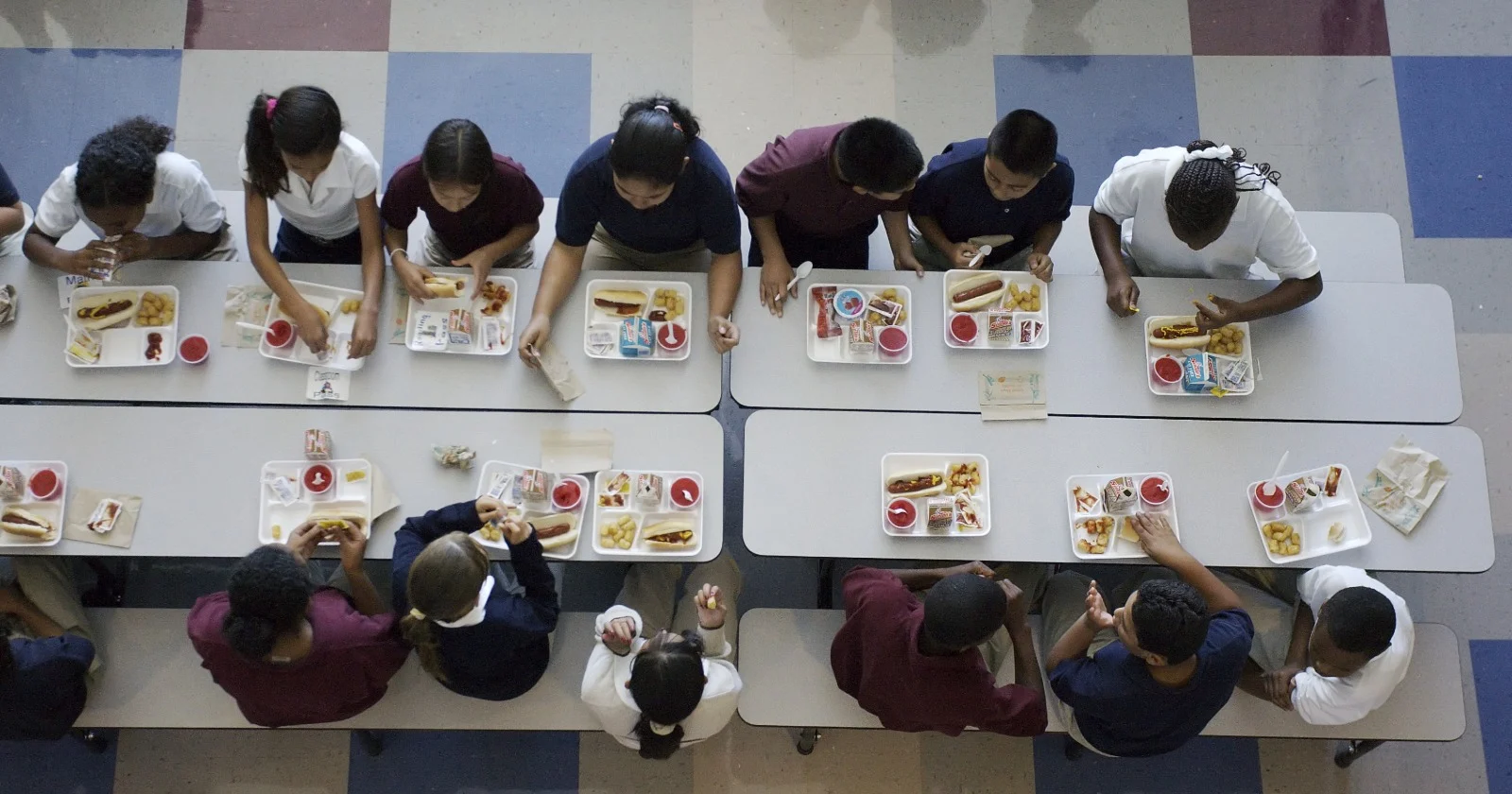




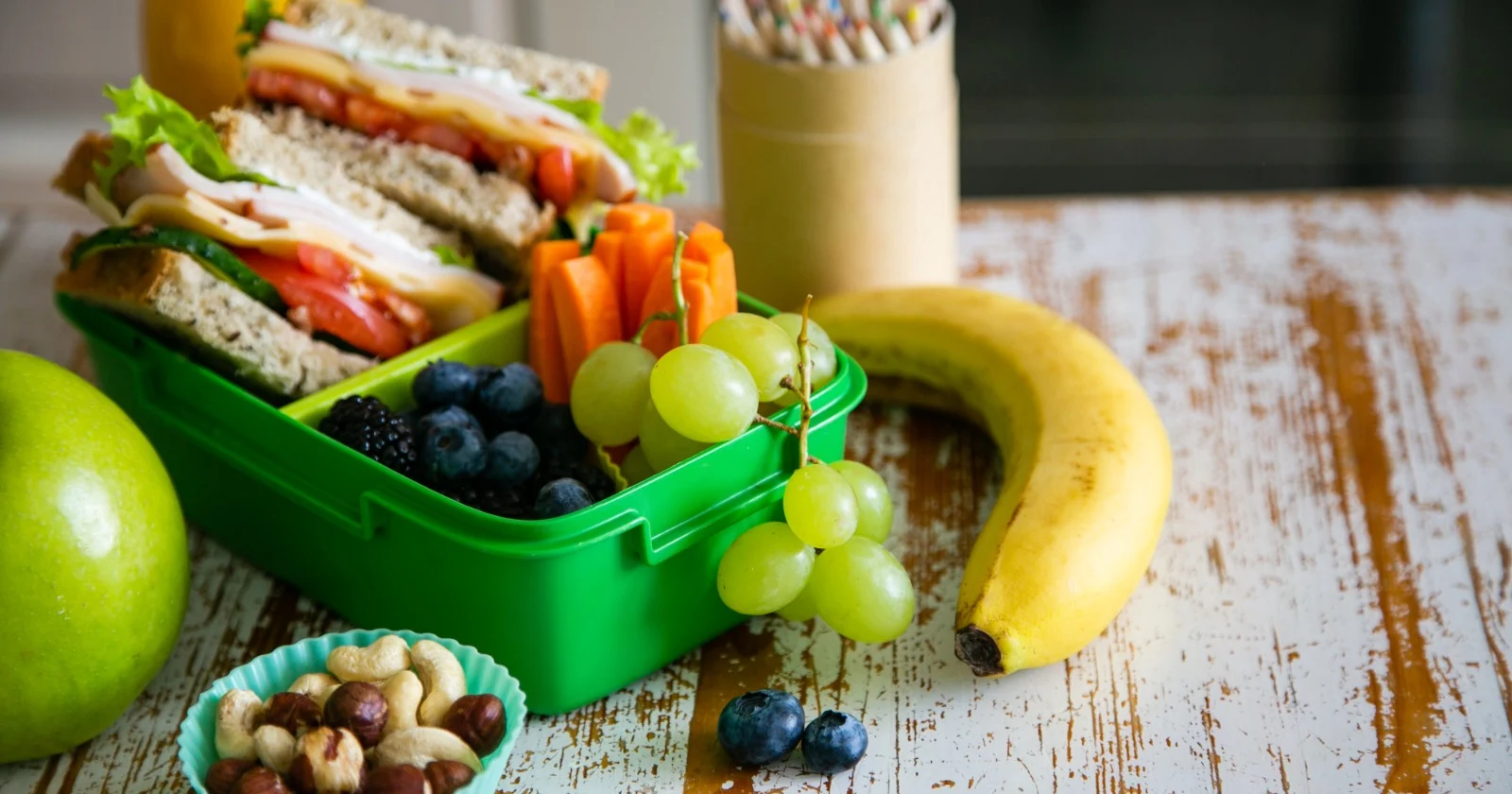
A first-grade teacher I once observed kept a box of crackers in her desk drawer. Not for snack time. For the two or three children who came in most mornings without having eaten, the ones who put their heads down on the desk by nine o'clock and stopped answering questions. She had learned, without any study to tell her, that a hungry child is not really in the room. Feed them, and they come back.
That small classroom fact turns out to be the sturdiest thing we know about food and school. Parents ask me a broader question, usually some version of "what should my child eat to do better in school," and they are often hoping for a list of brain foods. The honest answer runs the other way. The research on nutrition and academic performance is real and worth knowing, but its strongest findings are about the absence of food, not the presence of any magic one.
Hunger Is the Clearest Signal in the Data
Start with food insecurity, the term researchers use for households that cannot reliably afford enough food. Children in these homes tend to show lower academic performance, more behavioral difficulty, and worse attendance than peers who are otherwise similar. No Kid Hungry, drawing on teacher surveys and research syntheses, reports that hunger disrupts concentration, memory, mood, and behavior, and that children who arrive hungry are simply less available to learn.
A child running on an empty stomach has unstable blood sugar, and unstable blood sugar impairs concentration and working memory. Chronic undernutrition, especially in the earliest years, can affect development itself. But most of what a teacher sees day to day is the short version: a kid who cannot focus, cannot sit still, cannot hold instructions in mind long enough to follow them. Settle the hunger and the child is more present, more regulated, more able to do the work.
Breakfast Is the Strongest Evidence We Have
If you want to see the effect of food on learning cleanly, breakfast is where to look. The National School Breakfast Program gives researchers something close to a natural experiment, because access to it is governed by rules and thresholds rather than by which children happen to be hungry.
The study I point people to is David Frisvold's, published in the Journal of Public Economics in 2015. Frisvold used the fact that states require schools to offer breakfast once a certain share of enrolled students qualify as low-income. Schools just above that threshold have to run the program; schools just below do not. Comparing students on either side of that line, he found that access to the School Breakfast Program raised student achievement, with the clearest effects in high-poverty schools. That design is a real strength. It is not comparing kids who chose breakfast against kids who skipped it, which would tangle the result up with every difference between those families. It is comparing schools that had to offer breakfast against schools that did not.
Eating breakfast is tied to better attention, better attendance, and fewer behavior problems, with achievement gains that are real but modest. The Food Research and Action Center summarizes the case for school breakfast along these lines, and adds a practical wrinkle worth knowing: how you serve breakfast changes how many children eat it. Offering it in the cafeteria before the first bell reaches fewer kids than serving it after the bell, in the classroom, as part of the school day. "Breakfast After the Bell" models, often paired with free breakfast for all students, raise participation substantially. The food only helps the children who actually eat it, and the logistics of the school morning decide who that is.
Lunch Quality, and One of the Cleaner Studies
Breakfast is about whether a child eats at all. A separate question is whether the quality of the food, once they are eating, moves anything. Here the evidence is thinner, but there is one study I trust more than most.
Michael Anderson, Justin Gallagher, and Elizabeth Ramirez Ritchie looked at California public schools in an NBER working paper released in 2017. Schools there contract out their lunch service, and those contracts turn over fairly often, with some schools switching to vendors that serve healthier, less processed meals. The researchers compared test scores at schools before and after they switched to a healthier vendor. They found that scores rose by a few percentile points after the switch, and that the gains were larger for students eligible for free or reduced-price lunch. Notably, they found no effect on obesity, which suggests the benefit ran through something like daily nutrition and attention rather than through weight.
What makes this study strong is the same thing that made Frisvold's strong. The change in food came from contract timing, not from which students or families chose to eat better, so it is less likely that some hidden difference in the kids is driving the result. School-meal studies like these are among the cleaner evidence in the whole field, precisely because policy and contracts create comparisons that individual choices cannot. One study is still one study, and a few percentile points is a modest effect, not a transformation. But it is a credible signal that better food, not just enough food, can matter at the margin.
What the CDC Says, and How It Says It
The Centers for Disease Control and Prevention has published on this. Drawing on the Youth Risk Behavior Survey, the CDC reports that students with higher grades are more likely to eat breakfast, more likely to eat fruit and vegetables, and less likely to drink soda than students with lower grades. A healthy diet, in their framing, is associated with better academic grades and better performance on measures of cognitive function like memory and concentration.
The word doing the work there is "associated." The CDC explicitly lays out that the arrow could point in more than one direction. Healthy eating might improve school performance. Doing well in school might travel with households that also eat well. Or some third factor, family income being the obvious one, could drive both. That is not hedging for its own sake. It is the correct description of what a survey correlation can and cannot tell you, and it is a useful model for reading every diet-and-grades headline you will ever see.
Where the Popular Claims Get Thin
There is no single superfood that makes a child smarter. Blueberries, walnuts, fish oil, the rotating cast of items sold as brain foods, none of them has evidence behind it resembling what we have for breakfast or basic nutrition. A varied, adequate diet supports a developing brain. No one ingredient does heavy lifting on top of that.
The sugar-and-hyperactivity belief is worth naming directly, because it is so widely held. The controlled research does not support it. A well-known meta-analysis by Mark Wolraich and colleagues, published in JAMA in 1995, pooled the controlled trials and concluded that sugar does not affect the behavior or cognitive performance of children, including children whose parents considered them sugar-sensitive. The effect parents are sure they see appears to owe more to expectation and to the birthday-party settings where sugar shows up than to the sugar itself. That does not make soda a health food. There are good reasons to limit it. Causing a sugar high that wrecks a child's afternoon is not one that the evidence backs.
Supplements aimed at boosting the cognition of well-fed children are in the same weak category. If a child has a genuine deficiency, correcting it matters. For a child already eating an adequate diet, the case for pills that promise sharper focus or higher scores is not there.
How to Hold All of This
Nutrition is one real input among many, not a lever you pull for a grade. Sleep, attendance, the quality of teaching, what happens at home, whether a school is well resourced, all of it competes for the same outcome, and food is one honest contributor rather than the secret one.
If you are a parent, the practical order of importance follows the strength of the evidence. Make sure your child is not going to school hungry, which is the single most supported thing you can do. If money is tight, the school meal programs exist for exactly this, and it is worth understanding what free and reduced-price lunch means for your child's school and whether your family qualifies. Schools that serve a high share of low-income students, often Title I schools, are also the ones where breakfast and lunch programs do the most measurable good. Feed the child, feed them reasonably well, and then spend your remaining worry on the things that matter more than the menu. You can look up the schools in your area on allk12 to see how they compare.
The crackers in that teacher's desk were never going to raise a test score by themselves. They just put a child back in the room where the learning was happening. That, in the end, is most of what the research is telling us.
Sources
PubMed: Frisvold, Nutrition and Cognitive Achievement, An Evaluation of the School Breakfast Program (Journal of Public Economics, 2015)
NBER: Anderson, Gallagher, and Ritchie, School Lunch Quality and Academic Performance (2017)
CDC: Dietary Behavior and Academic Grades
No Kid Hungry: How Does Hunger Affect Learning?
Food Research and Action Center: School Breakfast Program
Medical News Today: Medical Myths, Does Sugar Make Children Hyperactive?