

Google rolled out its back-to-school lineup for 2026, and it is heavily built around AI. The company announced study notebooks that run diagnostic quizzes to find what a student does not know, practice quizzes and interactive visuals in Search, step-by-step help through Lens, note and deadline organization through Gemini in Workspace, and expanded NotebookLM features. For teachers, it announced Google Classroom tools to customize and monitor how students use AI, with real-time progress tracking.
The most concrete giveaway is a free year of Google AI Pro for eligible US college students, with a comparable AI Plus offer for eligible international students.
The rules that actually matter
Your school's policy outranks any company's offer. This is first for a reason. Districts have been writing AI rules at very different speeds, and they range from open use with citation to outright prohibition on graded work. A student using a permitted tool in a prohibited way is still committing academic dishonesty, and the tool being free and school-branded does not change that. Maryland districts faced a state deadline to adopt policies, which we covered in the AI policy deadline, and plenty of districts still have nothing written down. Ask your child's school what its policy says, and get it in writing if you can.
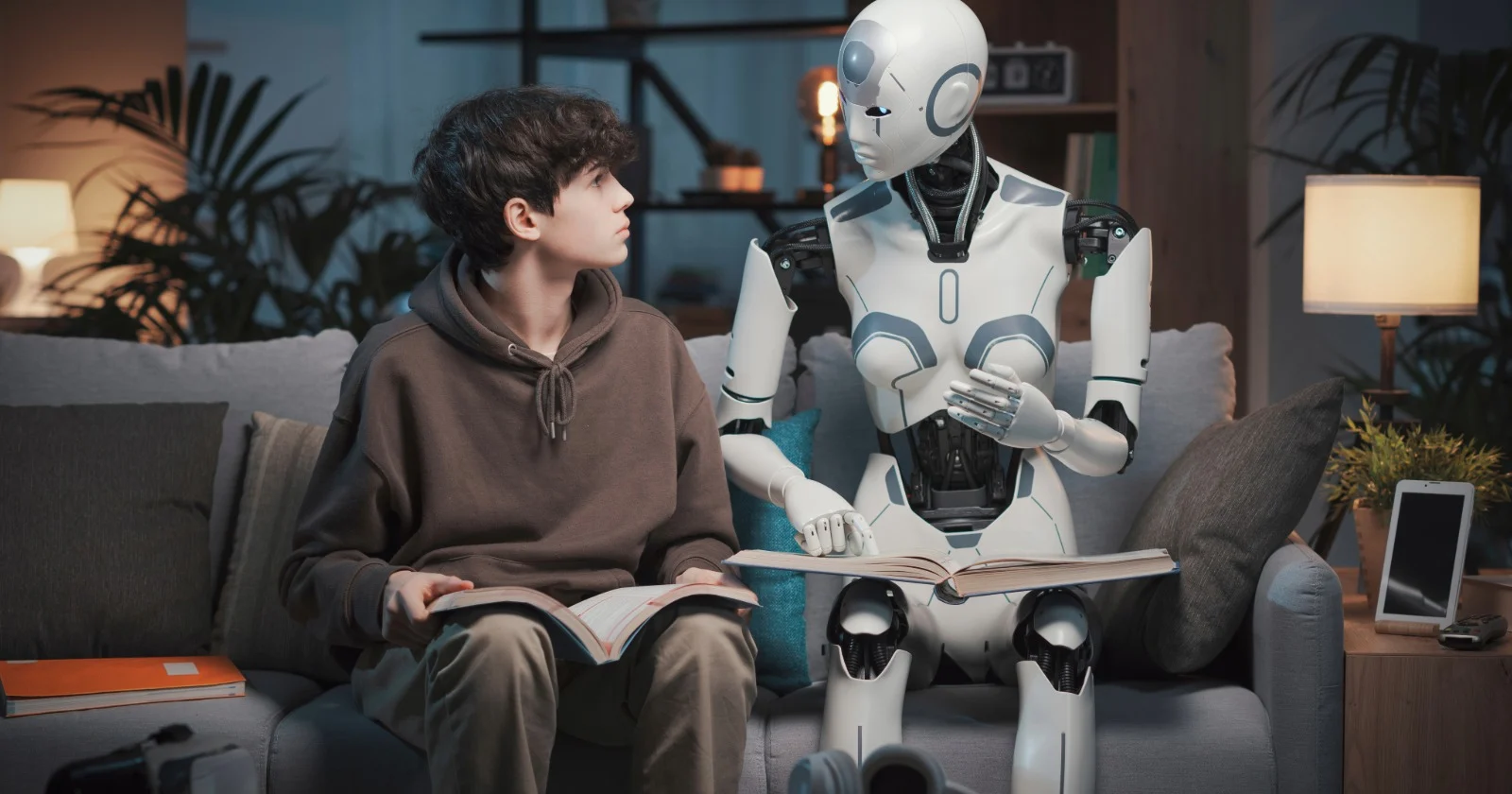
Use it to practice, not to produce. The distinction that holds up is between AI that makes a student do the thinking and AI that does the thinking for them. Generating practice questions, asking for an explanation of a concept a different way, getting feedback on a draft the student wrote, working a problem step by step: those build understanding. Producing the essay, the lab summary, or the answer set does not, and it is also the use most likely to violate a school policy. Google's own study-notebook and quiz features sit on the useful side of that line, which is a point in their favor.
Verify everything factual. These systems still assert wrong things with complete confidence, and students are unusually likely to take that at face value. A recent analysis found AI search results routinely misinform students on school-related questions, which we wrote about in why AI search is a minefield for schools. The habit worth teaching: if you would cite it, check it against a real source first. The Kentucky district that handed out planners with garbled state names is a reminder that adults fall for this too.
Do not put private information in. Full names, addresses, health details, other students' information, and anything from a school record do not belong in a chatbot prompt. This is worth saying plainly to a middle schooler once, because the tools invite conversational sharing.
Watch what it replaces. The skill AI most easily erodes is tolerance for difficulty, which is exactly the thing schoolwork is meant to build. Some districts have gone as far as requiring handwritten first drafts partly to see the thinking happen. If a student cannot start an assignment without opening a chatbot, that is worth noticing regardless of any policy.
The bigger question
Every company selling into schools right now describes its AI as a tutor. The evidence on whether it functions as one is genuinely thin, and the education world is running the experiment live, from districts adopting these tools wholesale to private schools built around AI instruction to parents pushing the other way. Teenagers themselves have been more thoughtful about this than most adults, as when 98 teens wrote an AI school policy that legislators have not managed.
These tools are in your child's pocket and increasingly in their assignments. The useful thing you can do is establish what your school permits, insist on the practice-not-produce distinction, and make verification a habit before it becomes a problem. For the longer view, see whether AI will ever replace teachers.
Sources
Google: Back to school 2026 education announcements
Guidance on student AI use reflects allk12's reporting on district AI policies and academic integrity practices. Confirm your own school's rules with the school directly.