



About 1 in 5 students ages 12 to 18 say they were bullied at school, according to the most recent federal survey. Fewer than half of the bullied students told anyone at school. Among students who were bullied, 44% reported it to a teacher or another adult there, the National Center for Education Statistics found.
"Not all children who are bullied or are bullying others ask for help," says StopBullying.gov, the federal government's bullying resource.
Signs your child may be bullied
StopBullying.gov tells parents to look for changes in their child, while warning that not every bullied child shows them. The signs it lists:
- Injuries your child can't or won't explain
- Lost or destroyed belongings, such as clothing, books, electronics, or jewelry
- Frequent headaches or stomachaches, feeling sick, or faking illness
- Changes in eating, like suddenly skipping meals or binge eating. Kids may come home hungry because they did not eat lunch.
- Trouble sleeping or frequent nightmares
- Falling grades, losing interest in schoolwork, or not wanting to go to school
- A sudden loss of friends or avoiding social situations
- Feeling helpless or lower self-esteem
- Self-destructive behavior, such as running away, self-harm, or talking about suicide
These signs can also point to other problems, such as depression or substance use, the site notes. Talking with your child is how you find out which it is.
What bullying looks like now
The share of students who say they were bullied has dropped over the past decade. It was 28% in 2010-11, 22% in 2018-19, and 19% in 2021-22, according to NCES, which uses data from a federal crime survey of students.
Middle school is the peak. Sixth graders reported the highest rate, at 27%, followed by eighth graders at 25%. Eleventh graders reported the lowest rate, 10%. Girls reported being bullied more often than boys, 22% compared with 17%.
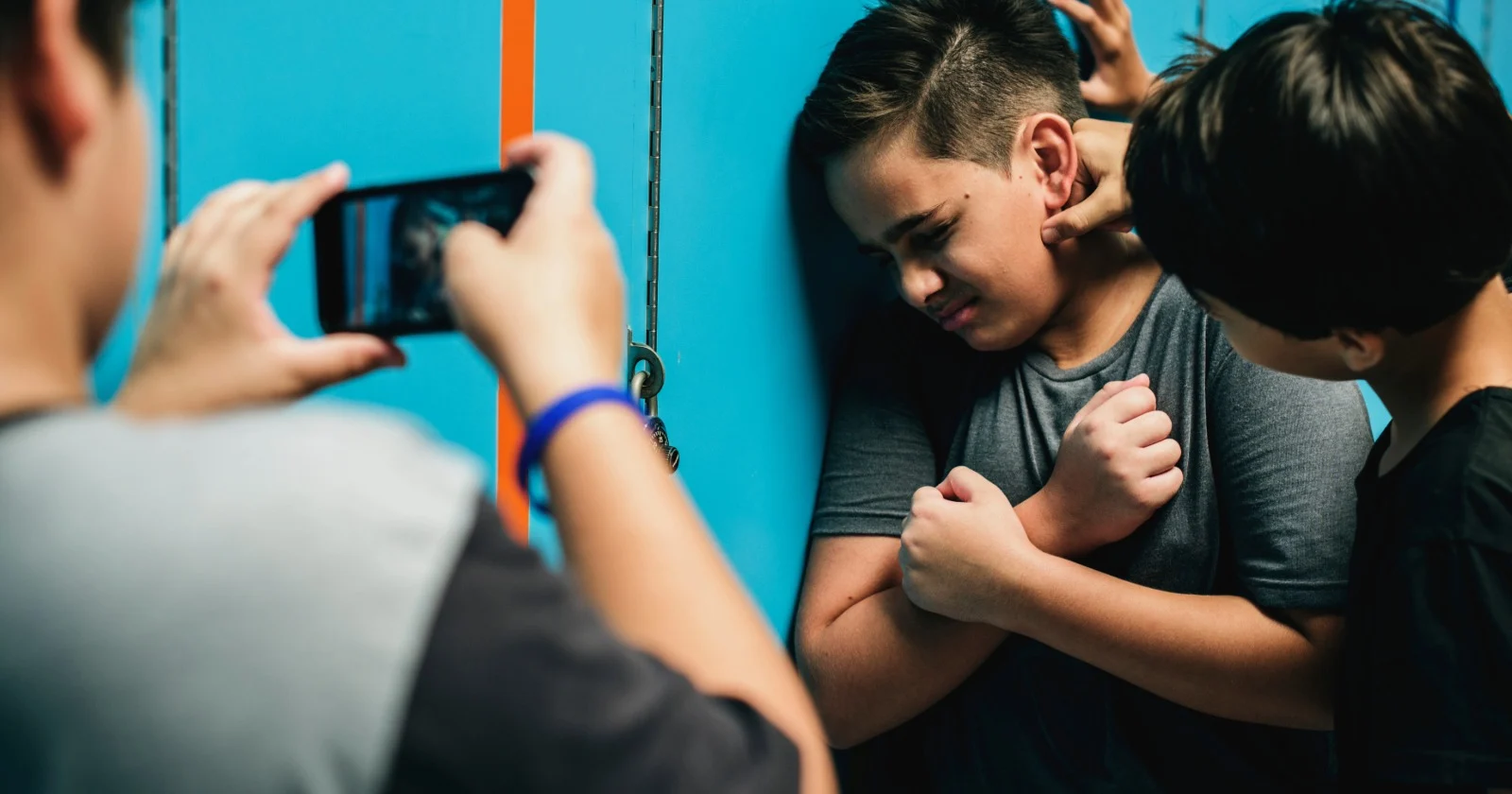
The most common forms were being the subject of rumors, reported by 13% of students, and being made fun of, called names, or insulted, reported by 12%. About 5% were pushed, shoved, tripped, or spit on. Among students who were bullied, 22% said it happened online or by text.
Why kids don't tell
StopBullying.gov lists several reasons children keep bullying to themselves. They may want to handle it alone to feel in control again, or worry about being seen as weak or a tattletale. They may fear the bully will retaliate. Some are embarrassed about what is being said about them. Others already feel isolated and think no one would understand, or worry about losing the friends they have.
Who to contact
If your child is being bullied at school, StopBullying.gov lists these contacts, in this order:
- Your child's teacher
- The school counselor
- The principal
- The district superintendent
- Your state department of education
If the bullying is based on race, color, national origin, sex, disability, or religion and the school is not addressing it, the site also points families to the U.S. Department of Education's Office for Civil Rights and the Justice Department's Civil Rights Division. For bullying online, it recommends documenting the messages and reporting them to the app or platform.
If a child is in immediate danger, call 911. If a child seems hopeless or is talking about suicide, call or text 988, the Suicide and Crisis Lifeline.
Our guide to who runs your school district and who to call explains each of those roles. If the problem is the other way around, see what to do if your kid is the bully.
Sources
StopBullying.gov: Warning Signs for Bullying
StopBullying.gov: Get Help Now
National Center for Education Statistics, Condition of Education: Student Bullying