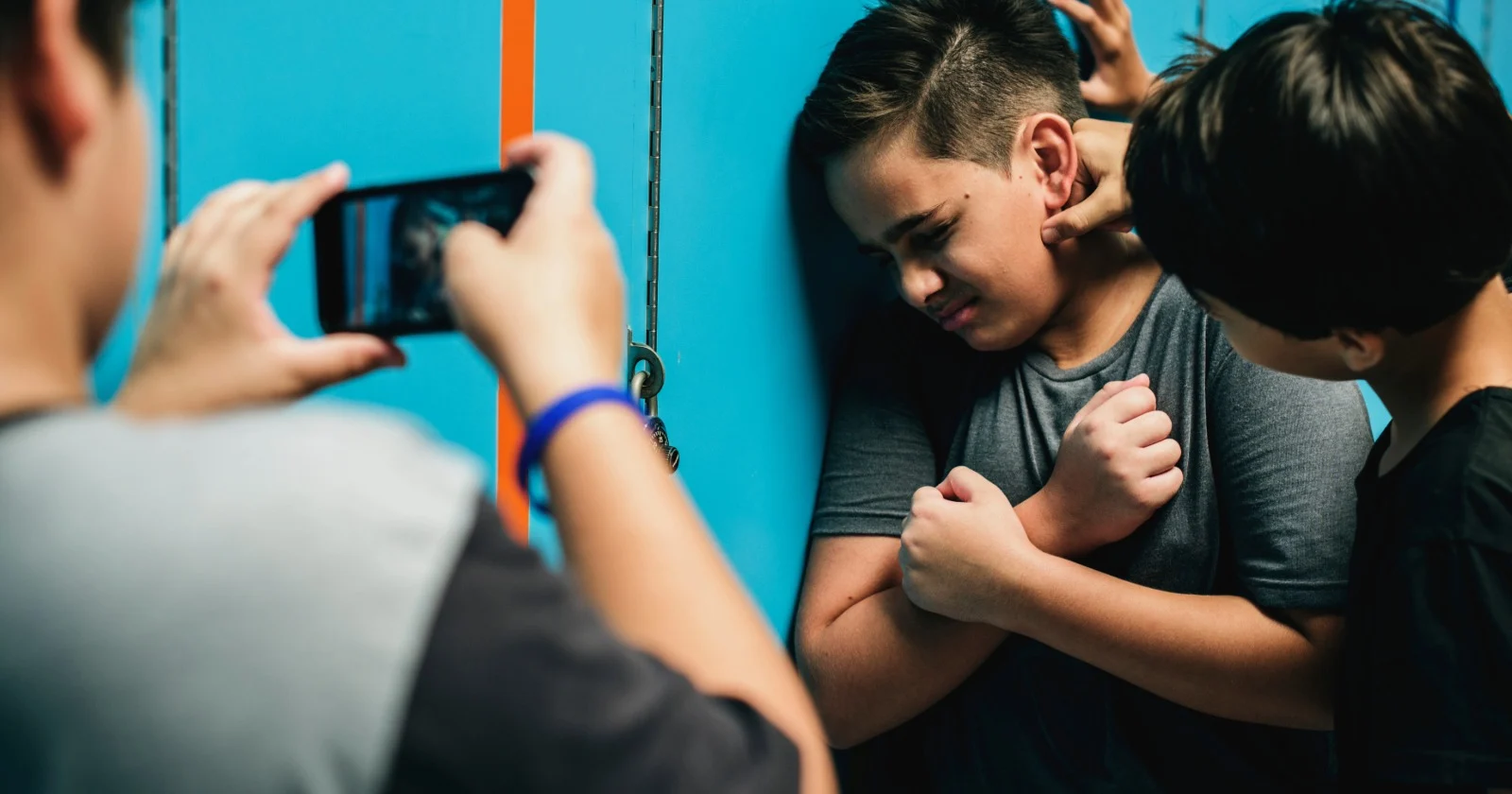




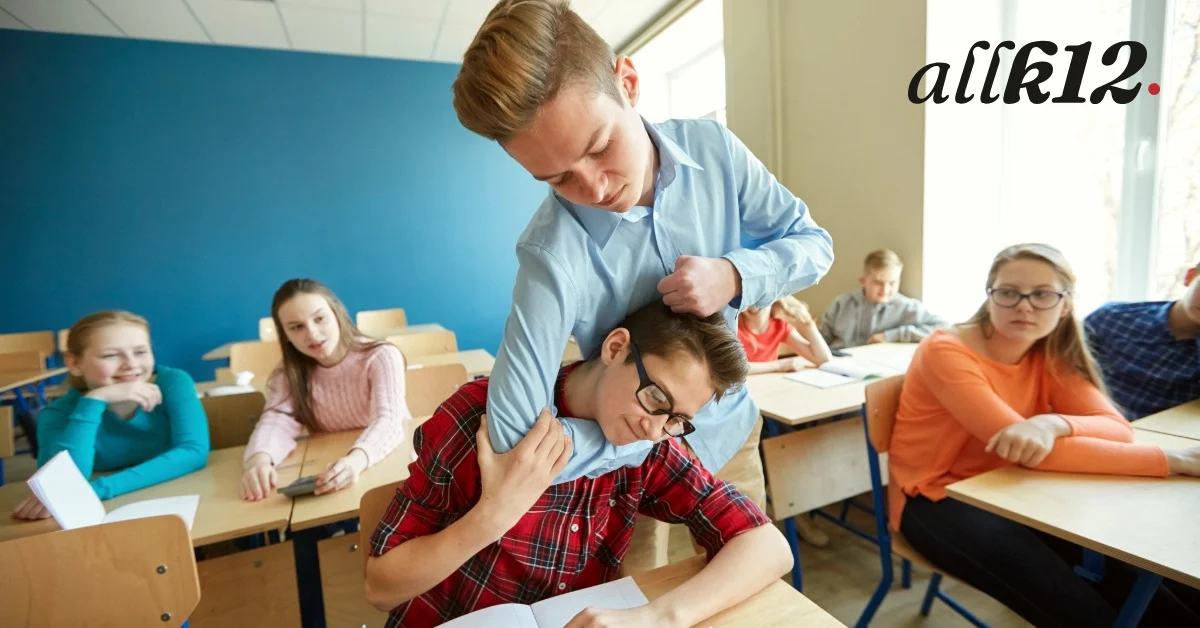
The call from school that your child has been bullying another student is one of the harder ones to receive. The impulse for most parents is immediate defense: my kid wouldn't do that, there must be a misunderstanding, the other child is probably exaggerating. Sometimes that impulse is partially correct. Often it isn't, and the parents who stay in the defensive posture longest tend to produce the worst outcomes for their own children.
A child who bullies others and whose parents run interference rather than intervene meaningfully is a child who learns that behavior has no real consequences and that adults will protect them from accountability. That lesson does not stay in the cafeteria. It travels with them into high school, into relationships, into workplaces. The parent who takes the call seriously and responds thoughtfully is not punishing their child. They're doing the harder and more important work of actually raising them.
First, Get the Full Picture Before You React
Before you respond to anyone, including your child, you need to understand what actually happened. Not your child's version alone, not the school's summary alone, but as complete a picture as you can assemble.
Ask the school for specifics: what behavior was observed, by whom, over what period of time, and what evidence exists. A single incident and a pattern of behavior over weeks are different situations that warrant different responses. Physical bullying, verbal bullying, social exclusion, and cyberbullying have different dynamics and different intervention paths. You need to know which you're dealing with.
Then talk to your child, but do it carefully. The goal of this conversation is information, not confession. Come in with genuine curiosity rather than accusation: tell me what's been going on with you and this other kid. What happened? How did it start? A child who feels they're being interrogated will shut down or tell you what they think you want to hear. A child who feels their parent is genuinely trying to understand is more likely to give you something real to work with.
Expect minimization. Almost every child who has been bullying will describe their behavior as less serious than it was, reframe themselves as reacting rather than initiating, or present the targeted child as having done something to deserve it. That's not necessarily dishonesty in the way adults understand it. Kids genuinely reconstruct their own behavior in more flattering terms. Your job is to listen to the reconstruction and also hold the information the school gave you without letting the two collapse into each other prematurely.
Don't Confuse the Behavior With the Child
This sounds like a platitude but it has a practical application that matters a lot in how you handle the next several weeks. A child who has been bullying is not a bully in the sense of a fixed identity. They're a child who has been using a particular set of behaviors, for reasons that are worth understanding, and who can learn different ones.
Research on children who bully consistently shows that the behavior is driven by something: a need for social status, a response to being bullied themselves in a different context, poor impulse control, a lack of empathy that is developmental rather than fixed, or family dynamics that model power-based conflict resolution. Understanding which of those is in play changes what intervention actually helps.
A child who is bullying to establish social position in a new school needs a different response than a child who is bullying because they're being bullied at home or in a different social context. A child who lacks genuine empathy development needs different support than one who understands perfectly well that their behavior hurts people but hasn't connected that understanding to their actions in the moment.
Treating bullying behavior as evidence of a bad kid, or as something to be punished into extinction, addresses the symptom without the cause. Consequences matter and are appropriate. But consequences without understanding of the underlying driver rarely change the behavior long-term.
Take the School's Report Seriously Even If Your Child's Version Differs
Children's accounts of their own behavior are unreliable in predictable ways. They minimize their role, maximize provocation from others, and edit out the parts that make them look worst. This isn't unique to kids who bully. It's how most people reconstruct their own behavior, especially when they know they're in trouble.
When the school's account and your child's account differ significantly, the default assumption should not be that the school is wrong. It should be that you don't yet have the full picture and need more information. Ask to see documentation if it exists: witness accounts, screenshots if the bullying was digital, incident reports. Not to build a legal case against the school but to understand what actually happened.
Parents who publicly side with their child against the school before they have complete information often find themselves in an untenable position when more evidence surfaces. More importantly, they send their child a message that they will be protected from the consequences of their behavior regardless of what that behavior was. That message is genuinely harmful even when it feels like loyalty.
Understand What the School Is and Isn't Going to Do
Schools are required to address bullying, and most states have specific anti-bullying statutes that define what schools must do when bullying is reported. In Georgia, the Student Safety Act requires schools to investigate bullying reports, notify parents of both involved students, and implement intervention plans. Similar requirements exist in New Jersey, which has one of the most comprehensive anti-bullying frameworks in the country, and across most other states.
What schools are less equipped to do is the deeper behavioral work that actually changes the underlying dynamic. A school can implement consequences, monitor interactions, and separate students. It generally cannot provide the kind of sustained therapeutic or behavioral support that addresses why a child is bullying in the first place. That work typically has to happen outside school, through counseling, family therapy, or both.
Ask the school specifically: what is the intervention plan for my child, not just the consequence? What support is available to help them understand the impact of their behavior and develop different responses? Some schools have counselors or social workers who do meaningful work in this area. Others have limited resources and their response is primarily punitive. Knowing which situation you're in shapes what you need to supplement on your end.
Have the Empathy Conversation, Not Just the Rules Conversation
Most parents, when they find out their child has been bullying, have a rules conversation: this behavior is not acceptable, these are the consequences, it cannot happen again. That conversation is necessary. It is not sufficient.
The more important conversation is about impact. Not "what you did was wrong" but "here is what it felt like to be on the other end of what you did." Specific, concrete, and as emotionally real as you can make it. Research on bullying intervention consistently shows that empathy activation, getting the child to genuinely connect with the experience of the person they hurt, is more effective at changing behavior than rule enforcement alone.
This is harder than it sounds with some kids. Children who have low natural empathy or who have learned to rationalize the distress of others won't connect immediately with this framing. But the attempt matters, and repeated honest conversations about impact over time produce more change than repeated consequence escalation without the underlying work.
Ask your child directly: if someone did this to you, what would that feel like? What would you want them to understand about how it affected you? Then connect that answer to the other child. That's what you did to someone. That's what they're feeling. Most children, even ones who have been bullying persistently, can access that connection if a parent creates the conditions for it rather than leading with punishment.
Address What's Driving the Behavior
Bullying behavior in children almost always has a driver that the behavior is serving. Identifying that driver is the most important diagnostic step, and it's the one parents most often skip because it requires uncomfortable questions.
Is your child being bullied in another context, at a different school, online, in your neighborhood, or at home? Children who experience powerlessness in one context sometimes recreate the power dynamic in reverse in another. A child who is bullied by an older sibling, or who lives in a household where coercive control is the dominant mode of conflict resolution, is learning a model for how power works that shows up in their peer relationships.
Is your child struggling socially in ways that aren't visible from the outside? Sometimes bullying behavior is an attempt to establish or maintain social standing that feels threatened. The child who appears socially dominant to a teacher or parent may be experiencing significant social insecurity underneath that behavior.
Is there something else going on: a learning struggle, anxiety, a transition that's been harder than it looks, something at home that's disrupting their functioning? Academic stress, family instability, and social anxiety all show up in behavior, and bullying is one of the ways they show up in kids who externalize rather than internalize.
Talking to a school counselor about what they're observing is a starting point. For persistent bullying behavior that doesn't respond to school intervention and parental conversation, a referral to a therapist who works with children and adolescents is worth taking seriously. Not as a last resort but as a proactive step. The behavior is telling you something. A professional can help figure out what.
Monitor Without Becoming a Warden
After the initial intervention, you need to know whether the behavior has actually changed. That requires some monitoring, but the form it takes matters.
Check in with your child regularly about their social life and relationships, not in an interrogating way but in the ongoing way of a parent who is paying attention. Ask about their friendships, how things are going with specific peers, whether there has been any conflict at school. These questions normalize the conversation and give you a window into what's happening without signaling that you're running surveillance.
Keep a line of communication open with the school. A brief email to the counselor a few weeks after the initial incident asking how things appear to be going is appropriate and signals that you're engaged. Schools respond better to parents who follow up than to parents who disappear after the initial meeting. It also gives you early warning if the behavior is continuing in ways your child isn't telling you about.
If the bullying included a digital component, phone and app monitoring during the intervention period is reasonable and worth doing transparently rather than secretly. Tell your child you'll be checking. The visibility itself changes behavior, and handling it openly rather than covertly models a kind of accountability that is itself part of the lesson.
Think About Whether the Social Environment Is Part of the Problem
Sometimes bullying behavior is driven or reinforced by a peer group dynamic that your child is embedded in. A group of kids where social status is maintained through exclusion, mockery, or targeting weaker peers creates pressure on every member to participate, including members who wouldn't engage in that behavior in a different social context.
If your child's bullying appears to be happening primarily within a specific peer group, it's worth having an honest conversation about that group and what your child gets from it versus what it's costing them. This isn't about forbidding friendships, which rarely works and often backfires. It's about helping your child develop enough perspective on the dynamic to make more conscious choices within it.
Sometimes a change in extracurricular environment, a new activity that puts your child in a different peer context, produces more change than any direct intervention on the bullying behavior. A child who finds a group where their status doesn't depend on putting others down often changes their behavior without the change ever being explicitly addressed.
Find your school's page on allk12 and look at the discussion board. Parents navigating similar situations at the same school sometimes share what worked and what didn't in ways that general advice can't replicate. The specific culture of a school, who the counselors are and how they work, what the administration's approach looks like in practice: that local knowledge matters when you're trying to figure out how to handle something like this in a specific building with specific people.