Lawmakers in at least 23 states considered 40 proposals this year governing federal immigration officers and K-12 public schools, and 11 of them became law by the start of this school year, according to an NPR analysis published November 12.
Most of the proposals pointed the same way. According to the NPR analysis, 35 of the 40 sought to limit federal officers' access to K-12 schools and students. One, in Mississippi, sought to make sure schools cooperate with U.S. Immigration and Customs Enforcement (ICE). The other four (40 minus 35 minus 1) did not explicitly limit or increase access or cooperation.
The bills followed a federal policy change at the start of President Trump's second term. On January 21, 2025, the U.S. Department of Homeland Security (DHS) said Acting Secretary Benjamine Huffman had rescinded guidelines that limited ICE and Customs and Border Protection enforcement in or near "sensitive" areas. "Criminals will no longer be able to hide in America's schools and churches to avoid arrest," a DHS spokesperson said in the statement.
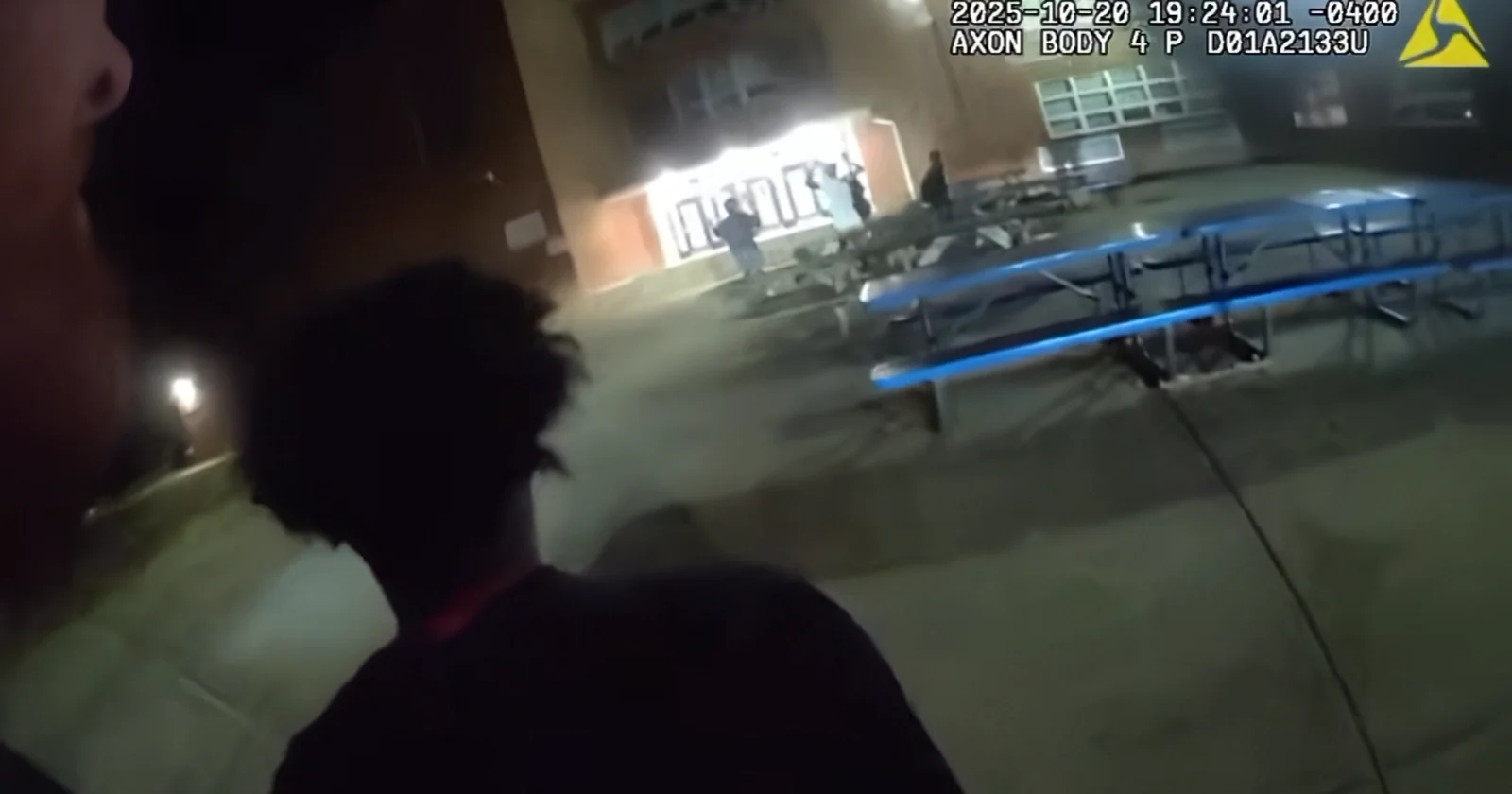
DHS has since said ICE does not raid or target schools. "ICE is not going to schools to make arrests of children," the department said in a September 9, 2025, statement. A K-12 Dive tracker of ICE encounters reported on school grounds since January 21, 2025, listed 15 dated entries in seven states as of October 27, 2026, the latest at Stanton Middle School in Wilmington, Delaware. The tracker includes private schools and early childhood centers.
Thomas Saenz, president and general counsel of the Mexican American Legal Defense and Educational Fund, said the end of the federal sensitive locations policy is likely pushing many states to set their own protections, "belts and suspenders, as they say."
The 23 states and what they considered
The table rebuilds NPR's state graphic. In NPR's labels, "restricts" means limiting immigration enforcement in schools, "allows" means ensuring cooperation, and "other" means neither explicitly.
| State | Proposal type | Proposals | Enacted | Enacted law (state record) |
|---|---|---|---|---|
| Arizona | Restricts | 2 | 0 | None |
| Connecticut | Restricts | 2 | 1 | Not verified |
| Delaware | Restricts | 1 | 0 | None |
| Florida | Restricts | 1 | 0 | None |
| Georgia | Restricts | 2 | 0 | None |
| Hawaii | Mix (restricts, other) | 2 | 0 | None |
| Kansas | Restricts | 1 | 0 | None |
| Maine | Restricts | 1 | 1 | LD 2106 (Public Law 2025, ch. 770): schools must adopt a policy limiting consent to immigration-enforcement entry and records access |
| Maryland | Restricts | 1 | 1 | SB 810 (Chapter 161, Maryland Values Act of 2026): bars public school personnel from certain immigration enforcement |
| Minnesota | Restricts | 5 | 0 | None |
| Mississippi | Allows | 1 | 1 | HB 538 (Chapter 447): requires state and local government entities to cooperate with federal immigration enforcement |
| Missouri | Restricts | 1 | 0 | None |
| Nebraska | Restricts | 1 | 0 | None |
| New Jersey | Restricts | 1 | 1 | A6308 (P.L.2025, c.401, Safe Communities Act): public schools must follow attorney general model policies for sensitive locations |
| New Mexico | Restricts | 1 | 1 | Not verified |
| New York | Restricts | 3 | 0 | None |
| Oregon | Mix (restricts, other) | 3 | 3 | Not verified |
| Pennsylvania | Restricts | 2 | 0 | None |
| Tennessee | Mix (restricts, other) | 2 | 0 | None |
| Vermont | Mix (restricts, other) | 2 | 1 | Not verified |
| Virginia | Restricts | 3 | 1 | Not verified |
| Washington | Restricts | 1 | 0 | None |
| West Virginia | Restricts | 1 | 0 | None |
| Total (23 states) | 40 | 11 |
Source: NPR analysis of 2026 state proposals, from the data behind NPR's November 12, 2026, graphic. The 23 rows add up to 40 proposals and 11 enacted, matching NPR's totals. Vermont's enacted proposal was its restricting one, per NPR. NPR does not name bills; the last column comes from the Maine, Maryland, Mississippi, and New Jersey legislatures, and "Not verified" marks enacted proposals that could not be matched to a state record.
Nine states passed at least one proposal: Connecticut, Maine, Maryland, Mississippi, New Jersey, New Mexico, Oregon, Vermont, and Virginia. Oregon passed all three of its proposals, so the count is eight states with one law each plus Oregon's three, or 11. That is 11 of 40, about 28%.
Some of those states already had rules on the books. At least eight states had laws on immigration enforcement and K-12 schools at the start of 2026, and Connecticut, Maryland, and Oregon were among those that considered more this year, according to NPR.
The enacted laws work in different ways. Under Maine's LD 2106, public schools must adopt an attorney general model policy, or an equivalent, that limits their power to voluntarily let law enforcement into nonpublic areas or records for immigration enforcement, according to the Maine Legislature's enacted law summary.
Maryland's Senate Bill 810, approved April 28, 2026, bars public school personnel from certain immigration enforcement and requires certain public school personnel to notify the county superintendent or a designee when told of certain immigration enforcement at a school, according to the Maryland General Assembly. New Jersey's Safe Communities Act, approved January 20, 2026, requires the state education commissioner to make public schools follow the attorney general's model policies for sensitive locations, or stronger ones.
Mississippi went the other way. Its HB 538, effective July 1, 2026, requires state agencies, counties, cities, other political subdivisions, and colleges to cooperate "to the fullest extent possible" with federal immigration enforcement, according to the bill text.
Plenty of proposals stalled. West Virginia, Hawaii, and Kansas each tried to designate schools as sensitive locations, and none of the three passed, NPR found. Missouri considered limiting school cooperation with immigration enforcement this spring, even though an existing state law bars municipalities from adopting sanctuary policies and requires cooperation, according to NPR.
Tennessee weighed bills from both sides. Rep. Jason Zachary (R-Knoxville) backed a measure that would have required schools to report students who are undocumented. "As legislators, we cannot make informed decisions without data," Zachary said at a March hearing. That bill did not reach a final vote.
House Bill 1482, sponsored by Rep. Gabby Salinas (D-Memphis), would have barred schools and other sensitive areas from being used as staging areas, processing sites, or bases for immigration enforcement. It failed in a House subcommittee on March 17, 2026, according to the Tennessee General Assembly. "Everybody deserves to have a great learning environment, and it's hard to teach when you are worried that one of your students is going to be taken," Salinas said.
NPR's count excludes bills that would let public schools charge tuition to students who are not U.S. citizens or legal immigrants. Those would challenge Plyler v. Doe, the Supreme Court ruling that all children, regardless of immigration status, have a right to a free K-12 public education.
How schools without a state law are handling it
After this year's immigration crackdown in Minneapolis, Minnesota lawmakers considered at least five proposals, from stricter warrant requirements to requiring schools to write procedures for law enforcement requests, NPR reported. None reached a final vote, and NPR could not find an earlier Minnesota law on the subject.
That leaves district rules. Kenny Newby, principal of Justice Alan Page Elementary School in Maplewood, said his district's policy calls for staff to welcome ICE officers, ask for required paperwork, and notify school administrators, who then contact district leaders. Officers with a warrant would be sent to the district office. "We would not allow them to have direct contact with students," Newby said. The school enrolled 804 students in 2024-25, according to allk12's analysis of federal data.
Rob Reetz, principal of Mounds View High School in Arden Hills, said a state law could simplify dealings between districts. Right now, he said, if one of his school's teams travels to another district and ICE shows up at the game, it is unclear which district's protocols the adults should follow. Mounds View enrolled 1,833 students in 2024-25.
In Laredo, Texas, it is not unusual or alarming when ICE agents are spotted near a school, said Andrea Garza, a school leader with United Independent School District. If agents arrive without a warrant or subpoena, they don't get in, Garza said. "It is more just verifying that we are all following the law," she said.
Texas law bars local entities from obstructing federal immigration enforcement, but NPR found no state law that directly addresses how much access these officers should have in K-12 public schools. United ISD had 52 schools and 40,742 students in 2024-25, according to allk12's analysis of federal data.
Sources
NPR: At least 23 states considered laws governing ICE and schools this year
NPR: Almost half of all states considered laws around ICE and schools in 2026 (graphic)
U.S. Department of Homeland Security: Statement from a DHS Spokesperson on Directives Expanding Law Enforcement and Ending the Abuse of Humanitarian Parole
U.S. Department of Homeland Security: DHS Sets the Record Straight: ICE Does Not Raid Schools
K-12 Dive: ICE activity on K-12 school grounds
Maine Legislature: Judiciary Committee enacted law summaries, 132nd Legislature, Second Regular Session
Maryland General Assembly: SB 810, Maryland Values Act of 2026
Mississippi Legislature: House Bill 538, 2026 Regular Session (as sent to governor)
New Jersey Legislature: P.L.2025, c.401, Safe Communities Act
Tennessee General Assembly: HB 1482
School and district enrollment from allk12's analysis of National Center for Education Statistics (NCES) Common Core of Data, 2024-25.