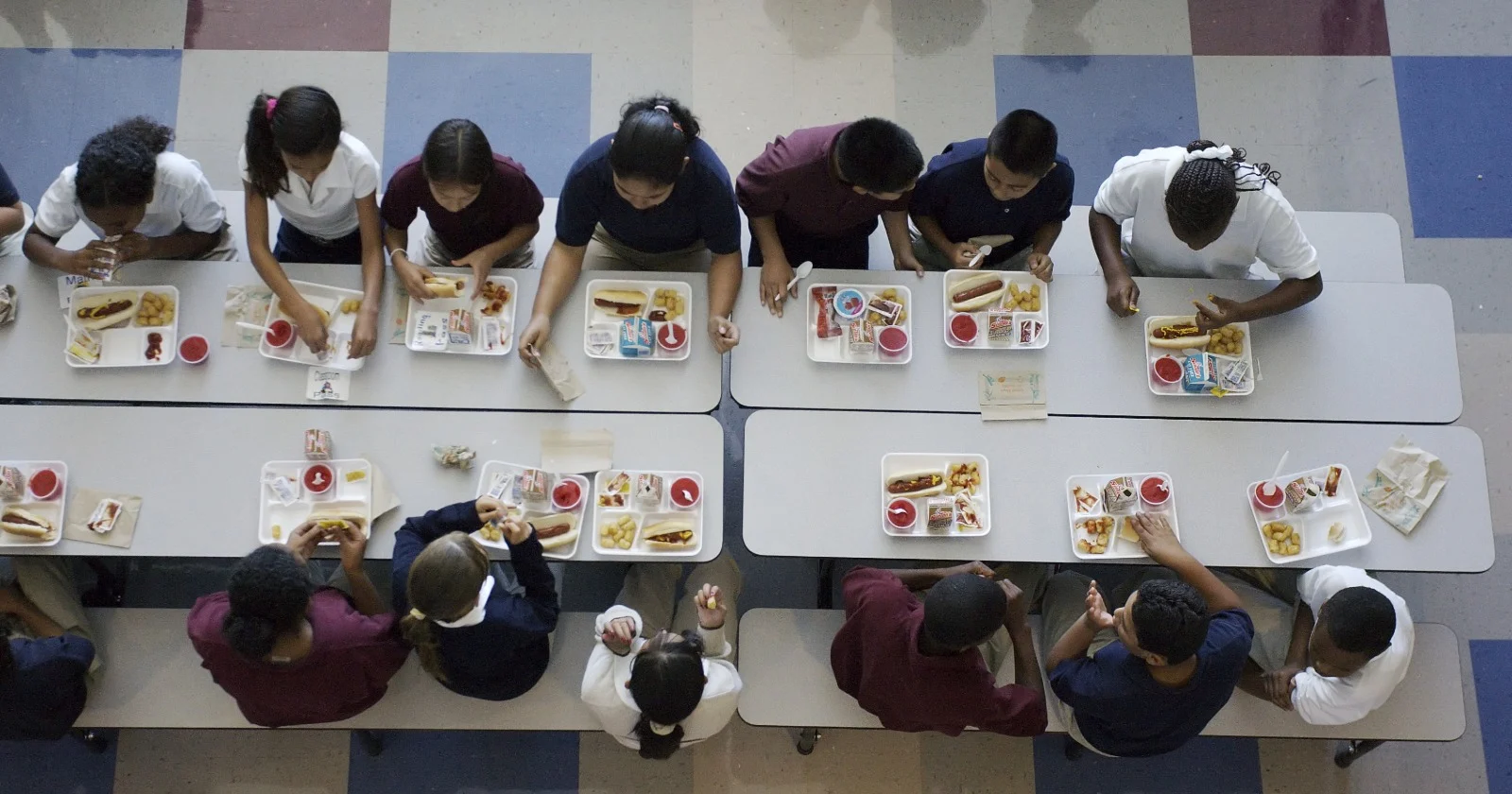




The screen time limits Los Angeles Unified approved in the spring are going into action this week. First grade and under: no screens at all. The rest of elementary school gets limits in November, and middle and high school follow later in the year. Students in early education through first grade will get no screen time, while older grades are capped, from 100 minutes a week in grades 2-3 up to 90 minutes per subject per week in high school. Homework counts toward the totals. We covered the policy when the board passed it. LAUSD is one of the largest school districts in the country with more than 400,000 students.
The teachers implementing it are not all ready. Armaghan Khan teaches science at Johnnie Cochran Jr. Middle, a school of about 440 students, and told NPR that roughly 75% of his work ran through a screen. That wasn't ideology. His students run large-scale experiments on laptops, like a car crash simulator for Newtonian forces, because "we have a lab space, but we do not have a lab budget." Of the new rules he said, "I don't feel like I'm being set up for success."
Pia Sadaqatmal, the new chief academic officer running the rollout, called it a transition year. "There is no perfect solution on how to roll out to a school district the size of ours," she said, adding that a district among the first to try this at scale will be "learning along the way at each phase."
Software on student devices logs weekly screen time but never shuts a device off. The district combs the data at year's end to see what worked and adjust. Virtual textbooks are exempt, and teachers are still sorting out where everything else lands.
The sharpest detail in NPR's reporting comes from Kirti Baranwal, a 28-year teacher librarian at William Jefferson Clinton Middle. After the district banned phones last year, she had students self-report their daily screen time. Many said 8 to 10 hours. "And I was like, when are you sleeping?" She supports limits in general but keeps landing on the question the policy doesn't answer: "What is it that we want kids doing?" Research shows kids without sports teams or arts programs fill the empty hours with their phones, so turning screens off at school leaves a hole something has to fill.
LAUSD was a national leader in putting devices into classrooms a decade ago, it's now among the first to pull them back at scale, and the answer to Baranwal's question is scheduled to emerge from a year of tracking data nobody has yet.
Sources
NPR: The school year begins in LA with one big change: limited screen time
School figures from allk12's analysis of National Center for Education Statistics (NCES) data, SY 2024-25.