



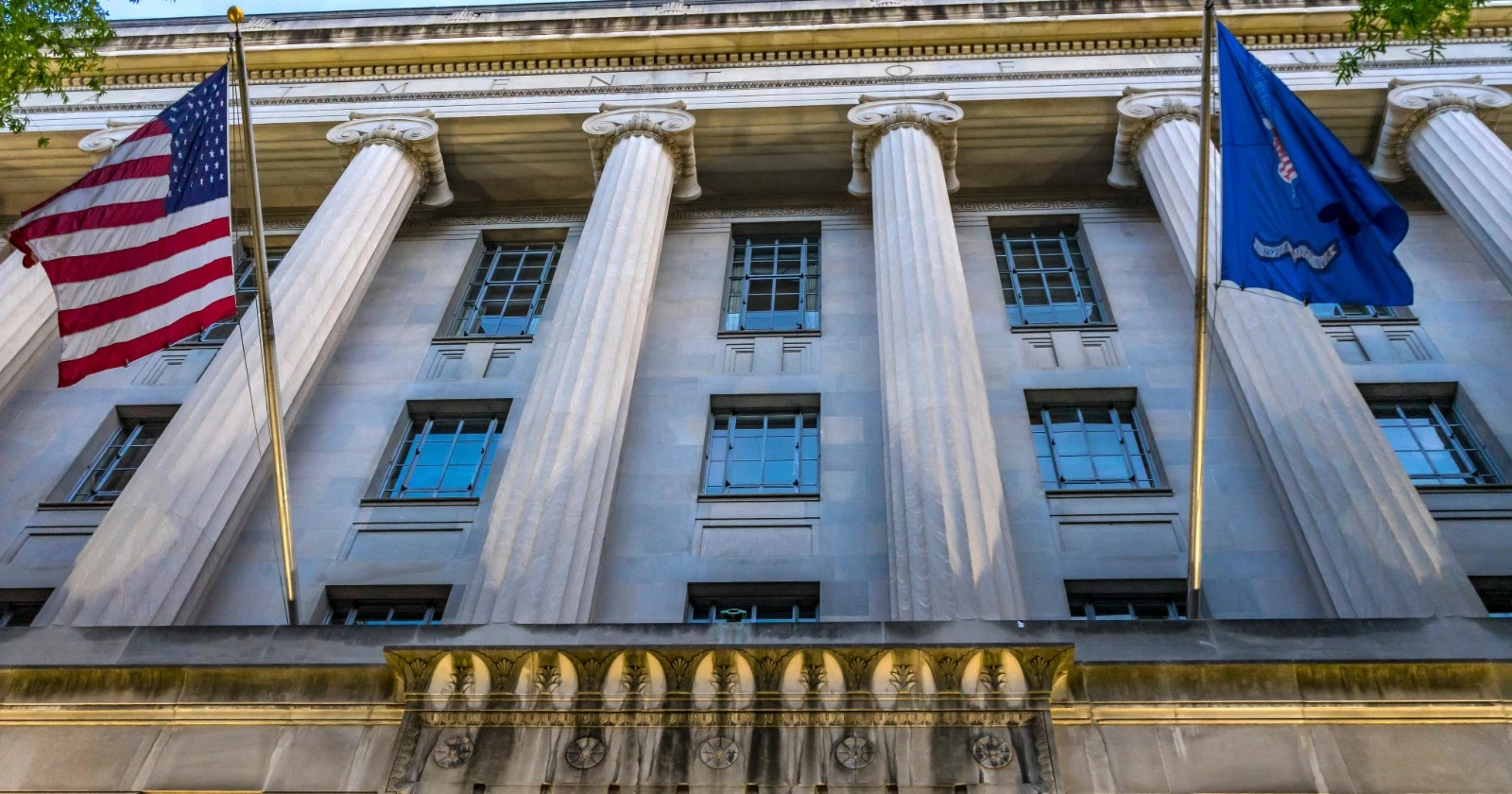
The Justice Department said Thursday that it has ended more than 50 school desegregation cases, some of which had been on court dockets for more than half a century. Most of them were in the Deep South.
Department records show 57 desegregation orders have been dismissed since President Trump's second term began, The New York Times reported, though the paper could not confirm late Thursday that a judge had ruled in each one. The department's announcement named cases stretching from Waterbury, Connecticut, to Flagler County, Florida.
Georgia had the most dismissals, with 15. Nearly four of every five were in five Southern states.
| State | Desegregation orders dismissed |
|---|---|
| Georgia | 15 |
| Mississippi | 13 |
| Louisiana | 11 |
| Alabama | 5 |
| Florida | 5 |
| South Carolina | 1 |
| Arkansas, Arizona, Connecticut, Missouri, North Carolina, Tennessee, and Texas | 1 each |
| Total | 57 |
Source: Justice Department records, as reported by The New York Times.
"In this administration, we are ending prolonged federal oversight of these school districts because the effort does not reflect the reality of those classrooms today," said Harmeet K. Dhillon, the assistant attorney general who runs the department's Civil Rights Division. "In some cases, school districts have been under federal control for more than 60 years. Now these local school districts can redirect taxpayer dollars back to benefitting students, instead of funding onerous and outdated consent decrees."
The cases grew out of lawsuits the department brought in the 1960s and 1970s to enforce Brown v. Board of Education, the 1954 Supreme Court ruling that struck down racially separate schools. Many ended in consent decrees that required districts to keep reporting to the federal government. The department says it is reviewing each remaining case and will seek dismissal once it concludes a district has reached unitary status, the legal term for a district that has done away with its old dual system. As of last year, more than 130 school systems were still under department desegregation orders, according to court records cited by the Times.
Alabama Attorney General Steve Marshall thanked Dhillon on social media for ending "outdated orders" in his state. "This is just the beginning," he wrote. "We will keep working until every school district in Alabama is free from unnecessary consent decrees."
Civil rights groups see it differently. The NAACP and others have argued that desegregation orders do more than change who sits in which classroom, because they can also require equal funding, access to good facilities, and fair representation in advanced placement courses. Democrats on the House Education and Workforce Committee said on social media Thursday that "schools are just as segregated today as they were in the late 1960s" and accused the administration of "turning us back toward the Jim Crow era."
School segregation has grown in recent years, partly because of a 1991 Supreme Court ruling that made it easier for districts to be released from court orders, according to a 2024 study in the American Journal of Epidemiology cited by the Times. The study found school segregation significantly affects racial gaps in children's health.
The department's announcement named two of the districts. The Waterbury School District enrolls 17,123 students in 29 schools, and 62.6% of them are Hispanic, 21.2% Black, and 10.0% white, according to allk12's analysis of federal data. The Flagler County school district has 13,521 students, 56.6% white, 19.5% Hispanic, and 13.5% Black.
In Louisiana, the Concordia Parish school system operated under a court-ordered desegregation plan dating to 1965 until a federal appeals court ended the oversight in July, the Times reported. The district's 2,911 students are 48.0% Black and 44.3% white. Vidalia High School had 364 students in 2024-25.
For current enrollment patterns, see allk12's report on the most segregated public schools.
Sources
U.S. Department of Justice: Justice Department ends over 50 half-century-old desegregation cases
The New York Times: Justice Department Scraps Dozens of School Desegregation Cases
American Journal of Epidemiology: The end of court-ordered desegregation and US children's health
Enrollment and demographic figures from allk12's analysis of National Center for Education Statistics (NCES) Common Core of Data, 2024-25.