
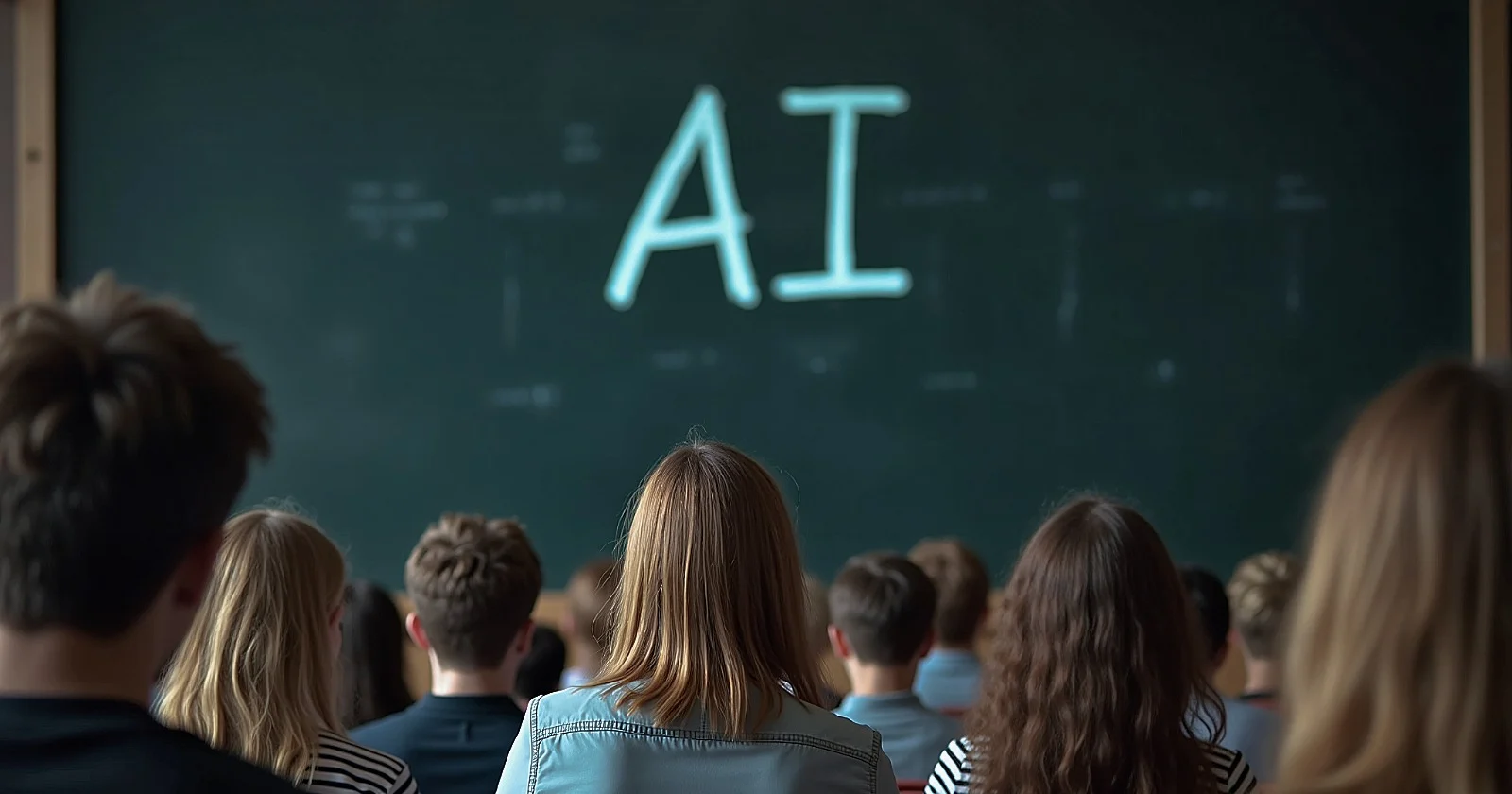
A private school opening in Oklahoma this August promises to educate children with two hours of AI learning a day, afternoon workshops, and no teachers at all. It costs $40,000 a year. This is Alpha School, and come August it is touching down in Oklahoma City and Tulsa.
How the School Works
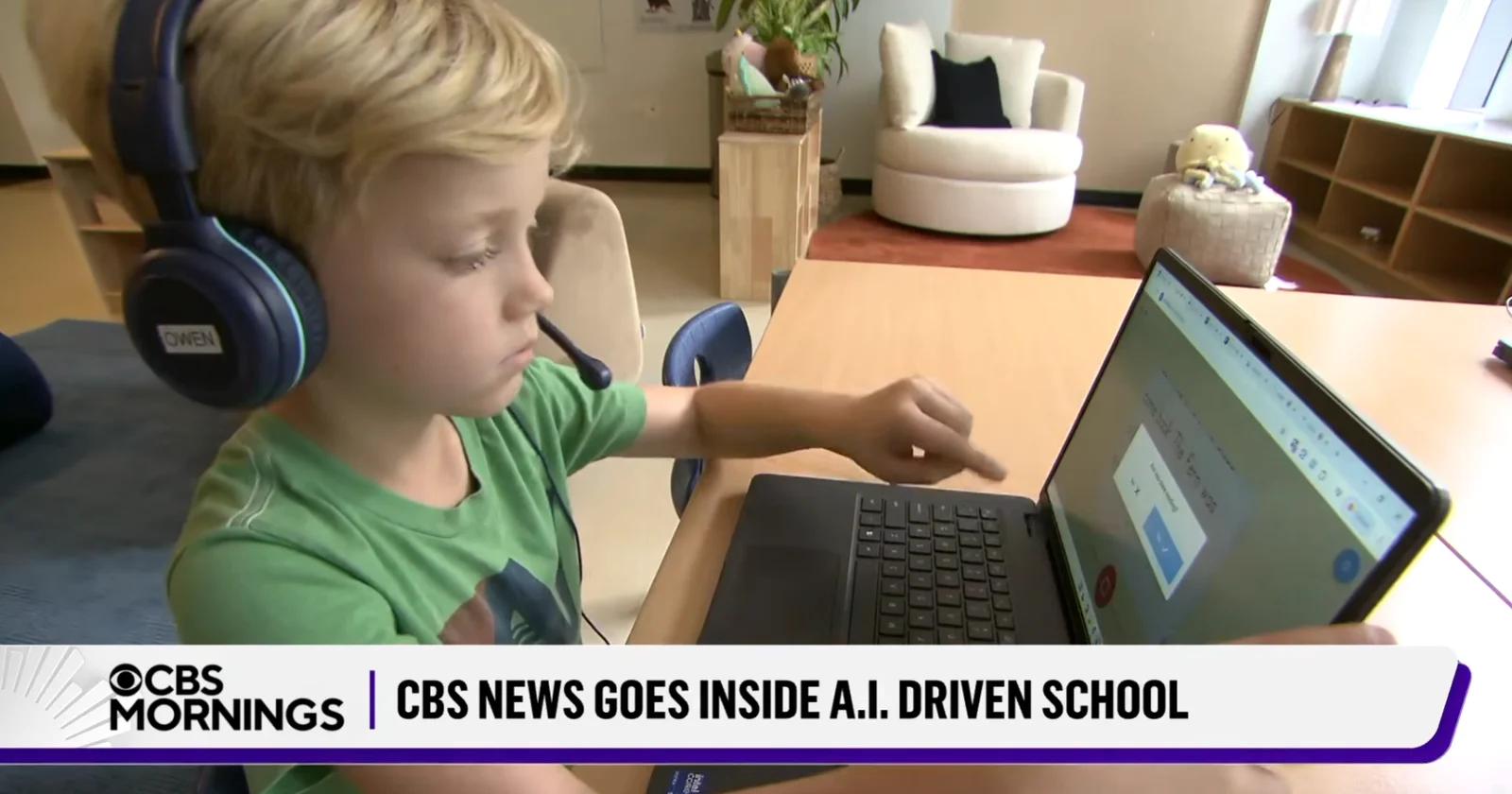
According to Alpha, students start each morning on a laptop with two hours on the company's adaptive AI platform, a proprietary program it calls 2 Hour Learning, with about half an hour on each of math, reading, science, and social studies. Afternoons are given over to projects and workshops meant to build life skills. Alpha says the AI teaches students twice as fast as a traditional school, which is where the platform's name comes from.
Alpha opened its first school in Austin, Texas in 2014 and has grown to six states. This fall it is opening 28 new schools, including a kindergarten-through-10th-grade school in Edmond, branded as the Oklahoma City location, and a kindergarten-through-8th-grade school in Tulsa. As of late July, Alpha's website listed 26 students enrolled at the Edmond site and 32 in Tulsa.
A School With No Teachers
The closest thing Alpha has to teachers are adults it calls guides, and the difference is the whole point. Guides do not touch curriculum. According to job postings, they monitor students' progress with the AI tutor but are not in the room during core learning, and in the afternoons they run one-hour workshops on things like sailing, programming toy cars, and Navy SEAL-style challenges. At one workshop, Alpha sent middle schoolers to a coffee shop with preloaded cards, then secretly zeroed out a balance so a student's card would be declined, a lesson meant to teach how to handle disappointment.
Guides earn $100,000 to $150,000 a year, two to three times a first-year public school teacher's salary, and Alpha does not require them to hold teaching certification. The company says it deliberately recruits people from unconventional backgrounds, vets them with a cognitive test and background check, and trains them at a months-long camp in Austin.
That model alarms some Oklahoma lawmakers. "These types of schools and models that are being implemented are taking away the seriousness of what it takes to be a classroom teacher," said state Rep. Cyndi Munson. "It is very disturbing and should worry all of us." Erika Wright, who leads the Oklahoma Rural Schools Coalition, was blunter, calling the model "a travesty for those kids."
The Price, and the Voucher Question
Tuition will be $40,000 a year, nearly double Oklahoma's most expensive private schools. For comparison, Edmond's Oklahoma Christian School charges $14,640, Tulsa's Holland Hall $21,625, and Oklahoma City's Casady School about $27,950 for high schoolers. Founding families get a $10,000 discount for five years, bringing it to $30,000, and there is no school-sponsored financial aid in the first year. The school is endorsed by hedge fund manager Bill Ackman and funded partly by software investor Joe Liemandt, who recently committed $1 billion to schools including Alpha.
Alpha's Edmond school briefly appeared on the state's list of schools approved for the Parental Choice Tax Credit, Oklahoma's voucher-like program that pays families up to $7,500 a year toward private tuition. After questions from Oklahoma Watch, the tax commission removed Alpha from the list; the company said it had not applied and that its accreditation is still pending site visits. Critics note the tax credit already skews toward higher earners: of the nearly $248 million awarded in 2025-26, $169 million went to families making more than $75,000, above the state's median household income. And for Alpha families, even the full credit would barely dent a $30,000 bill.
Privacy, Errors, and a Legal Threat
The technology has drawn scrutiny. Investigations by the news outlets 404 Media and Wired reported that Alpha's AI showed hallucinated answers and unsolvable quiz questions, and raised privacy concerns about a system that monitors screens and photographs students when it detects a lack of progress. Wired reported the system once captured video of a student doing schoolwork in her pajamas in bed. Alpha's chief communications officer, Anna Davlantes, said those stories relied on cherry-picked examples and former employees, disputed claims that the company improperly scraped other learning platforms, and said Alpha may pursue legal action against the outlets.
A Governor's Enthusiasm, and a Contradiction
Alpha arrives with powerful backing. Gov. Kevin Stitt, who chairs the National Governors Association and has been vocal in support of AI in education, has praised schools like Alpha and vowed to bring them to the state. That enthusiasm sits awkwardly against his own record: in 2025 he signed a law limiting virtual instruction in Oklahoma's public schools to just 12 hours per academic year, even as he championed a private school built almost entirely on screens. Wright did not miss the irony, saying the governor was "talking out of both sides of his mouth."
Oklahoma also passed a law this year, the Responsible Technology in Schools Act, requiring districts to adopt AI policies and keep educators in final control of AI-assisted instruction. Because Alpha is private, those rules do not apply to it, even though its model breaks both principles. State Sen. Regina Goodwin summed up the skeptics' view. "I understand we have challenges with our public education," she said. "But the answer is not to just eliminate human involvement that is certified."
The Families Signing Up Anyway
For all the criticism, some parents are sold. Wendy Vassiliou, whose son Cullen will start eighth grade at the Tulsa school, said she scoured the internet for every red flag she could find, from the data-scraping claims to the accreditation questions, and committed anyway. "I looked at everything I could find, and I still was not deterred," she said. Alpha markets itself hard to families like hers, pointing to seniors who average a 1545 on the SAT and glowing coverage in national papers.
Whether the results hold up outside a marketing deck is the open question, and it is a big one to test on children whose parents are paying $30,000 a year to find out. Alpha's first day is August 12. For families weighing a school like this, the fine print matters as much as the pitch. Alpha warns that it is not equipped to serve students who need intensive behavioral or one-to-one support, and asks applicants to disclose any 504 plan or IEP, a reminder that a school built to move fast is not built for every learner. It is one more entry in a growing trend of families with means leaving traditional schools for AI, and Oklahoma is about to find out how it goes.
Sources
Oklahoma Watch: A $40,000-per-Year AI School With No Teachers Is Opening in Oklahoma This August