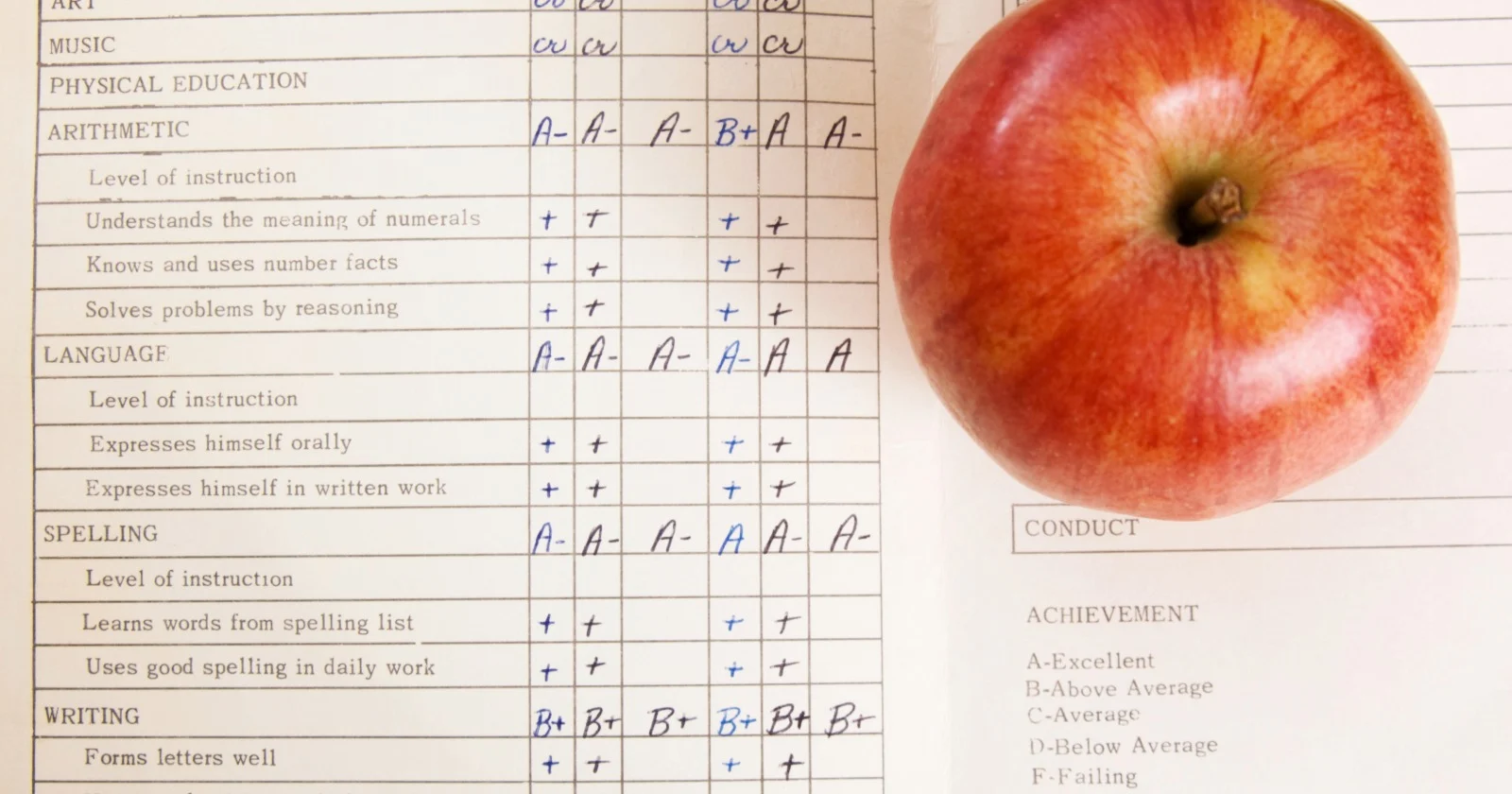




Letter grades are so embedded in how Americans think about school that questioning them feels almost absurd. An A means you got it. An F means you didn't. Everyone understands the system, colleges use it, and it's been the standard for over a century. So why are hundreds of districts moving away from it, and why is the pushback so loud when they do?
The debate between traditional A-F grading and standards-based grading is one of the more genuinely contested questions in K-12 education right now. Not politically contested in the usual sense, but contested among researchers, teachers, parents, and administrators who all have real evidence and real experience pointing in different directions.
What Standards-Based Grading Actually Is
Standards-based grading, sometimes called competency-based or proficiency-based grading, replaces the A-F scale with a rating system tied to specific learning targets. Instead of one grade for "English," a student might receive separate ratings for reading comprehension, argumentative writing, vocabulary, and close analysis. The ratings are usually something like 4-3-2-1 or Exceeds/Meets/Approaching/Beginning rather than letter grades.
The key philosophical difference is what the grade is supposed to measure. In a traditional system, a final grade typically blends together test scores, homework completion, participation, extra credit, late penalties, and sometimes behavior. A student who understood the material but turned work in late and skipped some homework might earn a C. A student who didn't fully understand but completed everything on time might earn a B. Standards-based grading tries to strip all of that out and report only what the student actually knows and can do at the end of the learning period, usually with the option to retest or resubmit until they demonstrate mastery.
The Case for Standards-Based Grading
The strongest argument for standards-based grading is diagnostic clarity. When a student gets a 74 in math, that number tells a parent almost nothing about what the student actually understands. Is the problem algebra? Fractions? Word problems? Reading comprehension on math tests? A standards-based report card that shows "Meets standard" on operations but "Approaching standard" on ratios and proportional reasoning tells you exactly where the gap is and what to work on.
Research supports the idea that feedback tied to specific skills produces better learning outcomes than a single summative grade. A 2014 study in the Journal of Educational Research found that students in standards-based classrooms showed stronger growth on external assessments compared to those in traditional grading environments, particularly in math. The theory is that when students know exactly what they're being measured on, they can self-regulate more effectively.
The other major argument is about what traditional grades inadvertently punish. Late penalties, homework completion grades, and participation points often measure compliance and life circumstances more than academic knowledge. A kid whose home situation makes it hard to complete homework regularly is penalized in ways that have nothing to do with what they know. Standards-based grading, in theory, separates the learning from the logistics.
The Case Against
The most practical objection is college admissions. Colleges use GPA. They use class rank. They use the A-F transcript as a sorting mechanism that has been in place for generations. Districts that switch to standards-based grading in high school face an immediate problem: how do you translate a 3-out-of-4 in chemistry into something a college admissions officer can compare to a B+ from the next district over? Some colleges have gotten better at interpreting non-traditional transcripts, but many haven't, and families in standards-based districts often feel their kids are at a disadvantage.
Parents also report that standards-based report cards are genuinely hard to interpret. A traditional report card takes thirty seconds to read. A standards-based report card for a middle schooler might have forty separate line items across five subjects, each rated on a four-point scale, with narrative comments. What does a 2 in "demonstrates understanding of text structure" mean for whether your kid is on track? The information density is higher, but accessibility is lower, and parents who feel confused often disengage rather than engage more deeply.
Teachers raise a different concern: the administrative burden. Tracking and reporting progress on dozens of discrete standards per subject per student is significantly more work than assigning a final grade. Without robust software support and training, standards-based grading often collapses in practice into something that looks like SBG on paper but functions like a more complicated version of the old system.
There's also a motivation question. Some researchers and many teachers argue that grades, including the prospect of a bad one, function as an external motivator that students need. Remove the grade and some students disengage. The counterargument is that this reveals a problem with how we've structured motivation in schools, not a problem with the grading reform. But that's a long-term cultural change, not something a single district policy can solve.
What the Research Actually Says
The honest summary is that the research is promising but not definitive, and implementation matters enormously. Studies consistently show that when standards-based grading is implemented well, with trained teachers, clear communication to families, and real commitment to allowing reassessment, students tend to develop more accurate self-assessments of their own skills, show less grade anxiety, and demonstrate comparable or better performance on external standardized assessments.
But "implemented well" is doing a lot of work in that sentence. A 2019 review of competency-based education research published by RAND found that outcomes varied widely based on implementation quality and that poorly executed transitions often produced confusion and frustration without academic gains. Districts that rolled out standards-based grading without adequate teacher training or parent communication saw backlash that frequently resulted in reverting to traditional grades within a few years.
The research on long-term outcomes, college readiness in particular, is thinner because the movement is still relatively young and tracking students through high school and into college takes time.
Where the Lines Actually Break Down
The most interesting thing about this debate is where the intuitive sides flip. Conservative-leaning parents who generally prefer rigor and high standards sometimes end up supporting standards-based grading once they understand that it requires students to actually demonstrate mastery rather than just accumulate points. Progressive-leaning parents who generally support equity-focused reforms sometimes end up opposing it because they're worried about college admissions competitiveness for their specific kids.
Teachers are similarly split in ways that don't track obvious ideological lines. Some of the most enthusiastic adopters are veteran teachers who were already frustrated with what traditional grades were measuring. Some of the most resistant are progressive teachers who believe grades motivate working-class students who won't push themselves without external accountability.
The Practical Middle Ground Most Districts Land On
Most districts that have experimented with standards-based grading have landed somewhere in the middle. Elementary schools go fully standards-based, middle schools use a hybrid, and high schools stay with traditional grades for the transcript while incorporating standards-based elements into how teachers give feedback within courses. This isn't necessarily intellectually coherent, but it reflects the real constraints: the college admissions system isn't changing anytime soon, and the diagnostic value of standards-based feedback is most powerful when kids are young enough to change course.
A handful of states are now moving toward competency-based graduation requirements alongside or instead of traditional credit accumulation. New York's ongoing Regents overhaul and Massachusetts' post-MCAS framework both gesture in this direction, though neither is fully committing to replacing traditional transcripts at scale.
If your district is currently debating a grading system change, the discussion boards on allk12 are organized by school. Find yours and see where the conversation is. These decisions tend to get made with limited parent input, and the parents who show up early have more influence than those who react after the fact.