




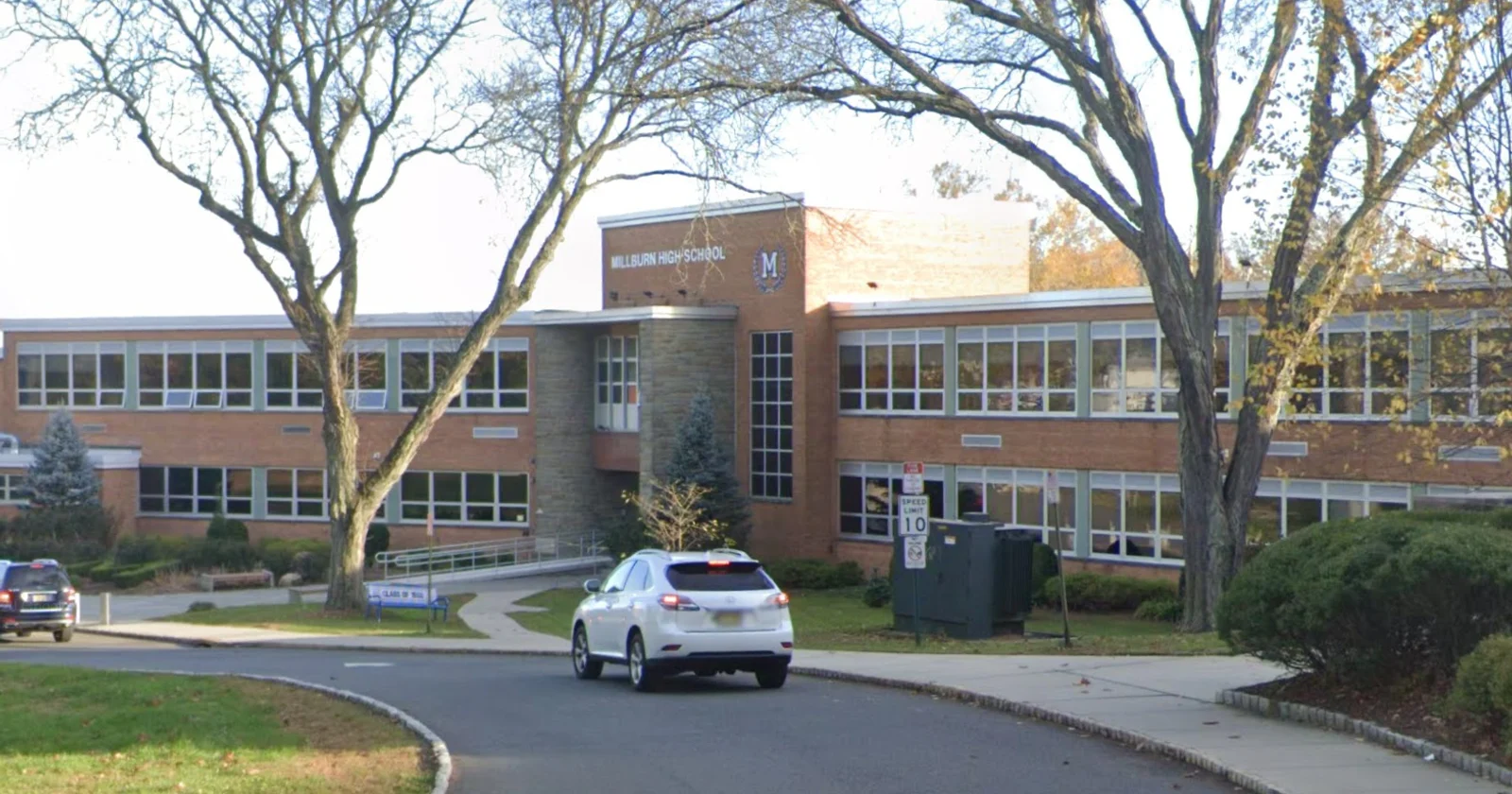
Millburn High School in Essex County posted an average SAT score of 1,391 out of 1,600, the highest of any New Jersey regular-admission high school, according to state Department of Education data. The school held the same #1 spot last year.
Behind Millburn come West Windsor-Plainsboro High School South at 1,356 and West Windsor-Plainsboro High School North at 1,341, both in Mercer County, then Montgomery High School at 1,330 and Princeton High School at 1,320. Tenafly (1,310), Ridge (1,306) and John P. Stevens (1,300) round out the top eight.
Millburn is first among regular-admission schools in average SAT score but seventh in the state overall, and every school above Millburn selectively pick the students who get in. Edison Academy Magnet School in Middlesex County led everyone at an average SAT score of 1,539, just 61 points off a perfect score and about 150 ahead of Millburn. High Technology High School, Biotechnology High School, Bergen County Academies, Woodbridge Academy and Union County Magnet fill out the spots of 2 to 6 respectively. Those are magnet and county vocational schools with competitive admissions and limited seats, so a high average partly reflects who they admitted.
Statewide, New Jersey students had an average SAT score of 1,052, with 519 in math and 533 in reading and writing. The national SAT score average was 1,029. For scale, first-year students admitted to Rutgers University's School of Arts and Sciences last fall SAT scores were between 1,350 and 1,510, a band that only Millburn and the two West Windsor-Plainsboro schools reach as a whole-school average.
What the enrollment data shows
The state releases the average SAT scores without demographics but federal enrollment figures fill that in, and the pattern is hard to miss.
John P. Stevens in Edison is 85.1% Asian American. West Windsor-Plainsboro North is 76.6%, South is 73.8%, and Montgomery is 56.1%. Millburn is 42.5%, Tenafly 34.6%, Ridge 34.2%, Princeton 26.2%. Statewide, Asian American students make up roughly a tenth of New Jersey's public school enrollment.
These are also small schools by New Jersey standards. Millburn enrolls about 1,380 students, Tenafly about 1,141. John P. Stevens is the outlier at 2,687.
Why the rankings based on average SAT score draw objections
Critics have long argued average SAT scores are a poor way to judge a school, since the test tracks family income and access to preparation courses more than what the school does. Six of the seven highest averages belong to schools that selected their students, and the highest-scoring open-admission schools sit in expensive towns.
We've compared two of them directly before, in a look at Millburn versus Tenafly, and the same caution applies. A score tells you who enrolled. It takes growth data to tell you what the school did with them.
The full list of 17 top regular-admission schools also includes Cresskill (1,292), Livingston (1,277), Summit (1,273), Northern Valley Regional at Demarest (1,265), Ridgewood (1,262), Robbinsville (1,261), Chatham (1,259), Hopewell Valley Central (1,249) and South Brunswick (1,247).
Sources
NJ.com: These 17 remarkable local high schools keep producing some of N.J.'s highest SAT scores
SAT figures from the New Jersey Department of Education, 2024-25, with combined averages calculated by NJ Advance Media.
Enrollment and demographic figures from allk12's analysis of National Center for Education Statistics (NCES) data, SY 2024-25.