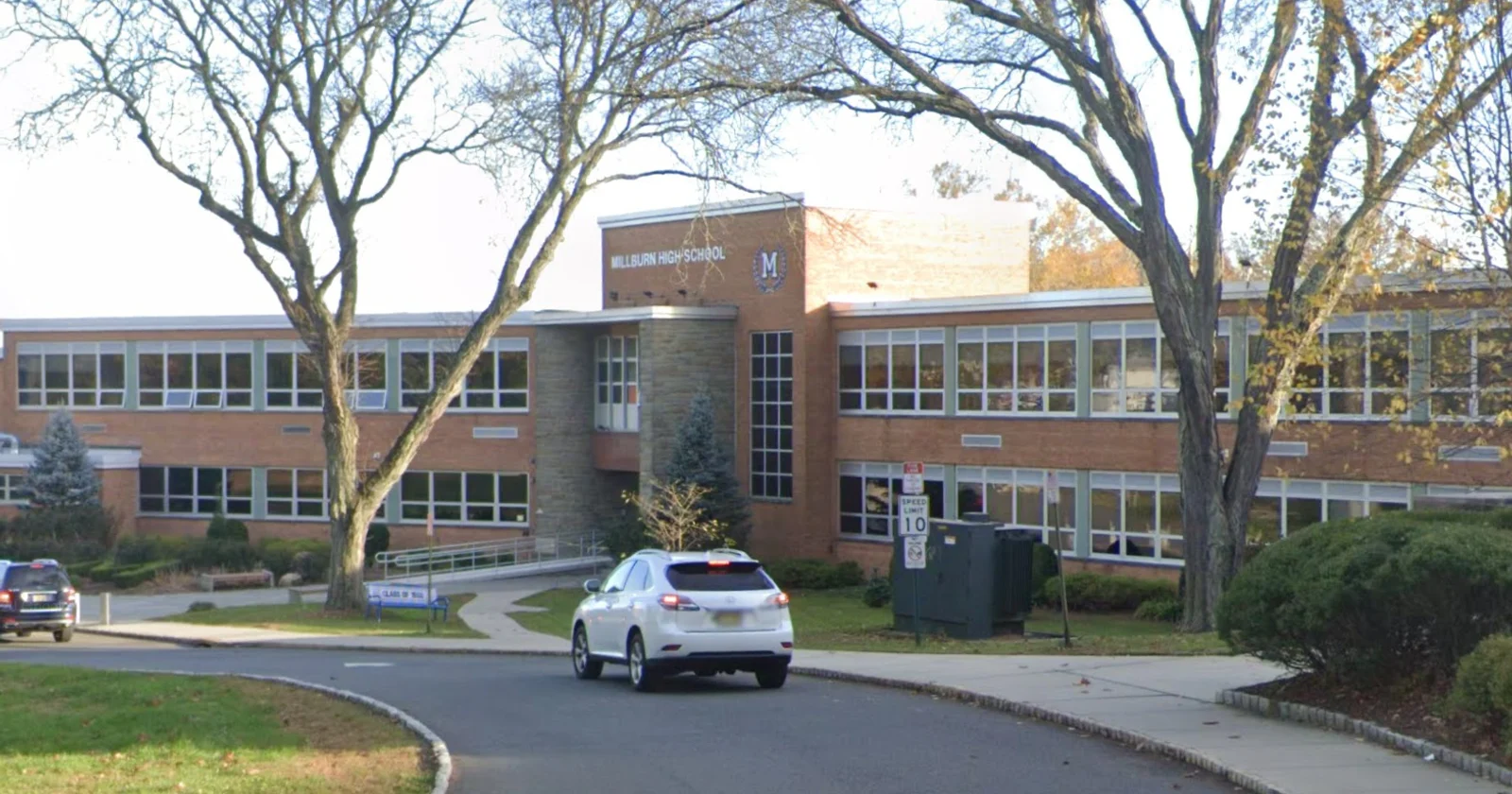





Millburn and Tenafly are two of the most consistently recognized public high schools in New Jersey, a state with no shortage of high-performing districts. Both appear regularly in national rankings of top public high schools. Both draw families who specifically relocate to those communities for the schools. And both sit in north Jersey suburban corridors, Millburn in Essex County and Tenafly in Bergen County, with strong community investment and high academic expectations baked into the school culture.
When families are choosing between northern New Jersey communities and these two schools keep coming up, the question gets specific: what do the numbers actually show, and what does each school offer beyond the rankings?
The Test Score Comparison
New Jersey uses the NJSLA, the New Jersey Student Learning Assessments, as its primary state assessment, reporting the percentage of students meeting or exceeding grade level in ELA, math, and science. The New Jersey state average for high school ELA is roughly 63%.
Millburn High School posts 82.9% ELA, 79.6% math, and 80.1% science on 2025 NJSLA assessments with 1,380 students enrolled. The Millburn scores page shows multi-year performance that is notably consistent across all three subjects, with 2025 ELA at 82.9% and 2024 ELA at 92.4%. The 2024 to 2025 ELA drop warrants a note: single-year variation of this magnitude is common with NJSLA and often reflects assessment administration factors rather than genuine school quality shifts. The 2025 figures are the most current available, and math and science have held steady at 79.6% and approximately 80% respectively.
Tenafly High School posts 79.9% ELA, 61.9% math, and 65.6% science on 2025 NJSLA assessments with 1,141 students enrolled. The Tenafly scores page shows similarly strong ELA performance, with 2024 ELA at 87.5% and 2024 math at 71.3%. The 2025 math figure of 61.9% represents a meaningful drop from 2024 that is worth watching across future assessment cycles to determine whether it reflects a trend or a single-year variation.
On the most current data available, Millburn holds a measurable advantage in math and science, while ELA scores are close enough to be within the range of normal year-to-year variation. Millburn's math proficiency of 79.6% versus Tenafly's 61.9% is the most significant gap in the comparison and reflects a difference in the schools' academic profiles that goes beyond single-year noise.
Context for the Numbers
Both schools are in the top tier of New Jersey's high schools, which places them among the strongest public schools in the country. The New Jersey state average of 63% ELA means both Millburn and Tenafly are outperforming the state by roughly 17 to 20 percentage points. The comparison between them is a comparison within a very strong tier, not between a strong and a weak school.
The demographic profiles of the two schools shape the academic culture in ways the test scores reflect but don't fully explain. Millburn has a high concentration of students from families in finance, law, and professional services, the kinds of careers that cluster in Essex County's proximity to New York City's financial district via direct rail access. The community has been one of New Jersey's most consistently affluent suburbs for decades, and the school benefits from the concentrated investment that comes with a long-established high-income community.
Tenafly's demographic profile has shifted significantly over the past twenty years with a large and academically oriented Korean American population that has concentrated in Tenafly and the surrounding Bergen County communities. This demographic shift has driven high AP enrollment, strong extracurricular academic competition participation, and a school culture with intense college preparation emphasis that Tenafly families frequently describe as both a strength and a source of pressure. The school's ELA strength relative to its math scores in 2025 is somewhat atypical given this profile and may reflect the single-year variation noted above.
School Size and What It Means
Millburn at 1,380 students is meaningfully larger than Tenafly at 1,141 students, a difference that affects the range of course offerings, extracurricular depth, and the general character of the school experience.
Millburn's larger enrollment supports a broader AP course catalog, more varsity sports teams, and a wider range of performing arts and fine arts programs. The school has a nationally recognized drama program that produces genuinely high-quality theatrical productions, a depth of extracurricular offerings that small schools can't sustain. For students with specific interests in arts, performing arts, or niche sports, Millburn's size creates more options.
Tenafly's smaller size produces a tighter community feel that some families prefer. Student-teacher ratios at smaller schools often translate to more direct access to faculty, smaller class sizes in upper-level courses, and a social environment where students are more likely to know most of their peers across grade levels. For students who thrive in more intimate academic environments, the difference is real.
The College Placement Picture
Both schools send students to highly selective colleges at rates well above what most high schools achieve. Millburn's college placement record includes consistent placements at Ivy League and highly selective institutions, supported by an experienced college counseling staff and a community culture where college preparation is taken seriously from freshman year. Tenafly's college placement is similarly strong, with the Korean American community's strong college preparation culture contributing to high rates of selective college enrollment.
Neither school publishes comprehensive college placement data publicly in a form that allows direct comparison, which is typical of most public schools. The best proxy for college readiness is the AP course participation and pass rate data that both schools make available through their school profiles and that the College Board publishes at the school level. Both schools have high AP participation rates and strong pass rates on AP exams.
The Community and Commute Question
Millburn sits in Essex County with direct NJ Transit rail access to New York Penn Station via the Morris and Essex Line, making it one of the most convenient suburban communities for Manhattan commuters in the entire state. The Millburn train station puts residents roughly 35 to 40 minutes from Midtown. The downtown area along Millburn Avenue has developed into a walkable small-town center with independent restaurants, shops, and a genuine Main Street character that many suburban New Jersey communities lack.
Tenafly sits in Bergen County and is not on a commuter rail line. Access to Manhattan is primarily via the George Washington Bridge by car, the nearby Park-and-Ride connecting to express buses, or the NJ Transit bus lines that run along Route 9W. Commute times to Manhattan are comparable to Millburn in light traffic but significantly more variable during rush hour given the bridge's notorious congestion. Tenafly's community character is quieter and more residential than Millburn's, with less of a downtown retail core and more of a neighborhood feel.
Housing costs in both communities reflect their school reputations. Both are among the more expensive communities in their respective counties, with median home prices well above the state average. Tenafly's Bergen County position and proximity to the GWB has historically driven strong demand, and Millburn's rail access and school reputation have sustained high prices through multiple real estate cycles.
What Each School Does Better
Millburn's advantages in the current data: stronger math and science proficiency across multiple years, a larger course catalog supported by higher enrollment, a nationally recognized performing arts program, and direct rail access to New York that benefits families with Manhattan-based careers.
Tenafly's advantages: a tight-knit community culture, strong ELA performance that has been consistently in the high 80s across multiple assessment cycles, a highly motivated student body with strong academic competition participation, and Bergen County's overall strong school district ecosystem that surrounds it. Bergen County has more top-tier school districts in close proximity than Essex County, giving families who end up in the wrong attendance zone a stronger fallback.
The honest answer to which school is better is that both are genuinely excellent and the gap between them in most measures is narrow enough that the choice between these two communities should weigh commute, housing, and community fit as heavily as the test score difference. A family that chooses Tenafly for non-school reasons is not making an academic sacrifice in any meaningful sense. A family that chooses Millburn primarily for the math scores is making a choice with real benefits but not a dramatic difference in outcomes relative to Tenafly.
Browse the full school profiles for Millburn High School and Tenafly High School on allk12, compare multi-year score histories on the scores pages, and read the discussion boards to see what parents in each community are currently saying. The scores are a starting point. The community perspective on what these schools are like to actually attend is where the most useful information lives.