


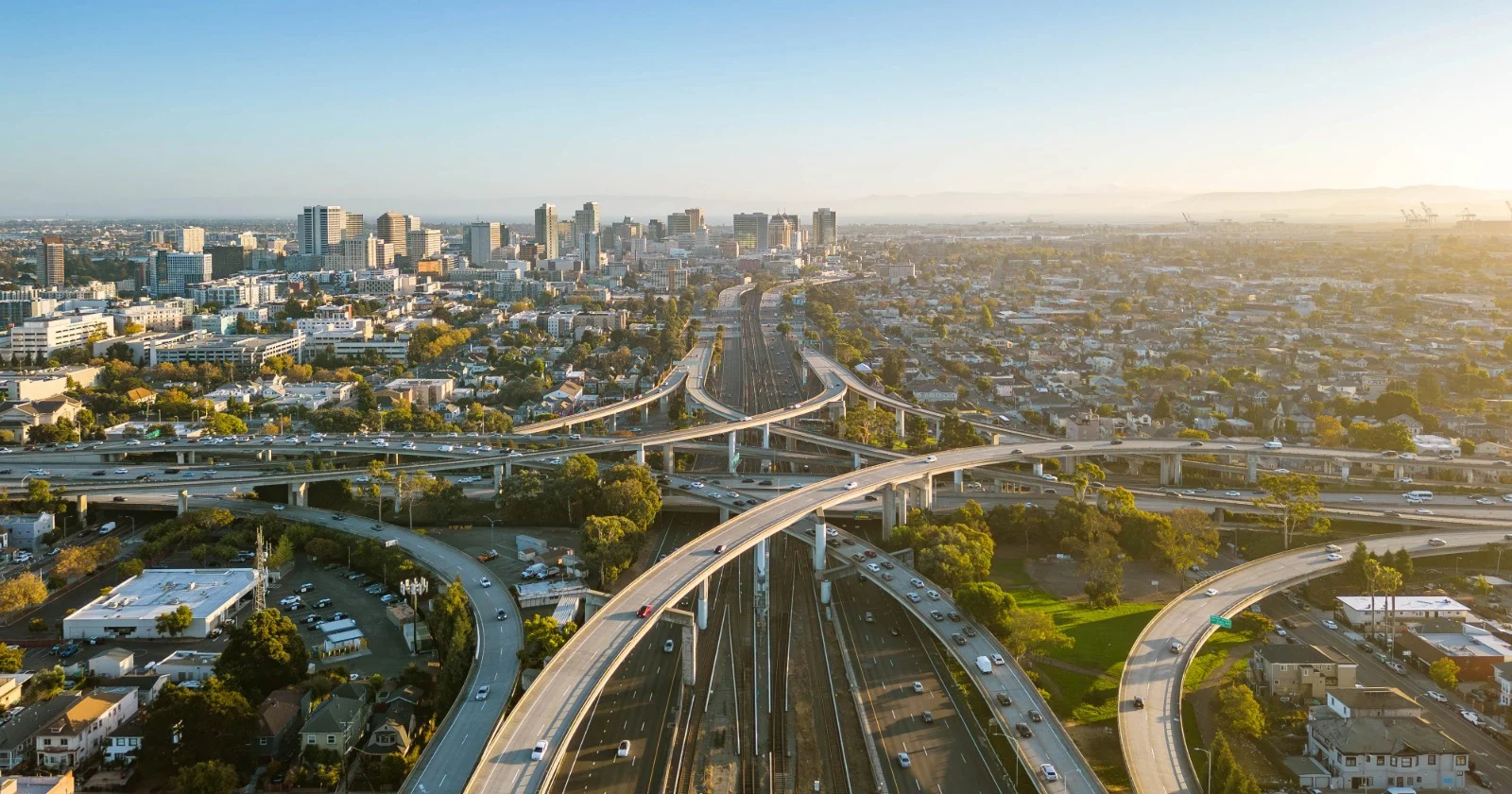
Ask where American kids go to school and some people will picture a city, but the data says it's the suburbs, and by a wide margin.
The federal government sorts every public school into one of four community types, city, suburb, town, or rural, each with subtypes by size or distance. We rolled up that classification for roughly 96,000 public schools across the United States. Here is what it shows.
Where the students are, and where the schools are
| Community type | Share of students | Share of schools | Average school size | Students per teacher |
|---|---|---|---|---|
| Suburb | 38.7% | 30.9% | 635 | 16.0 |
| City | 30.9% | 28.2% | 556 | 16.8 |
| Rural | 20.2% | 29.5% | 348 | 14.1 |
| Town | 10.2% | 11.3% | 460 | 16.2 |
Nearly four in ten public school students attend a suburban school, and suburban schools are also the largest in student population on average. Cities come second on students but run somewhat smaller buildings than their reputation suggests.
Rural schools are almost 30% of all public schools in the country, close to the suburban share, but they hold only about 20% of the students. Nearly a third of the nation's school buildings, and the teachers, buses, and boards that come with them, but serve just a fifth of the nation's students.
The size gap is really a high school gap
Elementary schools are not that different across community types: about 488 students in the suburbs, 451 in cities, 397 in towns, and 324 in rural areas. The divergence opens in the upper grades.
| Level | Suburb | City | Town | Rural |
|---|---|---|---|---|
| Elementary | 488 | 451 | 397 | 324 |
| Middle | 703 | 616 | 491 | 357 |
| High | 1,069 | 811 | 590 | 394 |
A suburban high school averages about 1,069 students. A rural one averages 394, and the most remote rural schools of all levels average under 200. That is the difference between a school that can run four levels of math, a dozen AP courses, and a full slate of sports, and one where the physics teacher also teaches chemistry and coaches. Whether that trade-off helps or hurts is a real debate, which we take up in does school size affect student outcomes, but it is not an abstract one for the families living it.
The flip side shows up in staffing. Rural schools average about 14 students per teacher, the lowest of any community type, and the most remote rural schools average about 12.5. City schools are highest at nearly 17. Small rural classes are real; so is the narrower course catalog they come with. Our guide to what a good student-to-teacher ratio looks like covers why that number is easy to over-read.
The most rural states
National averages hide how differently states are built. In Vermont, about 62% of public school students attend a rural school. Mississippi and Maine are both above 55%, West Virginia is near half, and Alabama, South Dakota, North Dakota, and Montana all sit above 40%. In those states, rural is not a category on the margin; it is the default, and it shapes everything from bus routes to why so many districts there have moved to a four-day school week.
At the other end, the country's biggest schools are overwhelmingly suburban, as our ranking of the largest public high schools in America shows, and the growth is there too. The suburb is where American public education is largest, most crowded, and most contested. The rural school is where it is smallest, most personal, and most stretched.
Data note: community type follows the National Center for Education Statistics locale classification, rolled up from twelve subtypes into city, suburb, town, and rural. Figures cover about 95,900 public schools with reported enrollment, excluding virtual schools. Student-teacher ratios are school-level averages and are not the same as class size.
Sources
Enrollment, staffing, and locale figures from allk12's analysis of National Center for Education Statistics (NCES) Common Core of Data, 2024-25.
allk12: Does school size affect student outcomes