


When Minnesota started paying for every public school student's breakfast and lunch in fall 2023, the bill came in higher than projected. Three years later, Gov. Tim Walz has a theory about why, and new research backs it up: a lot of children just above the old income line had not been eating.
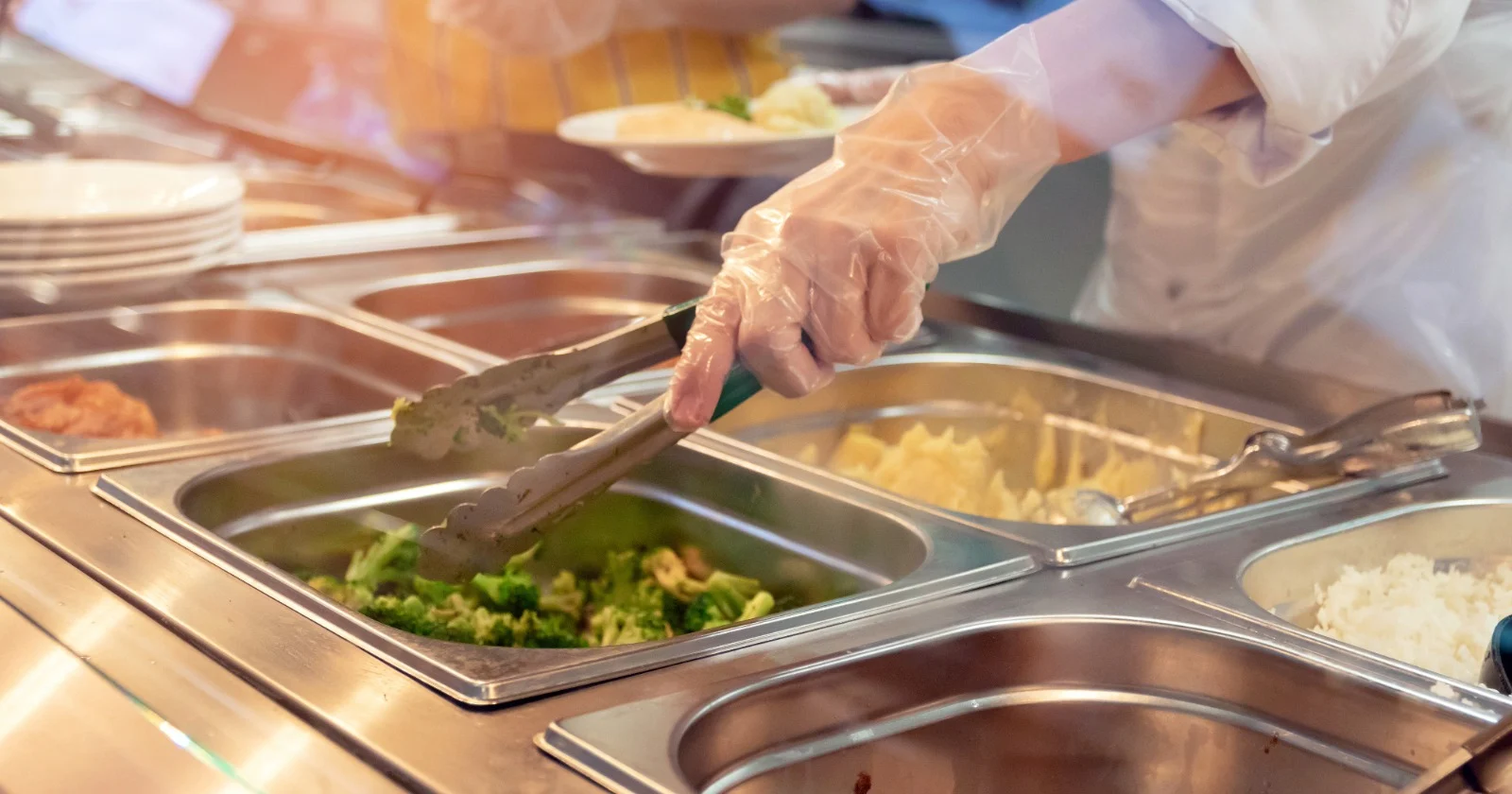
"I think what it showed was there … was a lot of folks that were just barely above that line where they could get it, and they just weren't eating because of that," Walz told reporters earlier this month. On the first day of school, he and Education Commissioner Willie Jett put on aprons and served orange chicken at Hoover Elementary in Coon Rapids.
The numbers from the Minnesota Department of Education, as reported by MPR News, show the jump. In the program's first year, the number of students eating school lunch rose 15%. Breakfast rose 40%. State spending on school meals has climbed from $277 million in 2024 to an estimated $306 million in 2026.
A trio of studies from the University of Minnesota and the nonprofit The Food Group fills in who those new eaters were. Before meals were free for everyone, 34% of students who did not qualify for free or reduced-price lunch had to skip meals, the research found. Among Black and Indigenous students and other students of color, the reported share was 70%.
That middle group is large. About 40% of Minnesota public school students were eligible for free or reduced-price meals, according to federal enrollment data, which leaves roughly six in 10 who were expected to pay under the old system, including families earning just enough to miss the cutoff.
"We had a young person share a story about just pretending not to be hungry because he knew his mom couldn't pay, and if that bill was added to her plate, she would not be eating," said Leah Gardner, policy director at The Food Group. "Our young people were not nearly as oblivious about the cost of meals as I think some people would like to think."
Students also described less stigma, Gardner said, now that nobody in line is flagged as a free-lunch kid. "Students are talking about it. They do notice it, and they feel much better all being together and eating together," she said.
Families report relief at home. The state estimates the program saves about $1,000 per student per year. In Gardner's survey, 51% of families said they worry less about their household budget, and 60% said mornings are easier because they no longer pack lunches or make breakfast before school. Minneapolis parent Bailey Jordan said her fourth grader became a breakfast eater for the first time. "And then her friends join her, too," Jordan said.
School nutrition departments say the steadier money changed what they can cook. In Moorhead, nutrition services director Ashley Schneider said guaranteed payment for every meal pulled her department out of a financial crisis and paid for better wages and equipment for scratch cooking. Not everything works. "We tried meatloaf and they were just like, 'What is this?'" she said. Sambusas and brussels sprouts, on the other hand, became hits.
"When all of a sudden it's like, 'Bam! Now we have many more students eating' … well, lines got long," Gardner said. Longer lines leave students less time to eat, and that complaint came through clearly when researchers surveyed them. The state's cost is also still rising.
Gardner called the program "really, really helpful" for families. "But that doesn't mean the program's perfect," she said.
Minnesota is one of nine states that now feed every public school student at no charge, a group we mapped in which states give every student free school meals. Elsewhere, the income-based system still decides who eats for free, and our explainer on what free and reduced lunch means covers how those cutoffs work. Hoover Elementary, where Walz served lunch, enrolls about 470 students, a little over half of them eligible for free or reduced-price meals.
Sources
MPR News: Fewer skipped meals, less stigma: New data on the impact of Minnesota's universal school meals
Participation and cost figures from the Minnesota Department of Education, as reported by MPR News. Survey findings from the University of Minnesota and The Food Group, as reported by MPR News.
Free and reduced-price meal eligibility from allk12's analysis of National Center for Education Statistics (NCES) Common Core of Data.