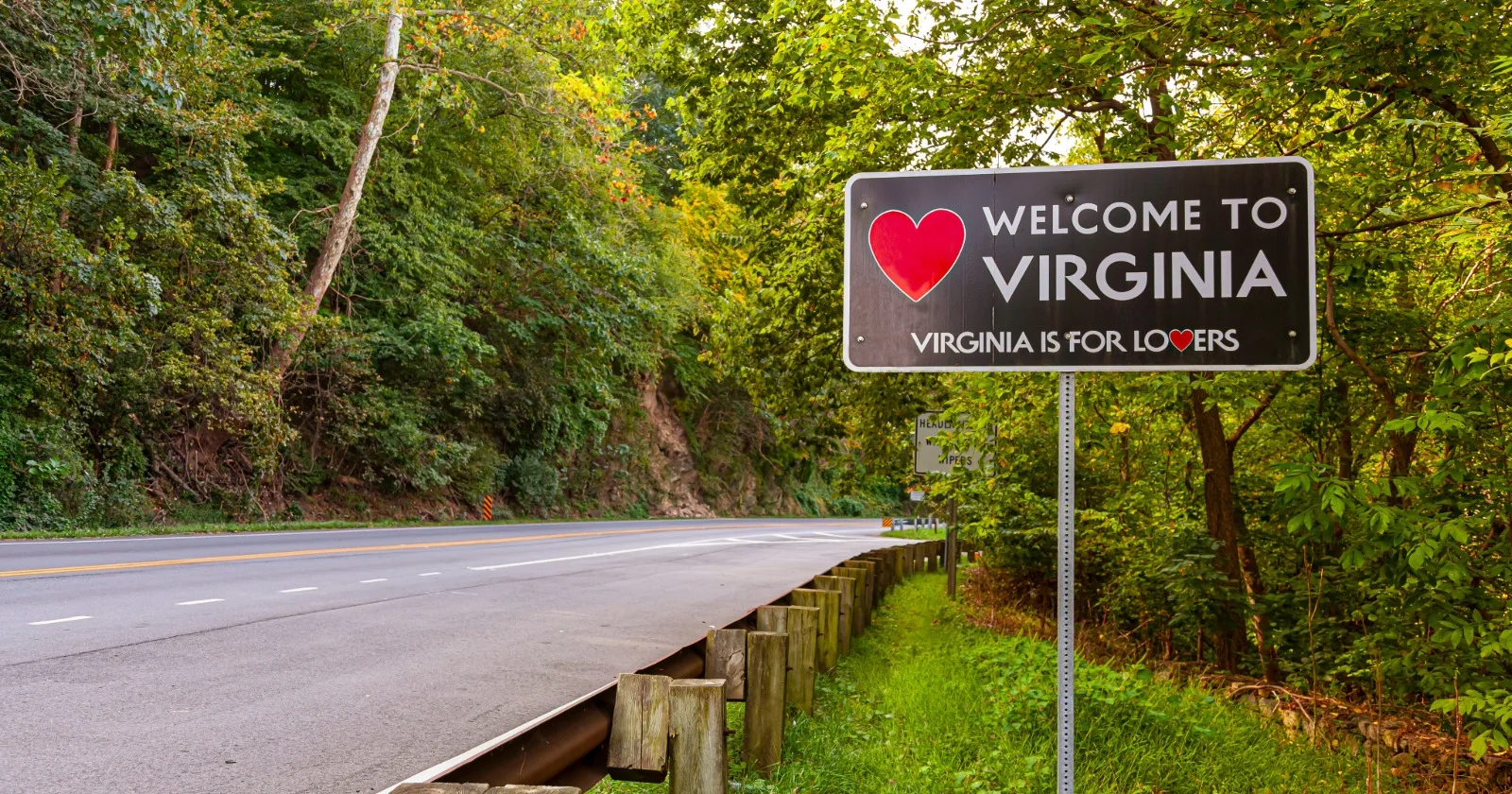



A student at a four-year public high school in Illinois needs "at least 16 units in grades 9-12" to graduate, according to the Illinois State Board of Education (ISBE) rule on graduation. That is the state floor. Districts are free to ask for more, and Chicago does.
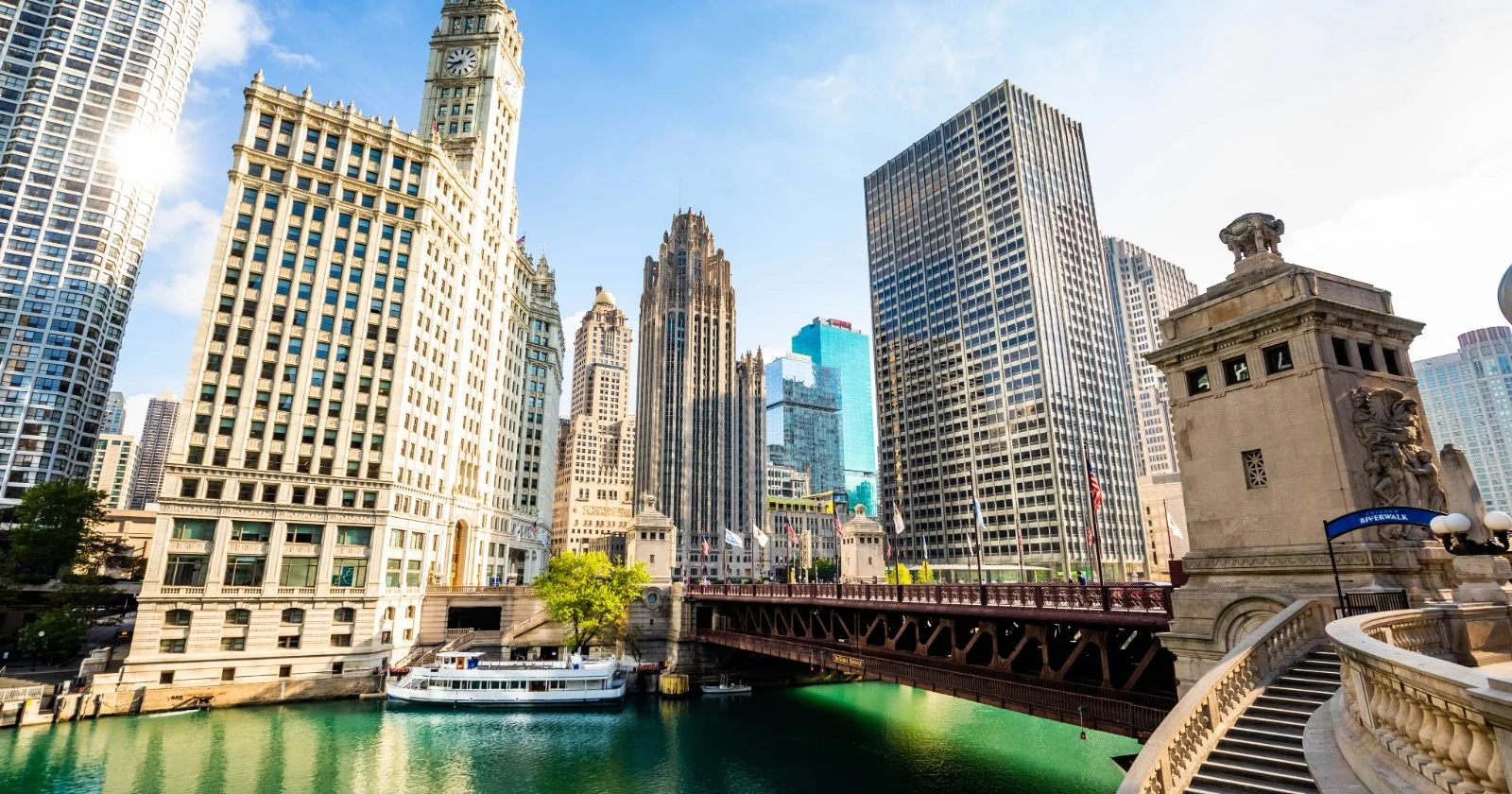
Chicago Public Schools (CPS) requires 24 credits, eight more than the state minimum (24 minus 16). In most cases one CPS credit equals one year of a course, the district says. CPS enrolled 25,114 of Illinois's 149,113 public school seniors in 2024-25, or about 17%, according to allk12's analysis of federal data. Statewide, 719 public schools reported 12th graders that year.
The subject list sits in Section 27-605 of the Illinois School Code. Until August 2025 it was Section 27-22, and ISBE's own October 2026 guidance still cites the old number in places. Public Act 104-391 renumbered it, along with dozens of other curriculum sections.
Illinois requirements next to Chicago's
The state column applies to students who entered ninth grade in 2024-25 or later, which means the class of 2028 on a normal four-year track. Students whose course of study is set by an individualized education program (IEP), the written plan for a student in special education, are exempt from the statute's course list.
| Requirement | Illinois state minimum | Chicago Public Schools |
|---|---|---|
| Total | 16 units in grades 9 to 12 | 24 credits |
| English | 4 years of language arts; 2 writing-intensive courses, 1 of them English | 4.0: English I, II, III, and IV |
| Math | 3 years: Algebra I, a course with geometry content, and a third (AP computer science counts) | 3.0: Algebra, Geometry, Advanced Algebra/Trig |
| Science | 2 years of laboratory science | 3.0: Biology, Chemistry, Physics |
| Social studies | 2 years: 1 year of U.S. history (or U.S. history and government), 1 semester of civics | 3.0: World Studies, U.S. History, 0.5 Civics or AP Government, 0.5 other social science |
| Arts, language, or career | 1 year of music, art, world language, career and technical education, or speech and debate | 2.0 fine arts, 2.0 in one world language, 1.0 career ed or JROTC |
| Computers | 1 course with intensive computer literacy instruction (can overlap other requirements) | 1.0 computer science |
| Physical education | At least 3 days of every 5-day week, with excuses allowed | 2.0 PE or JROTC; scheduled in PE each semester unless excused |
| Health | 1 semester (at least 18 weeks) | Must pass Health |
| Consumer education | 50 minutes a day for 9 weeks | A course with a financial education unit |
| Electives | Not set by the state | 3.0 academic credits |
| Constitution | Pass an exam on the U.S. and Illinois constitutions | A course covering both constitutions |
| Financial aid form | File the FAFSA, a state aid application, or a waiver | FAFSA or the RISE Alternative Application |
| State test | Take the 11th-grade state test (ACT with science and writing, or the DLM-AA alternate) | SAT or DLM-AA, as CPS lists it |
| Other | CPR and AED training (parents may opt out in writing) | 2 service learning projects, a postsecondary plan, Driver's Education |
Source: 105 ILCS 5/27-605, 27-510, 27-710, 27-250, 22-87, and 2-3.64a-5; 23 Ill. Adm. Code 1.440; ISBE, Illinois Graduation Requirements (October 2026) and grade 11 testing guidance; Chicago Public Schools graduation requirements page, accessed November 11, 2026.
The named state subjects add up to 12 of the 16 units (4 + 3 + 2 + 2 + 1). Computer literacy and the writing-intensive courses can count toward other requirements, so they do not have to add units of their own. That leaves four units the state does not tie to any subject. CPS fills that space and more with a third year of science and social science, two years each of world language and fine arts, a computer science credit, and a career or JROTC credit. CPS also says students who earned high school math credit in middle school still need three math credits in high school.
Several requirements sit outside the credit count. The constitution exam comes from Section 27-510, which says no student may get a certificate of graduation "without passing a satisfactory examination upon such subjects." Under Section 22-87, in place since the 2020-2021 school year, a student or parent must file the Free Application for Federal Student Aid (FAFSA) or a state aid application, or sign an ISBE waiver form saying they chose not to. A district must still award the diploma when extenuating circumstances block filing and the principal attests the school made a good-faith effort to help.
Section 2-3.64a-5 bars a regular diploma for students who skip the state's final accountability test unless they are exempt. ISBE's current guidance names that test as the ACT with science and writing in 11th grade, or the Dynamic Learning Maps alternate assessment (DLM-AA) for students whose IEPs make them eligible for it. Physical education can be waived in some cases. Juniors and seniors can be excused for school sports or for classes they need for college admission or graduation, and students in grades 9 to 12 can be excused for marching band or a district ROTC program.
What changes for the classes of 2028 and 2032
Most of the recent changes trace to Public Act 101-654, which took effect March 8, 2021. It added the computer literacy course for students entering ninth grade in 2022-23, the class of 2026. It also swapped "two years of science" for two years of laboratory science starting with 2024-25 ninth graders, the class of 2028. ISBE counts a course as a lab course only when every enrolled student regularly does lab investigations, and it recommends at least one a week. A 2023 law, Public Act 103-154, touched the same section, but it was a technical cleanup bill that combined earlier amendments.
The next change lands on students who start ninth grade in 2028-29, the class of 2032. They must complete two years of world language, and American Sign Language counts. Public Act 104-814, which took effect August 7, 2026, added a second route: at least two years of career and technical education coursework approved by ISBE. The board's October 2026 requirements chart lists both options. Either one also satisfies the existing one-year music, art, language, or career elective.
Two smaller rules round out the list. Every public high school in Illinois must teach a unit of Asian American history, a rule that began in 2022-23. And starting in 2029-30, CPR training must use both breasted and non-breasted manikins under an amendment that takes effect January 1, 2027.
Illinois's four-year graduation rate reached 89.8% in 2026, a record, according to the 2026 Illinois Report Card release. ISBE said the rate has risen more than nine percentage points since 2012 and now tops the state's federal accountability target of 88.9%. To see how Illinois's 16-unit floor compares with other states, read our breakdown of high school graduation requirements by state and the national guide to how many credits you need to graduate high school. Illinois is also one of the large states without a standalone personal finance course, as our personal finance requirements tracker shows. School-by-school enrollment for the city is on the Chicago Public Schools district page.
Sources
Illinois General Assembly: 105 ILCS 5/27-605, Required high school courses
Illinois General Assembly: 105 ILCS 5/27-510, Patriotism, principles of representative government, and elementary civics education
Illinois General Assembly: 105 ILCS 5/22-87, Graduation requirements; Free Application for Federal Student Aid
Illinois General Assembly: 105 ILCS 5/2-3.64a-5, State goals and assessment
Illinois General Assembly: 105 ILCS 5/27-710, Courses in physical education required
Illinois General Assembly: 105 ILCS 5/27-250, High school CPR and AED training
Illinois General Assembly: 105 ILCS 5/27-540, Asian American history study
Illinois Administrative Code: 23 Ill. Adm. Code 1.440, Additional Criteria for High Schools
Illinois General Assembly: Public Act 101-0654
Illinois General Assembly: Public Act 104-0814
Illinois State Board of Education: Illinois Graduation Requirements (October 2026)
Illinois State Board of Education: Participation in ACT + Science + Writing or DLM-AA for Grades 11 and 12
Illinois State Board of Education: Illinois Sets New Record for Highest-Ever Graduation Rate (October 30, 2026)
Chicago Public Schools: Graduation Requirements
School counts and 12th-grade enrollment from allk12's analysis of National Center for Education Statistics (NCES) Common Core of Data, 2024-25.