




The hardest part of identifying a learning disability in your own child is the gap between knowing something is wrong and knowing what it is. Most parents arrive at the question not through sudden revelation but through accumulation: a teacher's comment here, a pattern of frustration there, months of watching a child work twice as hard as their peers for half the result. By the time many families start asking serious questions, the child has already spent considerable time developing workarounds, avoiding reading aloud, hiding incomplete work, or concluding that they simply aren't smart.
That delay has real costs. Early identification and intervention produce significantly better outcomes than late identification. Understanding what learning disabilities look like, across different ages and different types, is the first step toward getting a child the support they need before the gap widens further.
How Common Learning Disabilities Actually Are
One reason learning disabilities go unidentified for so long is that parents sometimes assume the struggles they're seeing are too common to indicate a real problem. In fact, learning disabilities are extraordinarily common, which is a reason to take the signs seriously rather than dismiss them.
A 2025 study published in PLOS ONE using National Survey of Children's Health data from 2016 to 2023 found that 8.85% of U.S. children aged 6 to 17 had a parent-reported history of learning disability diagnosis, a figure that rose from 7.86% in 2016 to 9.15% in 2023. The National Center for Learning Disabilities estimates that as many as 20% of U.S. children have some type of learning or thinking difference, though not all of those meet the threshold for a formal clinical diagnosis.
According to the National Center for Education Statistics, approximately 7.5 million students were served under IDEA (Individuals with Disabilities Education Act) Part B during the 2022-23 school year, representing 15% of total public school enrollment. Learning disabilities are not rare edge cases. They are a significant part of the educational landscape in every classroom in the country.
What a Learning Disability Actually Is
A learning disability is a neurological condition that affects how the brain processes information. It is not an intellectual disability. Children with learning disabilities are not less intelligent than their peers. They process specific types of information differently, in ways that create specific and often predictable patterns of struggle.
As HelpGuide explains, because of the wide variations in learning disabilities, there is no single symptom or profile that serves as proof of a problem. Different disabilities create different patterns, and many children have more than one. The most commonly identified learning disabilities in American children are dyslexia, ADHD, and dysgraphia. Dyslexia alone affects approximately 15-20% of all students, making it the most prevalent specific learning disability.
What all learning disabilities share is a persistent pattern of struggle that doesn't resolve with additional effort or time in the way typical developmental delays do. A child who struggles with reading in first grade but catches up by third grade is developmentally behind. A child who struggles with reading in first, second, and third grade despite instruction and effort, who requires more repetition, makes the same types of errors repeatedly, and whose reading skills remain significantly below grade level, may have a learning disability.
Signs by Age: What to Watch For
Learning disabilities rarely announce themselves clearly. They tend to appear as patterns of specific struggle that look different at different developmental stages.
Preschool and kindergarten
According to Atrium Health Wake Forest Baptist, early indicators can include difficulty learning the alphabet, numbers, colors, shapes, or days of the week. Problems controlling crayons, pencils, and scissors, or difficulty with buttons, zippers, and tying shoes, can signal motor processing differences that sometimes accompany learning disabilities. Trouble with the connection between letters and sounds, or an inability to blend sounds to make words, are early reading-related signals worth noting.
A 2024 study in Current Psychology found that early signs of specific learning disorders encompass delays in social skill development, challenges with rules, difficulties with individual and group work, and motor skill delays. These broader developmental signals in preschool-age children can precede the academic struggles that become more visible once formal schooling begins.
Early elementary (grades 1-3)
This is when most learning disabilities become more visible because the academic demands begin to expose the specific processing differences that weren't detectable before formal instruction began. Signs include persistent difficulty learning to read despite solid instruction, frequently confusing similar-looking letters like b and d or p and q, reading words backwards, extreme difficulty with phonics, and significant trouble with spelling that doesn't improve with practice. Difficulty following multi-step directions, problems remembering sequences, and poor short-term memory are also common at this stage.
The distinction that matters here is persistence. A first-grader who confuses b and d is normal. A third-grader who still regularly confuses them despite instruction and practice may have dyslexia. The pattern continuing beyond when typical development would resolve it is the signal.
Late elementary (grades 4-6)
Children who reach late elementary with unidentified learning disabilities have often developed sophisticated avoidance strategies. They may have learned to use context clues in reading to mask their actual decoding difficulty. They may copy from neighbors during writing tasks or avoid reading aloud. They may develop behavior problems that represent frustration rather than conduct issues. The academic demands increase significantly in grades 4-6, and children who were managing earlier often begin struggling more visibly as the curriculum assumes skills they haven't solidly developed.
Signs at this stage include consistently slow reading with significant effort, poor written expression despite reasonable verbal communication, extreme difficulty with math facts that don't stick despite drilling, disorganized written work, and a growing pattern of incomplete assignments that reflect inability to complete the work rather than unwillingness.
Middle and high school
Late-identified learning disabilities in older students often present as underperformance that doesn't match the student's verbal intelligence or apparent understanding. A student who participates well in class discussions, understands concepts when they're explained verbally, but consistently produces written work far below what those discussions would suggest, may have a writing or reading-based disability that has gone unidentified. Students who take dramatically longer to complete tests or assignments than peers, whose performance drops sharply under timed conditions, or who avoid any task that requires reading or writing, may be managing an unidentified disability through avoidance.
The emotional toll by middle school can be significant. According to Crown Counseling's analysis of learning disability statistics, children with learning disabilities have a 31% greater chance of being bullied than children without disabilities, and over 18% of learning-disabled children drop out of school, rates driven largely by delayed identification and insufficient support rather than the disability itself.
The Specific Types and Their Specific Signs
Understanding which type of learning disability might be present helps parents ask the right questions and notice the right patterns.
Dyslexia affects reading and language processing. The signs are primarily around difficulty with phonological awareness, decoding words, reading fluency, and spelling. A child with dyslexia often reads slowly and effortfully, substitutes or omits words, has difficulty sounding out unfamiliar words, and may have strong listening comprehension that dramatically exceeds reading comprehension.
Dysgraphia affects writing. Signs include inappropriate sizing or spacing of letters, misspellings or incorrect word choices, difficulty organizing thoughts in writing, and written output that is dramatically below what the child can produce verbally. A child with dysgraphia often has strong ideas and can express them well verbally but produces written work that fails to capture any of that ability.
Dyscalculia affects mathematics. Signs include persistent difficulty understanding number concepts, inability to retain basic math facts despite significant practice, confusion with math symbols and operations, and difficulty understanding time, money, and measurement. According to a 2025 review in SAGE Open, between 2-8% of people worldwide have dyscalculia, making it less common than dyslexia but still affecting a significant share of students.
ADHD, while technically classified as an attention and executive function disorder rather than a learning disability in a strict diagnostic sense, co-occurs with learning disabilities frequently and produces overlapping academic struggles. A child who appears inattentive, impulsive, or hyperactive in ways that significantly affect school performance warrants evaluation for both ADHD and specific learning disabilities, as having one increases the likelihood of having the other.
The Difference Between a Learning Disability and a Developmental Delay
Not every child who struggles academically has a learning disability, and it's important to distinguish between the two before pursuing formal evaluation. A developmental delay means a child is acquiring skills on a typical developmental trajectory but at a slower pace. Many developmental delays resolve with time and appropriate support without indicating a persistent underlying processing difference.
A learning disability is characterized by a persistent, specific pattern of difficulty in one or more academic areas that doesn't resolve with appropriate instruction, doesn't match the child's overall intellectual profile, and continues to affect performance despite targeted intervention. The key word is persistent. If a child's struggles are improving steadily with support and instruction, a developmental delay or gap in instruction is the more likely explanation. If the same specific pattern of struggle persists across months and years despite good teaching and genuine effort, evaluation is warranted.
What to Do If You Think Your Child Has a Learning Disability
The first step is talking to your child's teacher. Teachers see children across many hours of instructional time and often have observations about specific patterns of struggle that parents don't have visibility into. Ask specifically: what patterns do you see in how my child approaches reading, writing, and math? Are there specific types of tasks that are consistently harder for them than for peers? Have you noticed any patterns that concern you?
If those conversations raise questions, the next step is requesting an evaluation through the school. Under IDEA, public schools are required to evaluate children suspected of having a disability at no cost to the family. You can request this evaluation in writing. The school has 60 days from receiving the request to complete the evaluation, though the timeline varies by state. The evaluation should include cognitive testing, academic achievement testing, and may include language, motor, and other assessments depending on the concerns raised.
Private evaluations through neuropsychologists or educational psychologists are also available outside the school system, typically at a cost of $2,000 to $5,000 depending on the scope and location. Private evaluations can be more comprehensive and faster than school evaluations, and their findings can be used to request services through the school. For families who have the means, a private evaluation often provides more detailed information and a clearer diagnostic picture than a school evaluation alone.
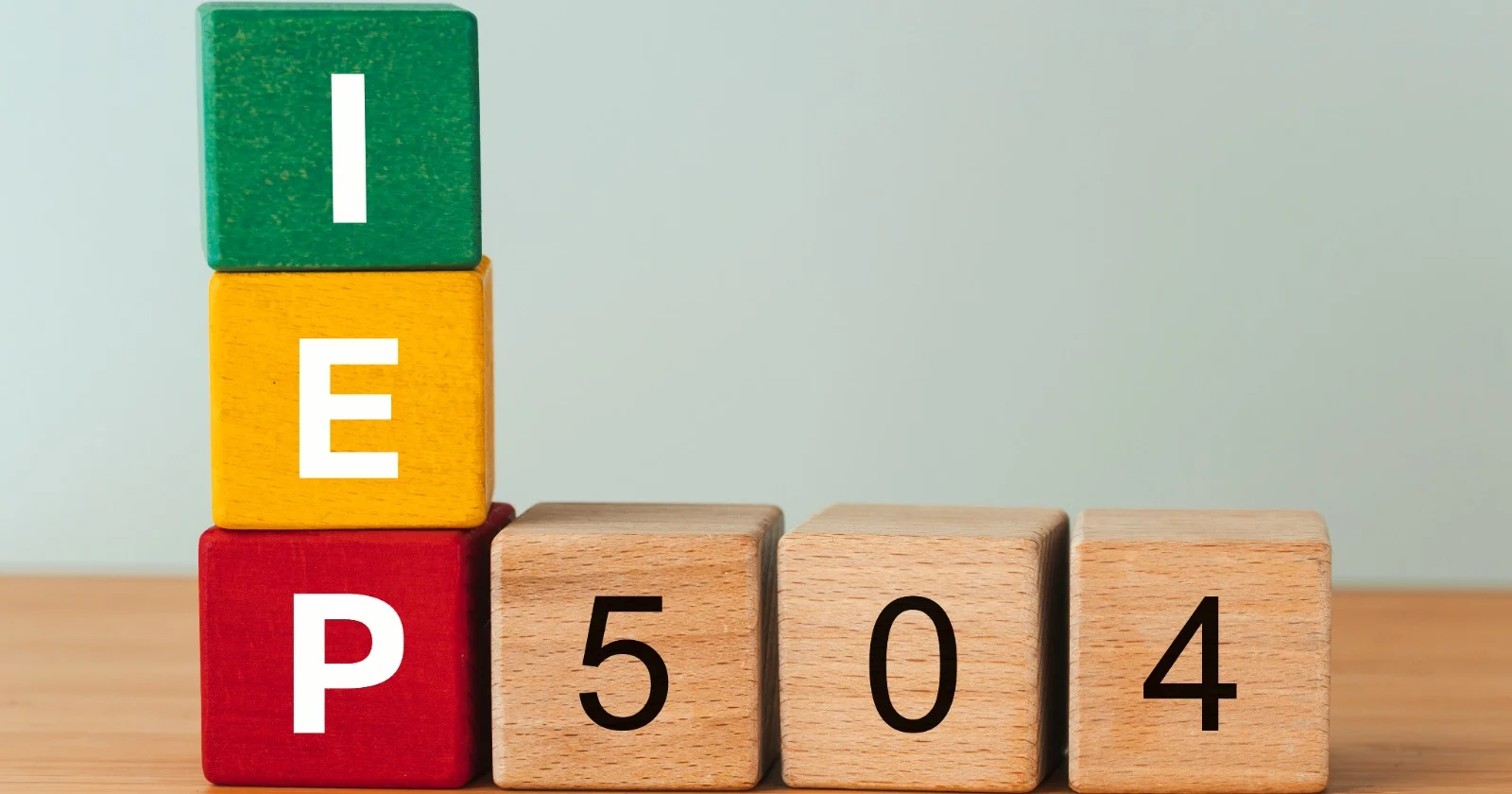
If your child is evaluated and found eligible for special education services, they will receive an IEP, an Individualized Education Program, which legally documents the accommodations, modifications, and services the school will provide. If they don't meet the threshold for special education but still have documented challenges, they may qualify for a 504 plan, which provides accommodations without the full special education framework.
Early identification is consistently the strongest predictor of positive long-term outcomes for children with learning disabilities. A child who receives appropriate support in second grade has a fundamentally different trajectory than one who doesn't receive it until seventh grade. If you're watching patterns that concern you, acting on that concern earlier is almost always the right call.
Browse schools in your area on allk12 and check the discussion boards for your specific school. Other parents navigating learning disability evaluations, IEP processes, and finding the right support in the same district have practical knowledge about how the process actually works locally that no general guide can replicate.
Sources
PLOS ONE (2025): Rising prevalence of parent-reported learning disabilities among U.S. children
Disabled World: 2026 U.S. Disability Statistics
National Center for Education Statistics: Public and private school comparison
HelpGuide: Learning Disabilities and Learning Disorders in Children
Atrium Health Wake Forest Baptist: Common Indicators of Specific Learning Disabilities
Current Psychology (2024): Children at Risk of Specific Learning Disorder
SAGE Open (2025): Learning Disabilities in the 21st Century
Illinois Cares for Kids: Learning Disabilities and Disorders
Crown Counseling: Learning Disabilities Statistics