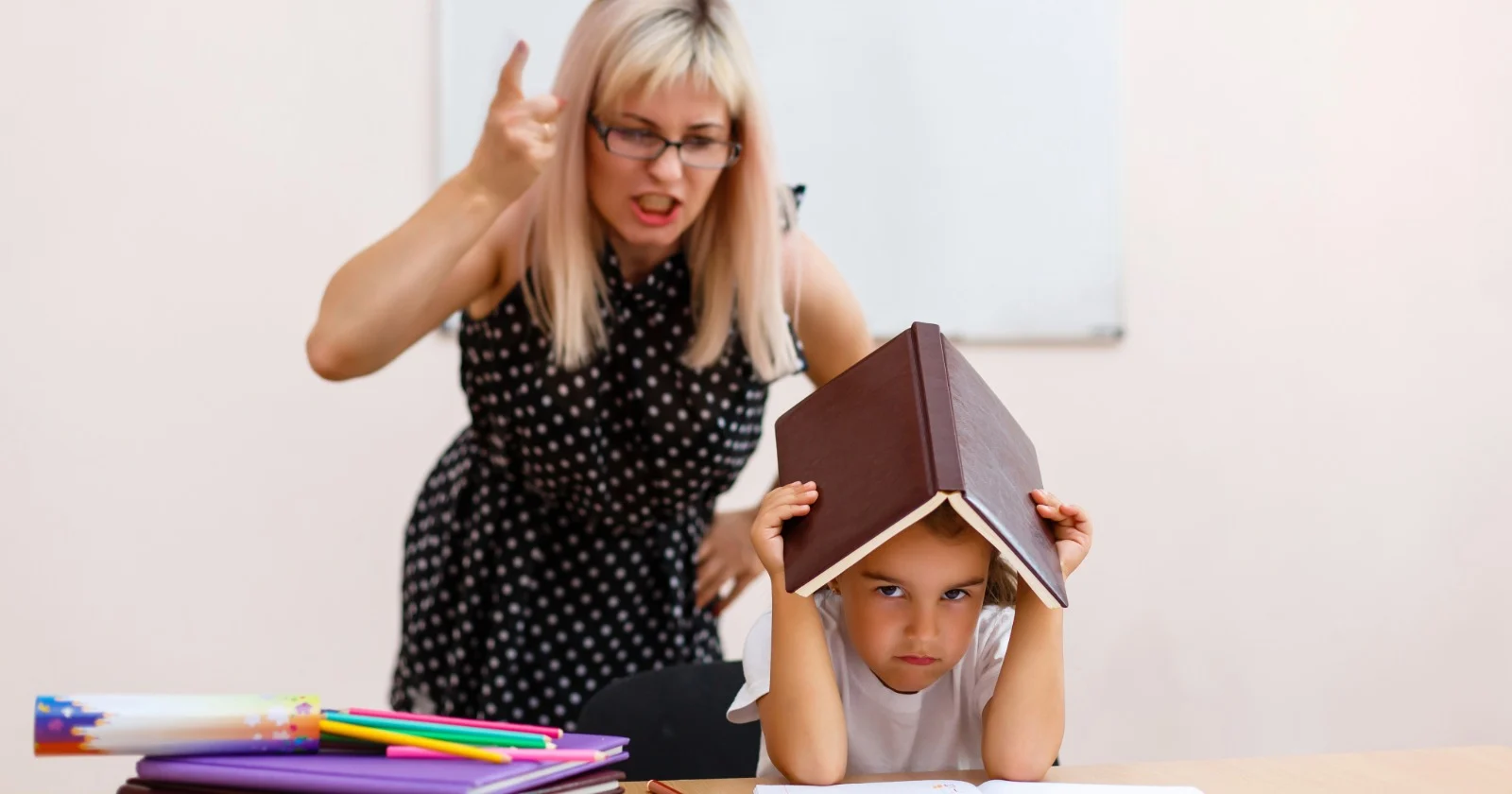





Every student will eventually have a teacher who is short-tempered, dismissive, sarcastic, or just plain unpleasant to be around. It's one of those unavoidable parts of school that nobody puts in the brochure. How you handle it matters, not just for your grade in that class, but for the skill you're building of navigating difficult people, which is going to come up for the rest of your life.
This isn't about telling you to just take it or pretend everything is fine. Some teacher behavior genuinely crosses a line and needs to be reported. But most rude teacher situations don't require a formal complaint. They require a strategy that keeps you out of the line of fire, protects your grade, and doesn't make your school year miserable.
First, Figure Out What Kind of Rude You're Dealing With
Not all rude is the same, and the right response depends on what's actually happening.
Some teachers are rude to everyone equally. They're impatient, have a dry sarcasm that doesn't land well, snap when the class is too loud, or deliver feedback harshly. It's unpleasant, but it isn't personal. These teachers often have a hard exterior that students who push through it find is more bark than bite. The strategy here is mostly just not taking it personally and learning their specific triggers so you can avoid them.
Some teachers are rude in response to specific student behaviors. They react sharply to talking, phones, late work, or disruption. If you're honest with yourself and you've been any of those things in their class, the rude response might be partly a reaction to what they perceive as disrespect. That doesn't make their delivery okay, but it does mean the situation is more in your control than it feels.
Some teachers single out specific students. This is a different situation and a more serious one. If a teacher consistently targets you, uses your name negatively in front of the class, grades your work differently than comparable work from other students, or goes out of their way to make you feel small, that's not just an unpleasant personality. That's something worth escalating.
And some behavior isn't rude, it's actually abusive: humiliating students publicly on a regular basis, making comments about race, gender, appearance, or family background, or creating an environment where students are afraid to participate. That's a different category entirely and requires adult involvement, not just coping strategies.
Don't Make It Worse
The natural impulse when someone is rude to you is to be rude back, shut down, or make it obvious you don't respect them. All of those responses feel satisfying for about thirty seconds and then make your life harder for the rest of the semester.
Arguing with a teacher in front of the class almost never ends in your favor. Even if you're right, you're in their room, in their class, being graded by them. Public confrontation creates a dynamic where they have to defend their authority and you have to defend your dignity, and that's a fight neither of you wins cleanly. If you disagree with something they said or did, find a private moment to address it, not an audience.
Checking out is a response that feels like neutrality but actually costs you. A student who stops participating, stops turning in work, or mentally leaves the class is letting a bad dynamic affect their grade and their learning. Don't hand a difficult teacher that kind of power over your academic performance.
Complaining about the teacher to other students in the class is also worth avoiding. It feels like solidarity but it tends to create more drama, get back to the teacher, and escalate a situation you'd probably rather just survive.
Control What You Can Control
The most effective strategy with a difficult teacher is also the most boring one: be so clearly prepared and so clearly respectful that they have no ammunition against you. Turn everything in on time. Do the reading. Know the material. Sit where you're visible and engaged. When you follow the rules of their class to the letter, you take away the most common reasons teachers lash out at students.
This feels unfair, and it is. You shouldn't have to be perfect to be treated respectfully. But you're playing a long game with a limited-duration problem. You'll be out of that class in a semester. Protecting your grade while keeping your head down is a smarter investment than winning the daily battle of proving the teacher is wrong.
Ask questions and engage with the material even when the delivery is bad. Some teachers who seem rude in a classroom environment respond noticeably differently to students who show genuine intellectual engagement. It doesn't always work, but it changes the dynamic often enough to be worth trying.
Communicate Directly If You Can
This feels counterintuitive when a teacher has been unpleasant, but talking to them directly, outside of class, in a low-stakes moment, is often the most effective thing you can do. Not to confront them or tell them they were rude, but to open a channel.
Go to office hours or catch them before or after class. Ask a genuine question about the material, get help with an assignment, or just make a brief, non-confrontational connection. Something as simple as showing interest in their subject can shift how they see you from a face in a difficult class to an individual student they've talked to. Teachers often behave very differently in one-on-one situations than in classroom settings where they're managing thirty people at once.
If something specific happened that bothered you, you can address it directly but carefully. Something like: "I wanted to ask about what happened in class on Tuesday. I felt embarrassed when my answer was corrected that way, and I wanted to understand what I got wrong so I don't make the same mistake." That framing, specific, focused on learning rather than accusation, opens a conversation without triggering a defensive response. Some teachers will hear that and adjust. Others won't. But you'll have given the direct approach a real chance before escalating.
Talk to a Trusted Adult
If the direct approach doesn't work or the situation is serious enough that going directly to the teacher doesn't feel appropriate, talking to a school counselor is the right next step. Not to file a formal complaint necessarily, just to get an outside perspective from someone who knows the school and the teacher and can help you figure out what's actually happening and what your options are.
Your counselor may already know that other students are having similar experiences. They can help you decide whether this is something to ride out, something that warrants a parent-teacher conference, or something that needs to go higher. They can also help you frame a conversation with your parents in a way that produces useful support rather than a reaction that escalates things in ways you didn't intend.
If you have a parent or guardian who is the kind of person who can make a call without turning it into a war, looping them in earlier rather than later often helps. A parent who requests a meeting and asks calm questions gets more information and better results than one who comes in already angry. How you frame it to them matters: I want to tell you what's been happening so you know, not because I want you to fix it, versus I need you to do something about this. The first gives them room to help thoughtfully. The second locks them into a reactive mode.
Know When to Escalate
There are situations where coping strategies and direct communication are not enough and formal escalation is the right call. If a teacher is publicly humiliating students on a regular basis, making discriminatory comments, creating a climate of fear in the classroom, or treating you differently from other students in ways that affect your grade without any academic justification, that needs to go to a principal or administrator.
When you do escalate, specifics matter enormously. "My teacher is rude" is hard to act on. "On these three dates, my teacher said these specific things in front of the class, and here is how it affected my participation" is actionable. Keep a record of specific incidents if you think things are heading toward a formal complaint: dates, what was said, who was present. That documentation makes your account credible and gives administrators something concrete to work with.
If your parents are involved in an escalation, the same specificity applies. Administrators respond much more effectively to documented specifics than to general complaints about a teacher's personality. Coming in with dates and quotes rather than impressions and feelings changes the conversation.
Keep the Long View
One difficult teacher is not going to derail your education unless you let it. The students who navigate bad teacher situations best are the ones who make a clear-eyed decision that this is a temporary problem requiring a specific strategy, not a referendum on whether school is worth it or whether they're capable of doing well academically.
There's also something genuinely useful in learning to work with people you don't like or who treat you poorly, not because that's how things should be, but because it's how things sometimes are. The ability to stay professional, protect your performance, and not let someone else's behavior determine your own is a skill that gets tested well beyond high school.
If you're dealing with a difficult classroom situation right now, check the discussion boards at your school on allk12. Other students at your school are likely navigating similar dynamics, and sometimes just knowing you're not alone with it makes it easier to handle.