The federal grant set up to pay for before-school, after-school, and summer programs is the Nita M. Lowey 21st Century Community Learning Centers program, usually shortened to 21st CCLC. Congress has funded it at $1,329,673,000 in every fiscal year from 2023 through 2026, according to state tables from the U.S. Department of Education.
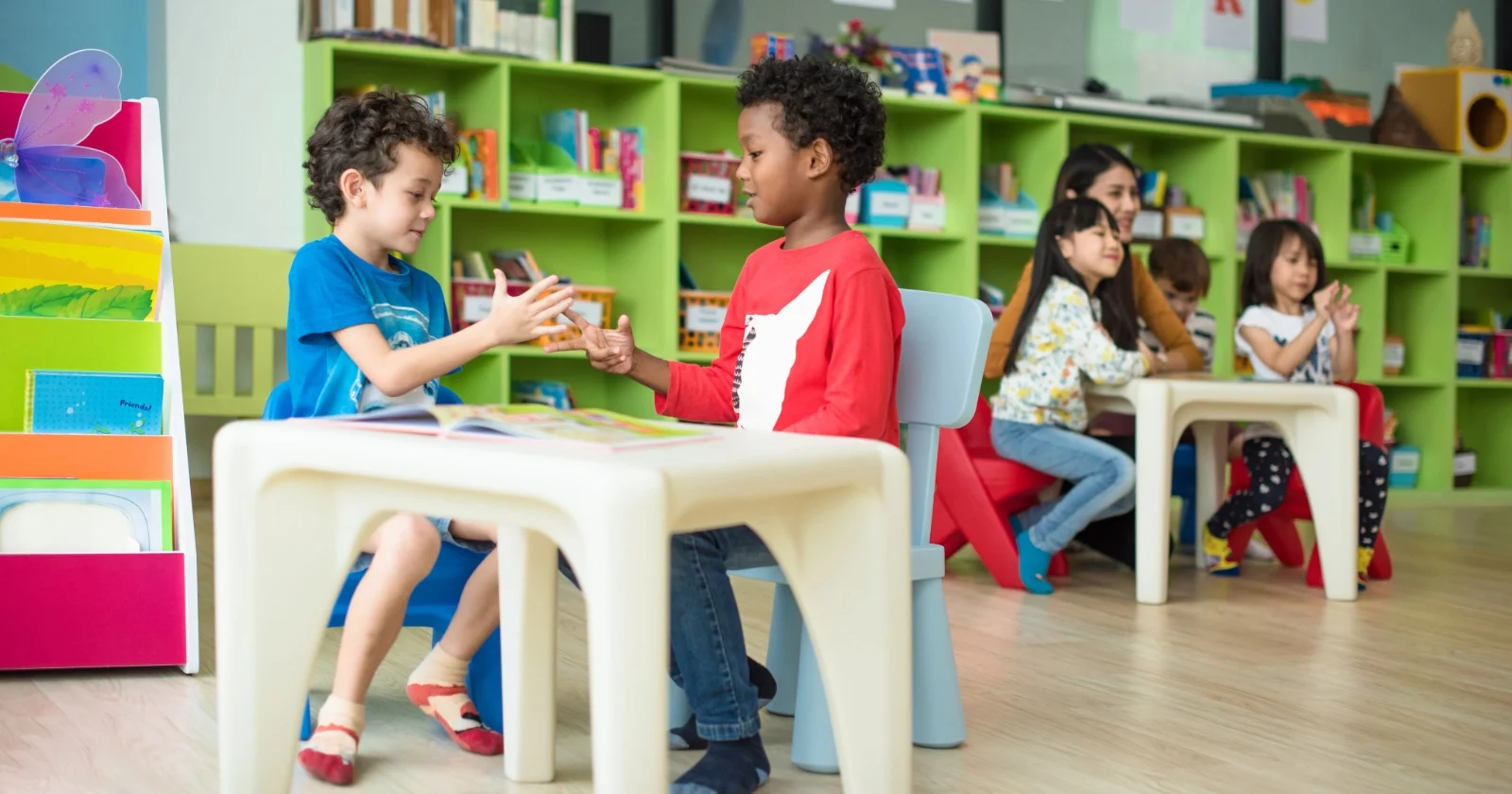
In the 2022-23 school year, states used that money to fund 9,985 centers. Those centers served 1,393,988 students and 428,884 adults and family members, according to the Department's most recent national performance report, published in 2024. The report also counted 192,205 students in summer programs in 2022.
Demand runs well past that. Parents of 29.6 million children want an after-school program for them, but just 7 million are enrolled, according to America After 3PM, a survey of 30,515 parents commissioned by the Afterschool Alliance and released in October 2025. The other 22.6 million (29.6 million minus 7 million) would attend if programs were available, the group found. Those figures count every kind of after-school program, not only federally funded ones.
The program's future is now part of a budget fight. The president's budget request for fiscal 2027 lists $0 for 21st CCLC. It would fold the program into Make Education Great Again, or MEGA, a proposed $2 billion grant that the Department describes as a single state formula grant replacing most current K-12 programs. States would have to spend at least 25% of MEGA money on reading and at least 25% on math. They could spend the rest on anything allowed under 17 current K-12 programs, which "would be eliminated as stand-alone programs," according to the Department's budget summary.
21st CCLC alone got $1.33 billion in fiscal 2025. That is about two-thirds of the proposed $2 billion pot ($1.33 billion divided by $2 billion is about 66.5%), before counting the other 16 programs MEGA would absorb.
Congress has seen this before. The administration's fiscal 2026 request also listed $0 for the program, according to a Congressional Research Service (CRS) report. Lawmakers kept it at $1.33 billion in the spending law the president signed on February 3, 2026.
For fiscal 2027, the House Appropriations Committee approved its labor, health, and education spending bill on June 9, 2026, by a vote of 34 to 28. The committee's report provides $1,329,673,000 for the program, which it calls "the same as the fiscal year 2026 enacted level." The Senate Appropriations Committee had not marked up its version as of a September 8 CRS report. Federal agencies are running on a stopgap law, signed September 2, that continues spending based largely on fiscal 2026 levels through December 11, 2026.
Timing matters too. 21st CCLC is forward funded, meaning each year's money normally reaches states on July 1, at the start of the federal fiscal year's last quarter. In July 2025, the Department did not make that money available on July 1 for 21st CCLC and four other K-12 formula programs, CRS reported. The 2026 spending law added a rule requiring the Department to award those formula grants on the date the money becomes available.
How the money reaches schools
The Department does not pick local programs. Under federal law, it splits the money among states by formula: each state's share matches its share of federal Title I money for low-income students in the year before. No state gets less than one-half of 1% of the total. For fiscal 2026, 13 states and the District of Columbia get the same minimum amount, $6,515,398 each, according to the Department's preliminary estimates.
States must hand at least 93% of their money to local groups through competitions. School districts, nonprofits, and other public agencies can apply. Awards last three to five years and must be at least $50,000. States can keep up to 2% for administration and up to 5% for monitoring, evaluation, and training.
Programs have to aim at high-poverty schools. The law requires each program to target students who primarily attend schools eligible for Title I schoolwide programs, meaning schools where at least 40% of children come from low-income families. States must also give priority to applicants serving schools flagged for improvement under federal accountability rules and to joint applications that include a district. allk12 has a separate explainer on how Title I schools work.
That pool of schools is large. Using free and reduced-price lunch eligibility as the measure of low income, 58,000 of the 81,468 operating public schools with usable lunch counts for 2024-25 had at least 40% of students eligible, or 71.2%, according to allk12's analysis of National Center for Education Statistics data. Arizona, Delaware, Massachusetts, South Carolina, Tennessee, West Virginia, and the District of Columbia reported few or no usable counts and are left out, and Ohio reported them for fewer than half its schools. Lunch counts are a rough poverty gauge, and states collect them differently.
The share swings by state. In Louisiana, 93.8% of schools with data were at 40% or higher, and in Oklahoma, 91.8% were. In New Hampshire, 20.0% were, and in Utah, 33.0%. For scale, the Department counted 9,985 centers funded by the program nationwide in 2022-23.
What each state gets
The table shows each state's 21st CCLC allocation for fiscal 2025 and the Department's preliminary estimate for fiscal 2026, compiled March 16, 2026. California's $159.6 million is the largest, 12.0% of the $1.33 billion total. The five largest (California, Texas, New York, Florida, and Illinois) add up to $510.0 million, or 38.4%.
The national total did not move, but state shares did. Georgia's estimate rose $5.1 million, or 12.6%, and Tennessee's rose 13.8%. West Virginia's fell 17.3%, and Missouri's fell 14.2%. Because the formula follows each state's prior-year Title I share, a state's slice moves when its Title I slice does.
| State | FY 2025 actual | FY 2026 estimate | Change |
|---|---|---|---|
| California | $157,703,962 | $159,611,988 | +$1,908,026 (+1.2%) |
| Texas | $130,573,406 | $126,049,607 | -$4,523,799 (-3.5%) |
| New York | $105,749,545 | $104,003,866 | -$1,745,679 (-1.7%) |
| Florida | $70,479,187 | $68,238,349 | -$2,240,838 (-3.2%) |
| Illinois | $56,108,973 | $52,120,373 | -$3,988,600 (-7.1%) |
| Pennsylvania | $51,301,469 | $51,676,331 | +$374,862 (+0.7%) |
| Georgia | $40,591,845 | $45,709,066 | +$5,117,221 (+12.6%) |
| Ohio | $46,107,593 | $45,279,914 | -$827,679 (-1.8%) |
| Michigan | $39,205,268 | $40,917,113 | +$1,711,845 (+4.4%) |
| North Carolina | $35,802,326 | $37,595,304 | +$1,792,978 (+5.0%) |
| New Jersey | $31,217,446 | $31,784,886 | +$567,440 (+1.8%) |
| Louisiana | $27,743,522 | $27,381,595 | -$361,927 (-1.3%) |
| Tennessee | $23,610,487 | $26,866,646 | +$3,256,159 (+13.8%) |
| Virginia | $22,473,270 | $24,583,013 | +$2,109,743 (+9.4%) |
| Washington | $21,337,157 | $21,842,696 | +$505,539 (+2.4%) |
| Arizona | $22,114,069 | $21,766,097 | -$347,972 (-1.6%) |
| Kentucky | $19,772,061 | $21,494,076 | +$1,722,015 (+8.7%) |
| Massachusetts | $20,050,205 | $21,421,986 | +$1,371,781 (+6.8%) |
| Alabama | $21,177,196 | $21,044,233 | -$132,963 (-0.6%) |
| Maryland | $22,645,366 | $19,953,471 | -$2,691,895 (-11.9%) |
| Indiana | $19,590,813 | $19,456,482 | -$134,331 (-0.7%) |
| South Carolina | $19,309,779 | $19,204,111 | -$105,668 (-0.5%) |
| Oklahoma | $16,075,706 | $16,977,844 | +$902,138 (+5.6%) |
| Missouri | $18,971,391 | $16,275,835 | -$2,695,556 (-14.2%) |
| Wisconsin | $15,719,210 | $15,020,639 | -$698,571 (-4.4%) |
| Mississippi | $16,717,467 | $14,852,350 | -$1,865,117 (-11.2%) |
| Minnesota | $13,623,168 | $12,578,720 | -$1,044,448 (-7.7%) |
| Colorado | $12,862,977 | $12,383,265 | -$479,712 (-3.7%) |
| Oregon | $11,779,872 | $12,342,216 | +$562,344 (+4.8%) |
| Arkansas | $12,254,384 | $12,068,854 | -$185,530 (-1.5%) |
| Connecticut | $10,860,333 | $11,698,809 | +$838,476 (+7.7%) |
| Nevada | $11,531,167 | $11,130,581 | -$400,586 (-3.5%) |
| New Mexico | $10,311,083 | $10,687,110 | +$376,027 (+3.6%) |
| Kansas | $8,780,531 | $7,991,976 | -$788,555 (-9.0%) |
| Iowa | $7,617,833 | $7,786,388 | +$168,555 (+2.2%) |
| Utah | $6,548,640 | $7,039,198 | +$490,558 (+7.5%) |
| West Virginia | $8,287,022 | $6,856,629 | -$1,430,393 (-17.3%) |
| Alaska | $6,548,640 | $6,515,398 | -$33,242 (-0.5%) |
| Delaware | $6,548,640 | $6,515,398 | -$33,242 (-0.5%) |
| District of Columbia | $6,548,640 | $6,515,398 | -$33,242 (-0.5%) |
| Hawaii | $6,548,640 | $6,515,398 | -$33,242 (-0.5%) |
| Idaho | $6,548,640 | $6,515,398 | -$33,242 (-0.5%) |
| Maine | $6,548,640 | $6,515,398 | -$33,242 (-0.5%) |
| Montana | $6,548,640 | $6,515,398 | -$33,242 (-0.5%) |
| Nebraska | $6,548,640 | $6,515,398 | -$33,242 (-0.5%) |
| New Hampshire | $6,548,640 | $6,515,398 | -$33,242 (-0.5%) |
| North Dakota | $6,548,640 | $6,515,398 | -$33,242 (-0.5%) |
| Rhode Island | $6,548,640 | $6,515,398 | -$33,242 (-0.5%) |
| South Dakota | $6,548,640 | $6,515,398 | -$33,242 (-0.5%) |
| Vermont | $6,548,640 | $6,515,398 | -$33,242 (-0.5%) |
| Wyoming | $6,548,640 | $6,515,398 | -$33,242 (-0.5%) |
Source: U.S. Department of Education, State Tables by Program, FY 2025-FY 2027 President's Budget, compiled March 16, 2026. Fiscal 2026 figures are preliminary estimates. The 2027 request lists $0 for every state. Puerto Rico, other territories, the Indian set-aside, and other national reservations are not shown. Sorted by fiscal 2026 estimate.
Sources
U.S. Department of Education: State Tables by Program, FY 2025-FY 2027
U.S. Department of Education: Fiscal Year 2027 Budget Summary
U.S. Department of Education: Overview of the 21st CCLC Annual Performance Data, 2022-2023
House Appropriations Committee: H. Rept. 119-696, Labor-HHS-Education Appropriations Bill, 2027
Congressional Research Service: Labor, Health and Human Services, and Education: FY2026 Appropriations
Congressional Research Service: Status of FY2027 Labor-HHS-Education Appropriations
Congressional Research Service: Overview of Continuing Appropriations for FY2027
20 U.S.C. 7172: 21st CCLC state allotments and state use of funds
20 U.S.C. 7174: 21st CCLC local competitive subgrants
20 U.S.C. 6314: Title I schoolwide programs
Afterschool Alliance: America After 3PM 2025 national news release
School counts from allk12's analysis of National Center for Education Statistics (NCES) Common Core of Data, 2024-25.