
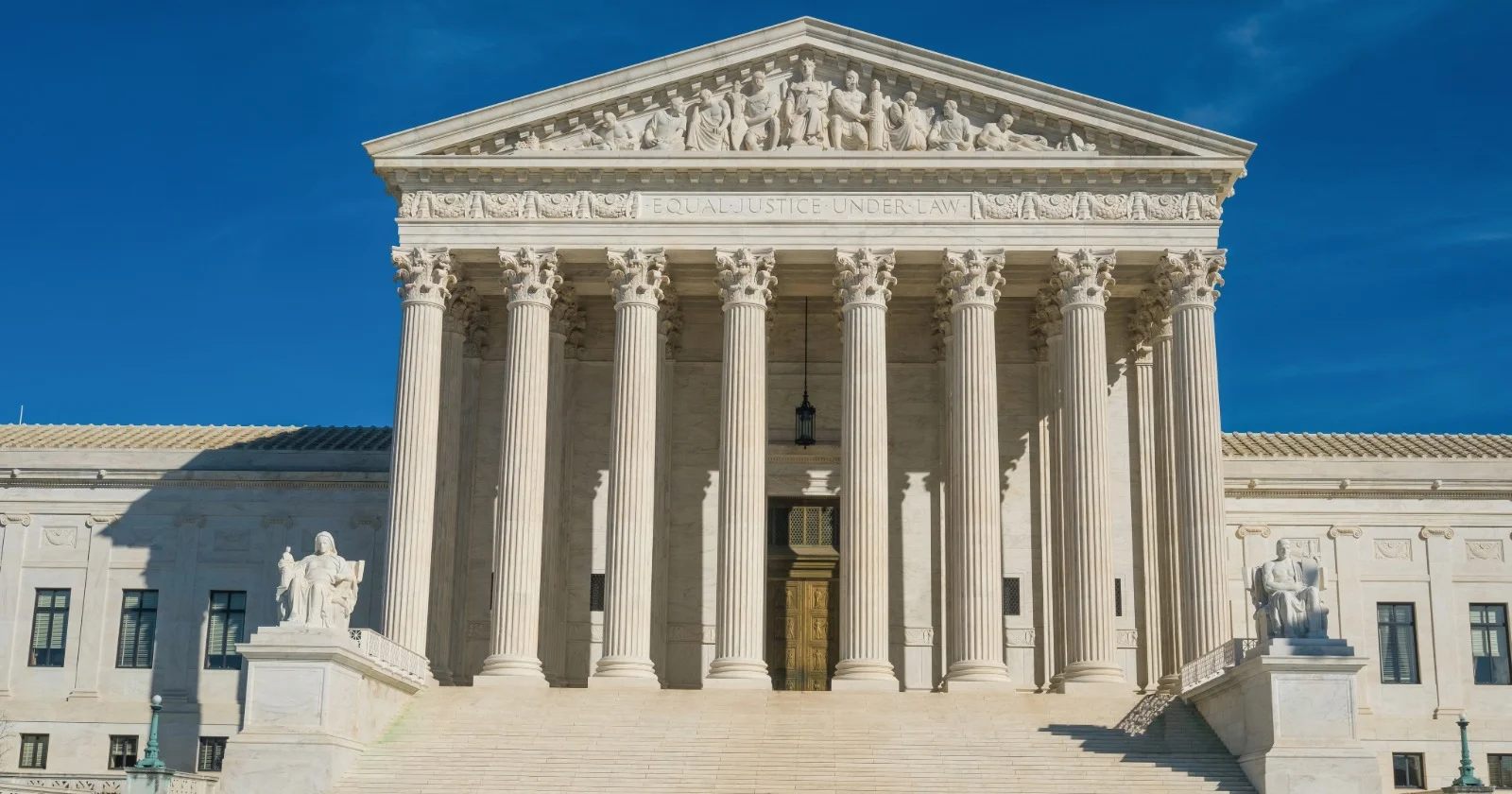
The U.S. Supreme Court agreed on October 19 to hear a challenge to how Montgomery County Public Schools in Maryland picks students for its magnet middle school programs. The case, Association for Education Fairness v. Montgomery County Board of Education (No. 26-12), was brought by a group of Asian American parents, and it could change what anyone has to prove when they say a race-neutral school admissions policy was designed to discriminate.
The district runs four highly competitive magnet programs for middle schoolers, a science, technology, engineering, and math (STEM) program and a humanities program in each half of the county. They are housed at Takoma Park Middle, Eastern Middle, Roberto W. Clemente Middle, and Martin Luther King Jr. Middle, according to the parents' petition.
The fight goes back about a decade. After a consulting firm studied access to the programs, the district tried new admissions rules it called a field test, which compared students with classmates at schools of similar poverty levels. The parents say that change cut Asian American enrollment. At the Takoma Park STEM program, Asian American students made up 45.6% of those offered seats in the three years before the field test and 31.5% during the three years it was used, according to the petition. The parents' group sued in 2020.
During the pandemic, the district switched to what it calls the Pandemic Plan and kept it. Students who score at or above a cutoff on a standardized test enter a lottery for seats. The cutoffs are set against students from elementary schools with similar poverty levels, so the bar is higher at more affluent schools. The parents say that still works against Asian American students, who are concentrated in low-poverty schools. The district says the lottery is "race-neutral, race-blind," and that once a student is in the pool, the test score plays no part in who wins a seat.
Lower courts dismissed the case. The 4th U.S. Circuit Court of Appeals ruled that the parents had not shown harm, because Asian American students were still admitted at a higher rate than their share of the applicant pool. It relied on its 2023 ruling upholding admissions changes at Thomas Jefferson High School for Science and Technology in Fairfax County, Virginia, a case the Supreme Court declined to hear in 2024.
The question the justices agreed to answer is narrow but important: whether a plaintiff must first show that the targeted group was admitted below its share of the applicant pool before a court will look at evidence of discriminatory intent. Federal appeals courts disagree. The 1st and 4th Circuits require that showing, while the 2nd and 3rd Circuits allow claims to go forward without it, according to K-12 Dive.
The answer will matter beyond Maryland. Parents have brought similar claims against selective public schools in Boston, New York, Fairfax County, and Philadelphia. The Supreme Court's 2023 decision in Students for Fair Admissions v. Harvard ended race-conscious college admissions. Closer to home, allk12 covered a Jersey City admissions settlement and how New York City's selective high schools admit students, and our explainer covers what a magnet school is.
Montgomery County Public Schools is Maryland's largest district, with 168,642 students in 232 schools in 2024-25, according to federal data. About 13% of its students are Asian American. The magnet programs are only part of each host school, so school-wide figures don't show who is in the programs. No argument date had been set as of early November, and a decision is expected by the end of the Court's term in June 2027.
Sources
Supreme Court of the United States: Docket No. 26-12
Petition for a writ of certiorari, Association for Education Fairness (June 29, 2026)
Brief in opposition, Montgomery County Board of Education (August 27, 2026)
Associated Press via NY1: Supreme Court to hear case on race in middle school admissions
K-12 Dive: Supreme Court takes case on K-12 admissions policies (October 20, 2026)
Enrollment and demographics from allk12's analysis of National Center for Education Statistics (NCES) Common Core of Data, 2024-25.