



Every year, rankings of state public school systems circulate and generate the predictable mix of pride and outrage depending on where you live. Most of those rankings are built on raw test score averages, which reflect the demographics of a state's student population as much as anything the schools are doing. The more interesting and more useful question is what the best-performing states are actually doing, which requires looking past the headline numbers into the policies, structures, and investments that distinguish the top from the bottom. The answer is more complicated than either the ranking celebrators or the ranking skeptics tend to suggest, and it cuts across political lines in ways that challenge easy narratives on both sides.
The Measurement Problem First
The National Assessment of Educational Progress, known as the NAEP or the Nation's Report Card, is the most reliable common measure of student academic performance across all fifty states. Unlike state assessments, which vary in rigor and standards from state to state, NAEP is administered uniformly and measures the same things everywhere. The 2024 NAEP results, the most recent available, show fourth and eighth grade performance in reading and math across all states.
The raw NAEP rankings favor states with higher-income, more educated, and less economically diverse populations. Massachusetts, New Jersey, Connecticut, and New Hampshire consistently appear at the top of unadjusted rankings, but those states also have among the highest median household incomes and lowest poverty rates in the country. Separating what schools are doing from what demographics are producing is the central methodological challenge in comparing states.
The Urban Institute produces demographically adjusted NAEP rankings that control for socioeconomic and demographic factors, attempting to measure school system performance independent of student background. These adjusted rankings tell a meaningfully different story. Mississippi, which ranks near the bottom on unadjusted scores, ranks first on demographically adjusted 4th and 8th grade reading and math in 2024, a dramatic reversal that reflects genuine instructional improvement rather than demographic advantage. Louisiana similarly ranks near the top on adjusted measures after years of policy reform, despite having among the highest poverty rates in the country.
Both measures matter. Raw rankings tell you where a state's students are performing. Adjusted rankings tell you how much the school system is contributing to that performance. The states that appear in both top tiers, strong on raw scores and strong on adjusted scores, are the ones worth looking at most carefully, because they are serving diverse student populations well and doing it in ways that go beyond demographic luck.
The Consistent Top Performers
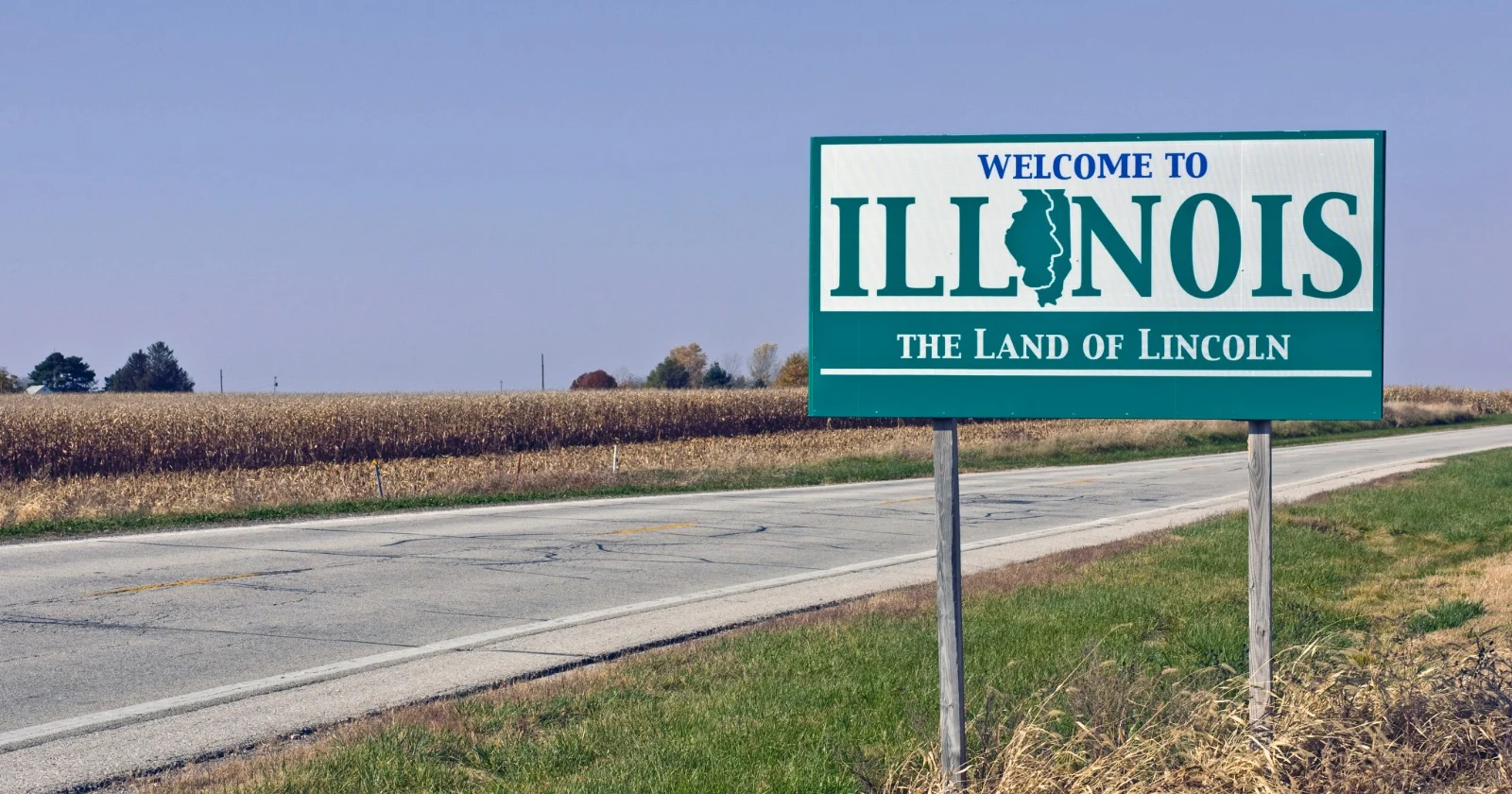
Five states appear in the top tier on both unadjusted and demographically adjusted 8th grade NAEP scores in 2024: Colorado, Connecticut, Illinois, Massachusetts, and New Jersey. That these five specifically appear in both rankings is significant because it means they are outperforming expectations for their student populations, not just benefiting from favorable demographics.
Massachusetts has been at or near the top of NAEP rankings for two decades and is the closest thing to a consensus answer when researchers are asked which state has the best public schools. The state's reading proficiency on allk12 state assessment data sits at 43.8% meeting or exceeding grade level, which sounds underwhelming until you understand that Massachusetts uses one of the most demanding state proficiency standards in the country, deliberately set high so that a Massachusetts proficient designation actually means something. On NAEP, Massachusetts students consistently score among the highest in the nation and compare favorably with top-performing countries internationally.
New Jersey is the other state that belongs in virtually every top-tier conversation. The state posts a 53.1% reading proficiency average on its own assessment data, among the highest of states that report to allk12, and its NAEP scores have been consistently strong across grade levels and demographic groups. New Jersey's demographic diversity, which includes large urban districts like Newark and Camden alongside some of the wealthiest suburban districts in the country, makes its performance on adjusted rankings particularly significant.
Connecticut at 50.5% and Maryland at 50.6% on reading proficiency are in similar territory, with Connecticut's top schools, particularly in communities like New Canaan, Greenwich, and Westport, producing some of the highest individual school scores in the country. New Canaan High School's scores page shows the kind of consistent multi-year proficiency that characterizes Connecticut's highest-performing districts.
Virginia stands out with the highest state reading proficiency average in allk12 data at 74.2%, though this reflects Virginia's assessment standards as much as absolute performance. Washington state at 58.4% and New Hampshire at 55.2% round out a group of states that consistently perform in the top tier on multiple measures.
The Most Improved States and What They Did
The states showing the most dramatic improvement over the past decade are arguably more instructive than the perennial top performers, because their gains are recent enough to trace to specific policy decisions.
Mississippi is the most studied turnaround story in American public education. The state ranked 49th in 4th grade reading in 2013. By 2024, it ranked first nationally on demographically adjusted 4th grade reading and near the top on multiple other measures. The improvement traces to a specific package of reforms: the Mississippi Literacy-Based Promotion Act of 2013, which required evidence-based reading instruction and retained students in 3rd grade who couldn't read at grade level rather than promoting them; investment in reading coaches and teacher professional development; and a deliberate alignment between state standards, assessment, and instruction. The state didn't just tell teachers to do better. It changed what they were taught to do, provided support for doing it, and created accountability for results.
Louisiana moved from 49th in 4th grade reading in 2019 to 15th by 2024, one of the largest climbs in NAEP history over a five-year period. The state's approach centered on curriculum quality, specifically the adoption of high-quality, knowledge-building curricula aligned to Louisiana's standards, and a state review process that rated and recommended specific curriculum materials to districts. Rather than leaving curriculum choice entirely to local discretion, Louisiana took a position on what good curriculum looks like and made it easier for districts to adopt it.
Indiana ranked 6th nationally in both 4th and 8th grade reading on the 2024 NAEP, up from 19th and 17th respectively in 2022. The state's gains followed a long-term commitment to A-F school accountability, structured literacy instruction grounded in the science of reading, and high-quality instructional content. Indiana's trajectory is particularly notable because it has been sustained over multiple years rather than representing a single-year bounce.
Tennessee improved by 10 or more spots in its national ranking across all four NAEP measures between 2022 and 2024, moving to 23rd in 4th grade reading and 20th in 8th grade reading. The state implemented higher standards in 2017 after a multiyear stakeholder process and has maintained those standards consistently, creating the kind of instructional coherence that tends to show up in outcomes over time.
What the Top States Have in Common
Looking across the states that perform best on both raw and adjusted measures, several common threads emerge that cut across political characterization.
The most consistent factor is commitment to evidence-based early literacy instruction. The states that have improved most dramatically over the past decade, Mississippi, Louisiana, Indiana, and Tennessee, all made explicit policy decisions to adopt instructional approaches grounded in the science of reading: systematic phonics, phonemic awareness, fluency practice, and vocabulary development. These approaches are not new, but they had been displaced in many states by whole-language and balanced literacy approaches that the research does not support. The states that moved fastest adopted the evidence and made it mandatory rather than optional.
Strong curriculum standards that are actually used in classrooms is a second common factor. The difference between having rigorous standards on paper and having those standards reflected in daily instruction is significant, and the states with the strongest outcomes tend to have systems that connect standards to curriculum materials to teacher preparation to assessment in a coherent way. Louisiana's curriculum adoption strategy is the most explicit example, but Massachusetts, New Jersey, and Virginia have all maintained standards alignment over long enough periods to see it reflected in outcomes.
Sustained accountability without excessive testing is a third thread. The states with the strongest long-term outcomes tend to have accountability systems that identify struggling students early, require intervention before students fall too far behind, and hold schools responsible for outcomes in ways that create genuine pressure to improve. Mississippi's 3rd grade reading retention requirement is the most visible example of this kind of early accountability, but similar early intervention requirements exist in Indiana, Tennessee, and several other improving states.
Teacher compensation and workforce quality also correlates with performance, though the relationship is more complex than simple salary comparisons suggest. Massachusetts and New Jersey both pay teachers well, but so do states that don't perform as well. The more specific relationship appears to be between competitive entry-level salaries that attract strong candidates to the profession and performance on adjusted metrics that control for demographics. States that attract academically stronger candidates into teacher preparation programs tend to produce stronger outcomes over time.
The Complicated Cases
Some states complicate the simple narrative about what produces good school outcomes.
Iowa at 73.6% reading proficiency on allk12 data sits near Virginia at the top of state-reported figures, reflecting a combination of demanding state standards and genuinely strong performance in a state that rarely appears in education policy conversations. Iowa has maintained strong NAEP scores for decades without dramatic policy swings in either direction, suggesting that stable, well-resourced community schools with experienced teachers can produce strong outcomes without high-profile reform initiatives.
Nebraska at 57.6% and Maine at 64.1% are similar cases: states that perform well on multiple measures without being frequent subjects of education reform coverage, largely because their performance has been stable rather than dramatically improving or declining.
California, which has among the highest per-pupil spending of any large state, does not appear in the top tier on adjusted or unadjusted NAEP rankings. The state's performance reflects the challenge of serving an enormously diverse student population across 58 counties with wildly varying local conditions, but it also reflects genuine instructional quality questions that per-pupil spending alone doesn't address. The state has moved toward phonics-based reading instruction in recent years, following the evidence that Mississippi and Louisiana acted on earlier, which may produce improvement in future NAEP cycles.
The adjusted ranking for Minnesota is a cautionary example in the other direction. The state at 49.7% on allk12 reading data has historically been seen as a high performer, but its demographically adjusted NAEP ranking fell to 28th nationally in 2024, suggesting that its aggregate performance reflects favorable demographics more than instructional quality. A state can have high absolute scores and mediocre school systems simultaneously if its student population is demographically advantaged enough.
What the School-Level Data Shows
State averages are useful for policy analysis but families care about specific schools. The pattern of top performers within states tells a more granular story about what strong public school performance looks like on the ground.
In Massachusetts, Dover-Sherborn Regional High School in Dover leads the state with 93.0% reading proficiency in SY 2024-25. Bromfield High in Harvard, Cohasset High, and Needham High all exceed 85%. These are predominantly small-to-medium suburban schools in affluent communities, which reinforces the demographic caveat, but the absolute level of proficiency they achieve is a useful benchmark for what public school performance can look like.
In New Jersey, multiple schools including the Academy for Allied Health Sciences, Academy for Information Technology, and Academy for Mathematics Science and Engineering in Scotch Plains and Rockaway achieved 100% reading proficiency in SY 2024-25. These are specialized magnet and academy programs that draw academically strong students, but they exist within the public system and demonstrate what concentrated academic focus and strong curriculum can produce.
In Virginia, Thomas Jefferson High School for Science and Technology in Alexandria, which enrolls 2,015 students, achieved 100% reading proficiency and is consistently ranked among the top public high schools in the country. The school's scores page shows multi-year performance that places it in a category of its own among large public high schools nationally.
In Connecticut, New Canaan High School at 1,257 students in one of the state's most affluent communities achieves the kind of multi-year consistency that characterizes Connecticut's top suburban districts. The New Canaan scores page shows what sustained community investment in a well-resourced public school system produces over time.
The Honest Limits of State Rankings
State rankings matter for policy but they matter less than most people think for individual families making school decisions. A family moving to New Jersey because it's a top-ranked state will have a very different experience depending on whether they land in a Newark attendance zone or a Millburn one. A family moving to a lower-ranked state can find individual schools and districts that outperform what the state average suggests is possible.
The research consistently shows that the specific school a child attends matters more than the state it's in, and within a school, the specific teacher matters more than the school's overall ranking. State rankings are the right level of analysis for governors and legislators. School and classroom level is the right level of analysis for parents.
Browse schools by state on allk12 and drill down to the school level to see test score histories, enrollment data, and what parents and teachers in specific communities are saying on the discussion boards. The scores pages for individual schools, available at the school page URL plus /scores, show four-year proficiency trends with grade-level breakdowns and comparisons against state, district, and county averages, giving you the school-level picture that state rankings can't provide.