
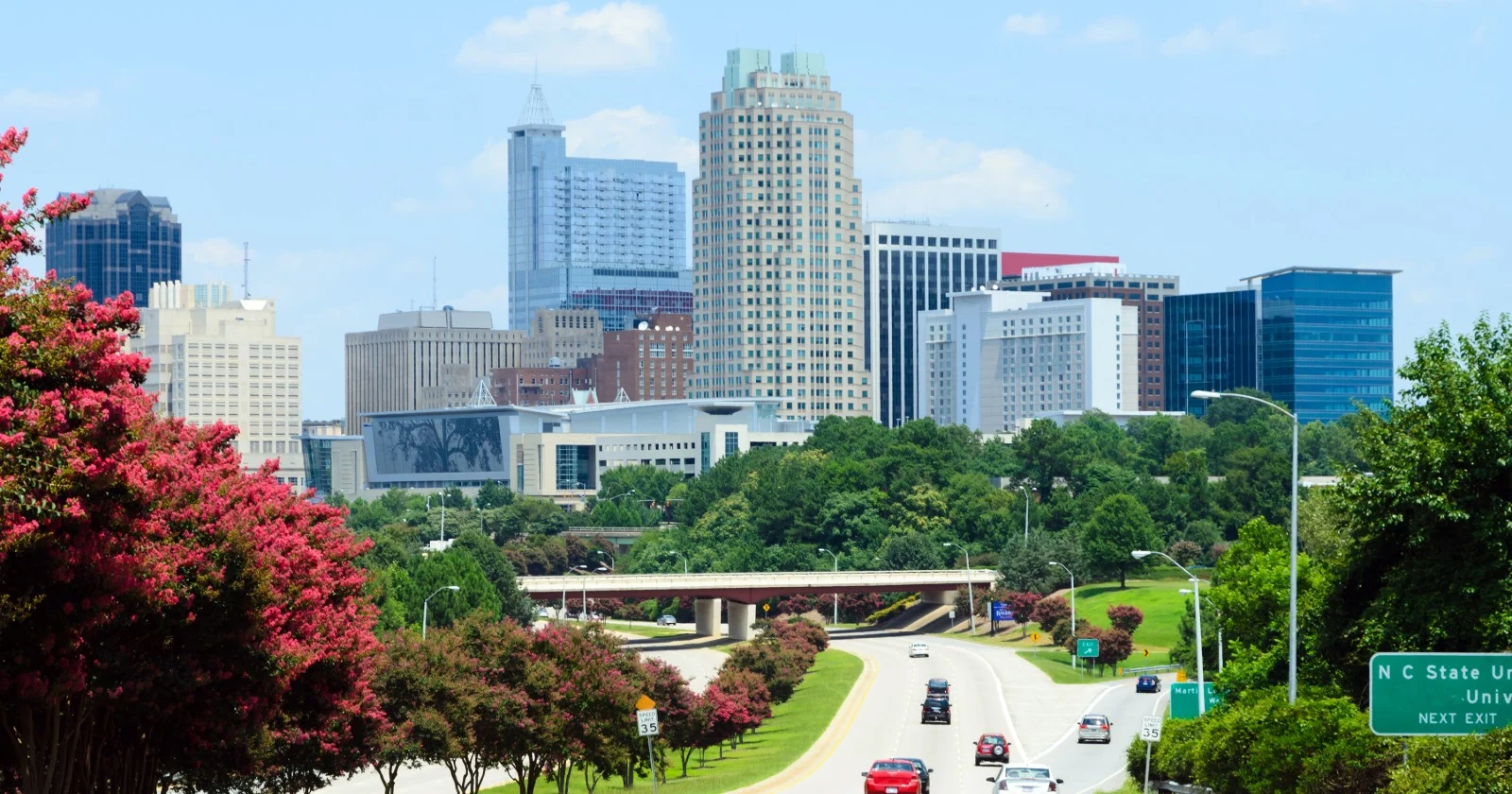
Wake County is what happens when a metro area grows faster than almost anywhere else in the country and decides to run its schools as one system. The county wraps around Raleigh, the state capital, and pushes west through Cary, Apex, Holly Springs, and Morrisville, the towns doing most of the growing. Put together, the public schools here enroll about 184,790 students across 237 schools, including 41 high schools. That is spread across roughly 30 different operators on paper, counting charters, but the number that matters is one: nearly all of it runs through a single district.
That district is the Wake County Public School System, and at about 163,000 students it is the largest in North Carolina and one of the 15 largest in the United States. It is bigger than most states' second-largest district. And unlike the metros people usually compare it to, it has no separate town systems carving it up. If you live in Wake County and your child attends a traditional public school, odds are overwhelming that one system runs it. That single fact shapes almost everything else here.
A Countywide District, Which Is Unusual
In a lot of states, especially in the Northeast and Midwest, school districts follow town and city lines. Each municipality runs its own schools, sets its own budget, and draws its own attendance boundaries. A family shopping for a house is also, in effect, shopping for a district, and crossing one town line can mean a completely different school system.
Wake County does not work that way. The county is the district. Cary does not have a Cary school system. Apex does not have an Apex one. They are all the Wake County Public School System, governed by one board, funded through one budget, drawing boundaries across the whole county. This is the southern county-unit model, and it has real consequences.
The upside is scale and equity of a sort. One system means resources can be pooled and moved where the growth is, and it means the wide gaps you see between adjacent town districts in fragmented states are harder to open up here. The complication is that your home address does not lock in a specific school the way it does in a town-district state. More on that below, because it surprises people.
Enrollment and the Growth Story
Wake is one of the fastest-growing large counties in the country, and the schools have been chasing that growth for two decades. The Research Triangle pulled in tech, pharma, and university talent, and the families followed. Most of the new arrivals landed in the western towns. Cary, Apex, Holly Springs, Morrisville, and Wake Forest went from suburbs to small cities, and the district has been building new schools and redrawing boundaries to keep pace.
That construction pace is the backdrop for one of the district's defining features: reassignment. When a new school opens in a fast-growing area, students get reassigned to fill it and to relieve the crowded schools nearby. In a stable district this happens rarely. In Wake County it has been a recurring fact of life, and it is the source of most of the friction parents here talk about.
Who Goes to School Here
Wake County is genuinely diverse, with no racial majority among its students. Across the county's schools, enrollment runs roughly 41% white, 21% Black, 20% Hispanic, and 13% Asian. That is a real four-way mix, not a token one, and it reflects both the longtime Raleigh population and the more recent influx into the Triangle's tech corridor, which brought a fast-growing Asian and Hispanic population to the western towns in particular.
The county's adult profile tracks with that. Median household income is about $105,800, well above the national figure, and roughly 57% of adults hold a bachelor's degree or higher, which is a strikingly high share for a county of this size. That education level shows up in the schools as engaged parents, strong PTAs, and a lot of competition for the magnet and early-college seats. The average student-teacher ratio sits around 16 to 1.
The Standout High Schools
When you sort Wake County's high schools by composite proficiency on the state assessments, a clear pattern shows up, and it is worth understanding before you read the list. The very top is owned by small, selective magnets. The strongest comprehensive high schools, the big neighborhood ones, cluster in the western suburbs. Here is how the top performers line up, by approximate composite proficiency:
- Wake STEM Early College High School, Cary · about 92% proficient, a clear outperformer
- Wake Early College of Health and Science, Raleigh · about 92%, also an outperformer
- Wake Young Men's Leadership Academy, Raleigh · about 90%
- Wake Young Women's Leadership Academy, Raleigh · about 86%
- Green Level High, Cary · about 85%
- Green Hope High, Cary · about 76%
- Apex Friendship High, Apex · about 74%
- Panther Creek High, Cary · about 72%
- Holly Springs High, Holly Springs · about 69%
The top four are the small ones. The early-college and leadership academies enroll a few hundred students, admit through an application process, and post proficiency in the high 80s and low 90s. That is partly a selection effect: when you pull motivated students into a small school built around a specific mission, the numbers come out high. It does not mean a comprehensive high school at 76% is weaker per pupil. It means you are comparing a selective magnet to an open-enrollment school that takes everyone in its boundary, which is a different thing.
The comprehensive standouts tell the geography story plainly. Green Level, Green Hope, and Panther Creek are all in Cary. Apex Friendship is in Apex. Holly Springs High is in Holly Springs. The strongest big high schools sit in the western, higher-income, higher-education towns, which is exactly where the household-income and degree-attainment numbers are highest. The data lines up with the map.
One note on reading these figures: treat them as approximate. Composite proficiency rolls several tested subjects into one number, and small year-to-year shifts are normal. Use them to understand the shape of the county, not to split hairs between a school at 74% and one at 76%.
What This Means for Families Moving In
If you are relocating to Wake County, especially from a state where town lines equal district lines, there is one thing to understand before you buy a house, and it trips up newcomers constantly.
A home address does not always lock you into a specific school. Between the countywide reassignment system and the magnet program, the school your child attends is not simply a function of which street you live on. The district can reassign students when it opens new schools or rebalances crowded ones, and a large magnet program means some of the most sought-after seats are won by application and lottery, not geography. Families coming from town-district states often assume that buying in a particular neighborhood guarantees a particular school for the next twelve years. In Wake County that assumption is shakier than they expect.
So here is what to actually do with this:
- Confirm the current assignment, not the reputation. Before you make an offer on a house, check the district's current base assignment for that exact address, and ask whether the area is flagged for any pending reassignment. A neighbor's child from three years ago is not a reliable guide.
- Learn the magnet and early-college options early. The highest-proficiency schools in the county are application-based magnets and early colleges. If that path interests you, the application timelines and criteria matter, and they start well before high school for some programs.
- Weigh the western towns honestly. Cary, Apex, Holly Springs, and Morrisville post the strongest comprehensive-school data and absorbed the most growth, which is both their appeal and the reason their schools see the most reassignment churn. Strong schools and frequent boundary changes tend to come together here.
- Use the county and city pages to compare. You can pull the full school list and the underlying numbers for Wake County, and drill into Raleigh, Cary, and Apex individually, before you commit to a neighborhood.
Wake County rewards families who do the homework on assignment and magnet access up front. The data is strong, particularly in the west, but the path to a specific school is less automatic here than in most places, and that is the part worth getting right before you sign anything.
If you are weighing the Triangle against the state's other big metro, the companion piece on the best public high schools in the Charlotte suburbs, ranked by test scores, runs the same kind of analysis for that area. You can also browse every district in the state from the North Carolina hub.
Data note: enrollment, demographic, and school-count figures come from NCES SY 2024-25 and ACS county data as compiled by allk12. Proficiency figures are composite results from North Carolina state assessments and are approximate; confirm current school assignment directly with the district before relying on it for a housing decision.
Sources
NCES Common Core of Data: Wake County Schools District Detail
Wake County Public School System: Stats and Facts
US Census Bureau: Wake County, North Carolina QuickFacts